OPEN TREASURE
DURHAM CATHEDRAL
2016
'Open Treasure' is an exhibition at Durham Cathedral that explores the story of St Cuthbert, the spread of early Christianity, and monastic life at the Priory and cathedral life post-reformation.
I developed five touch screen interactives for the exhibition, that are installed across 10 locations.
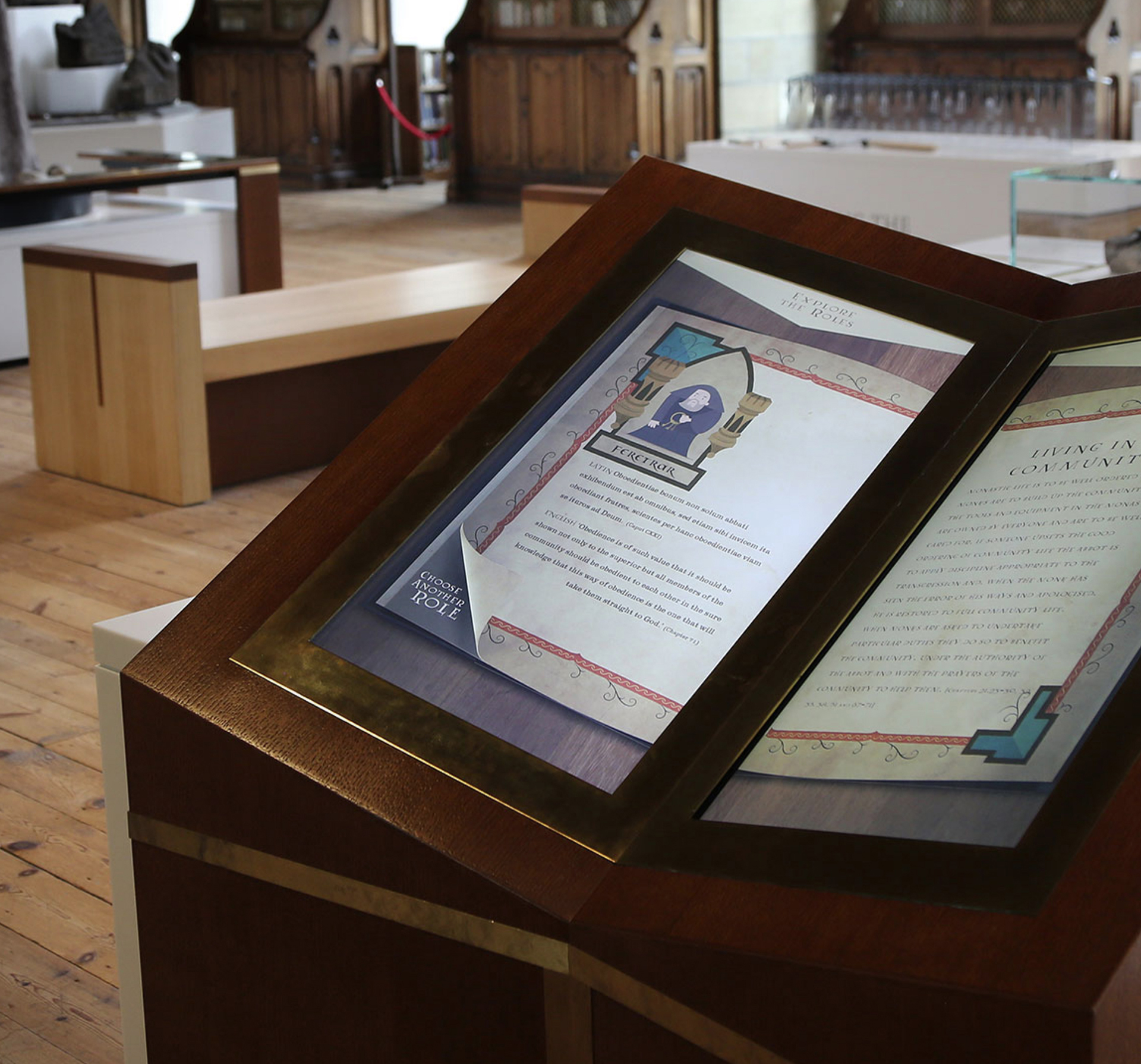
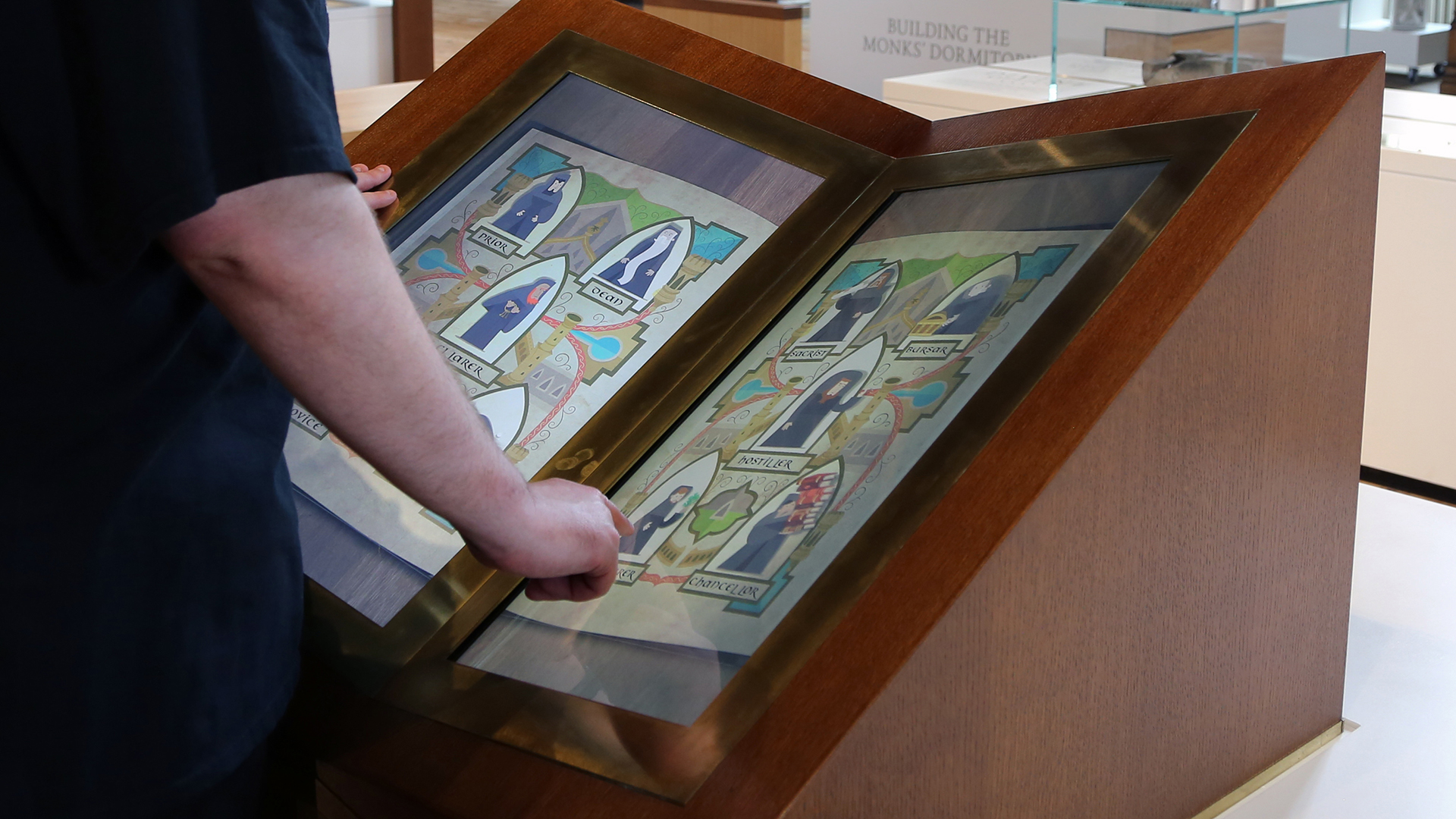
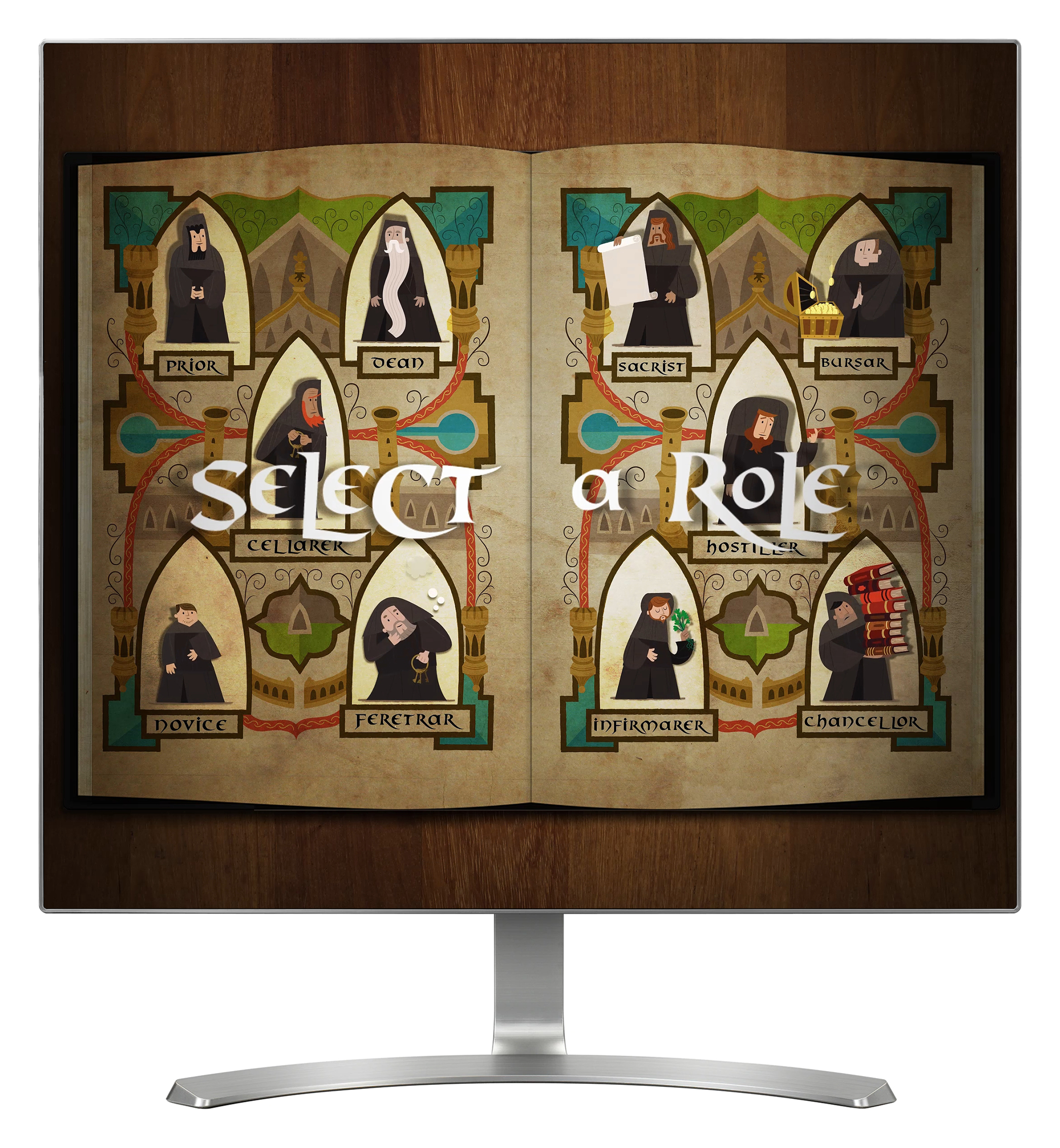
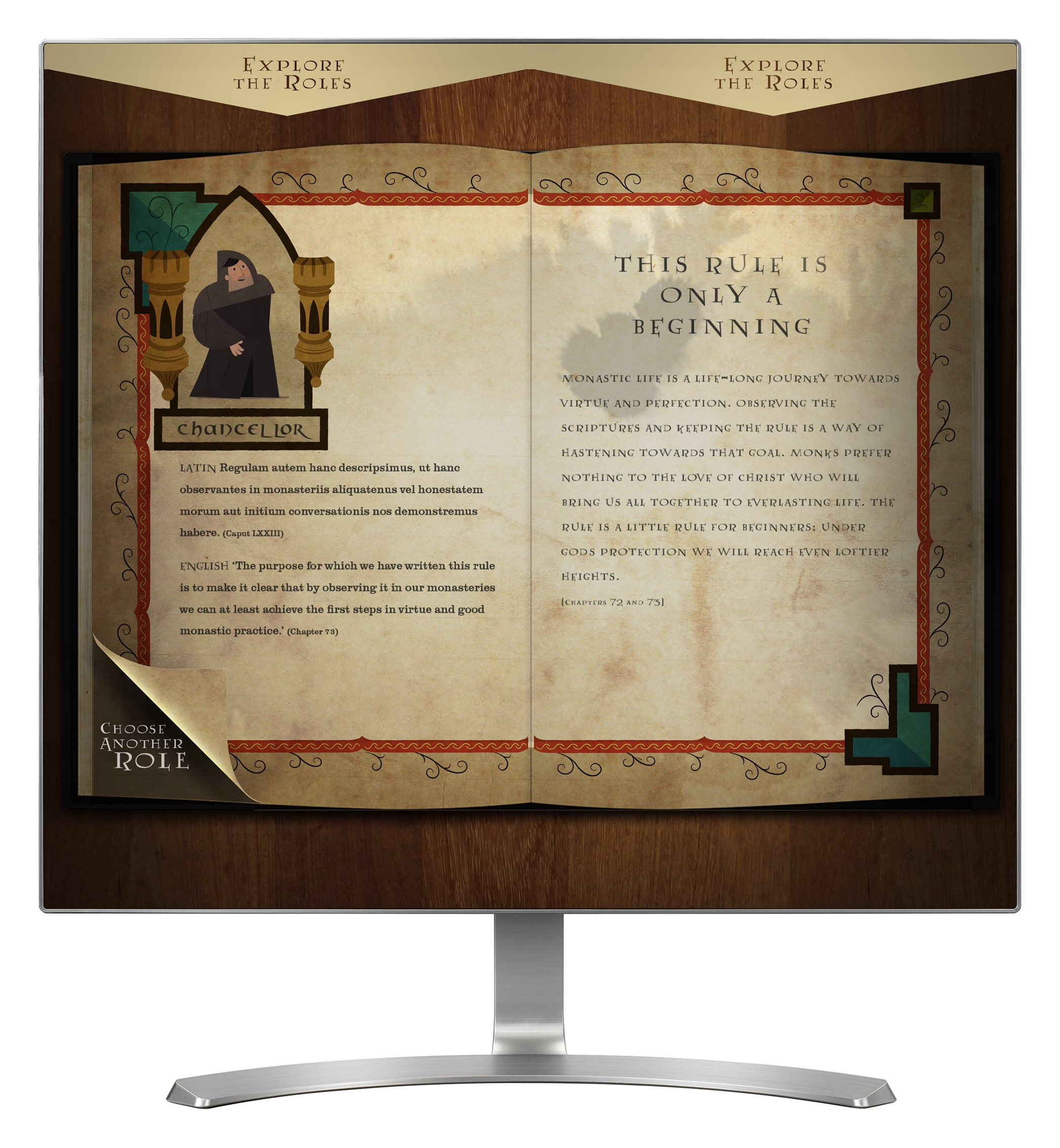
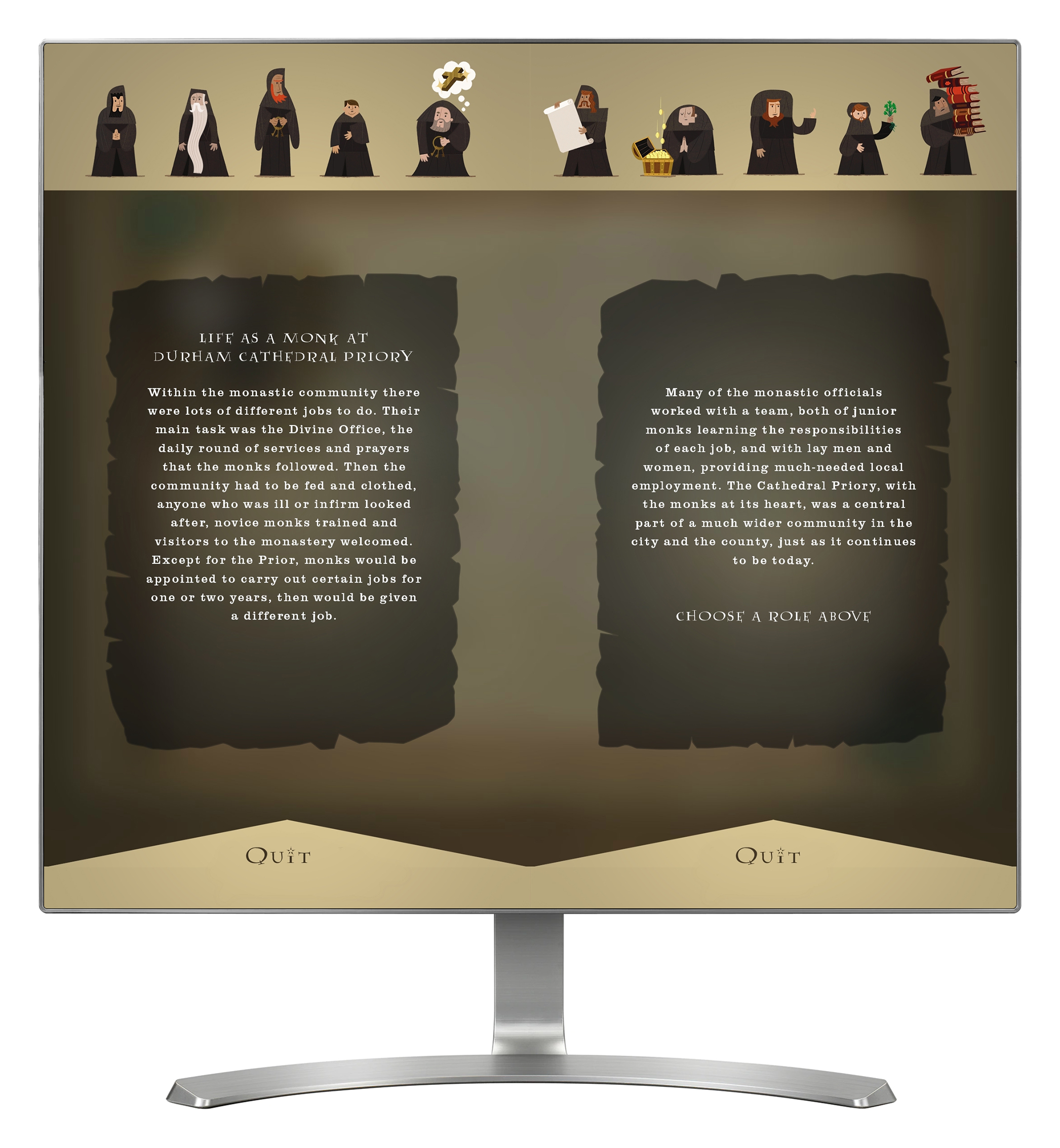
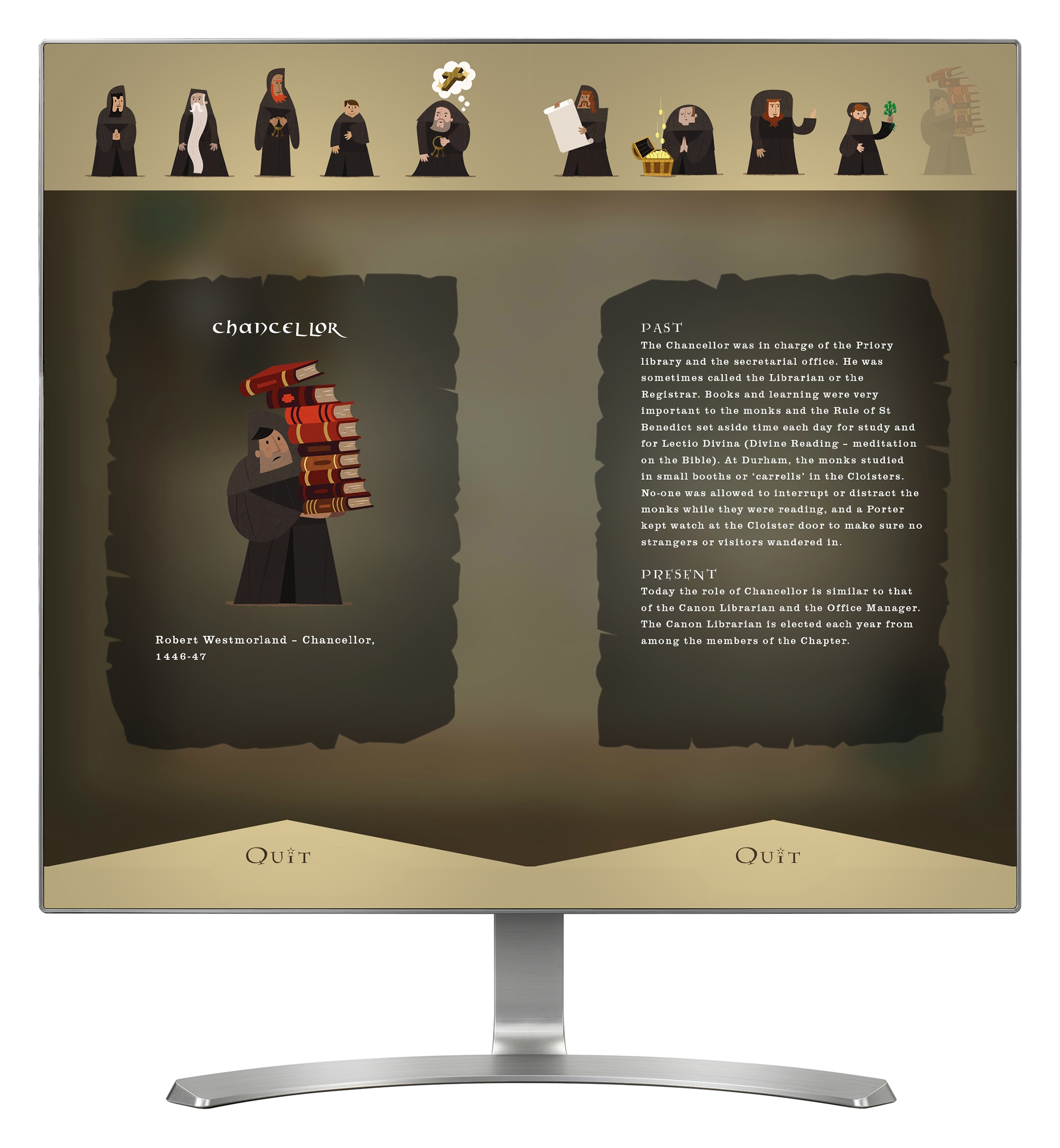
'Benedictine Rule' offers a glimpse into the daily life of monks, through 10 different illustrated and animated monks, each having a different role. The interactive is presented as an illuminated manuscript, and is accessed via two touch screens on the same computer, each screen representing one page, or side of the book. Selecting a monk turns the page to provide a little more information about their role. For each role there is also an option to dig a little deeper and find out more, including how the role differs today from the past.
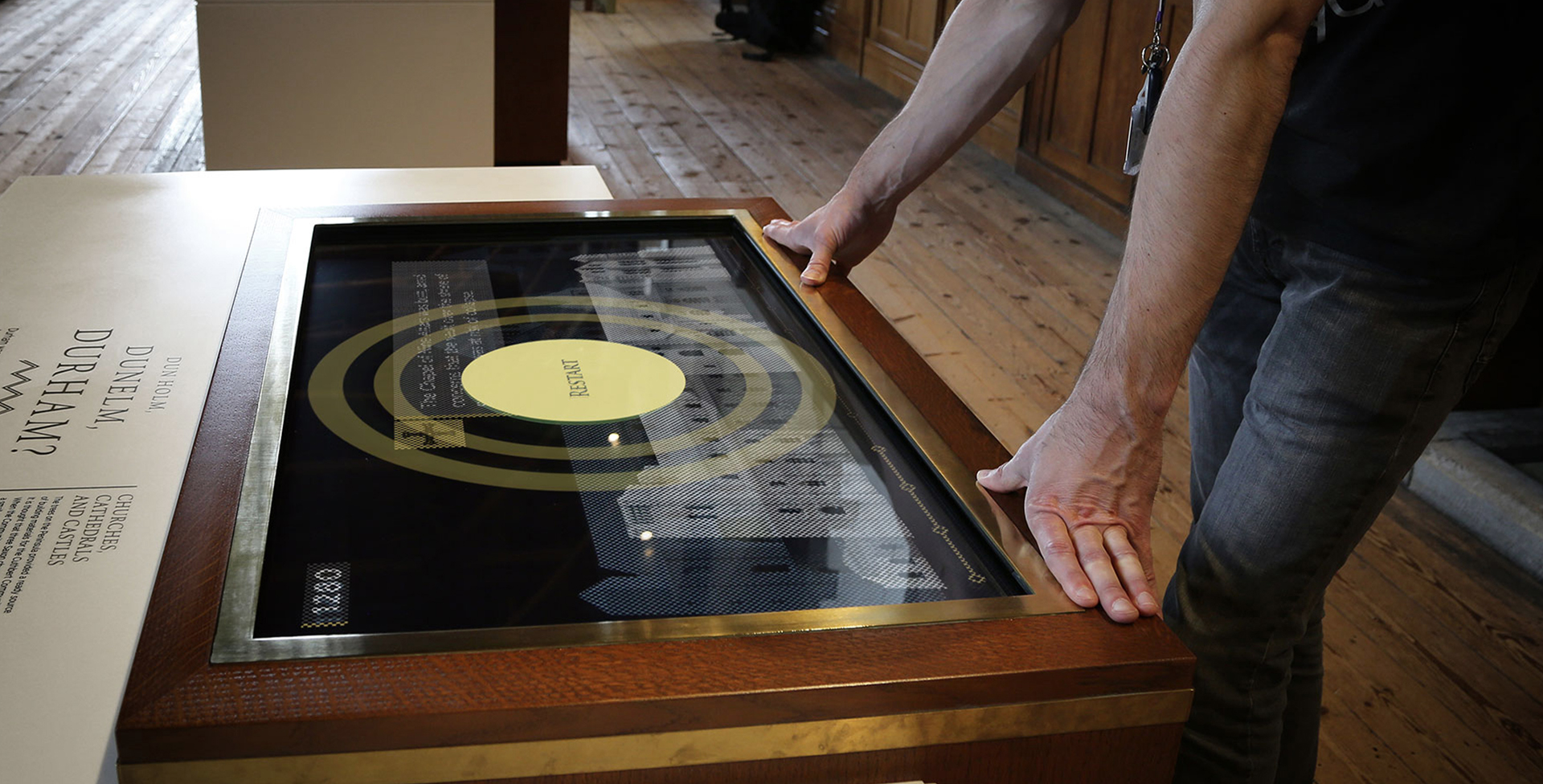
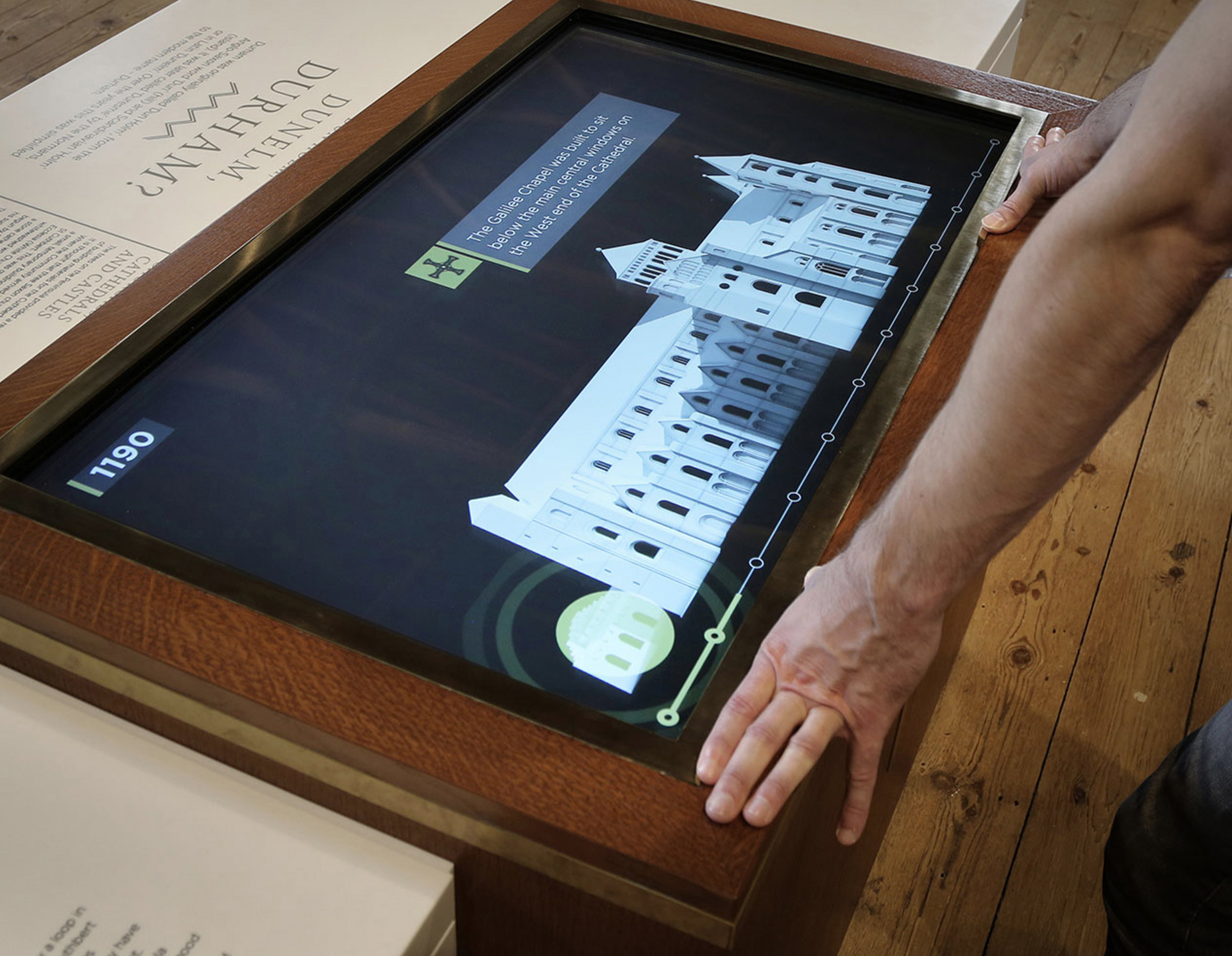
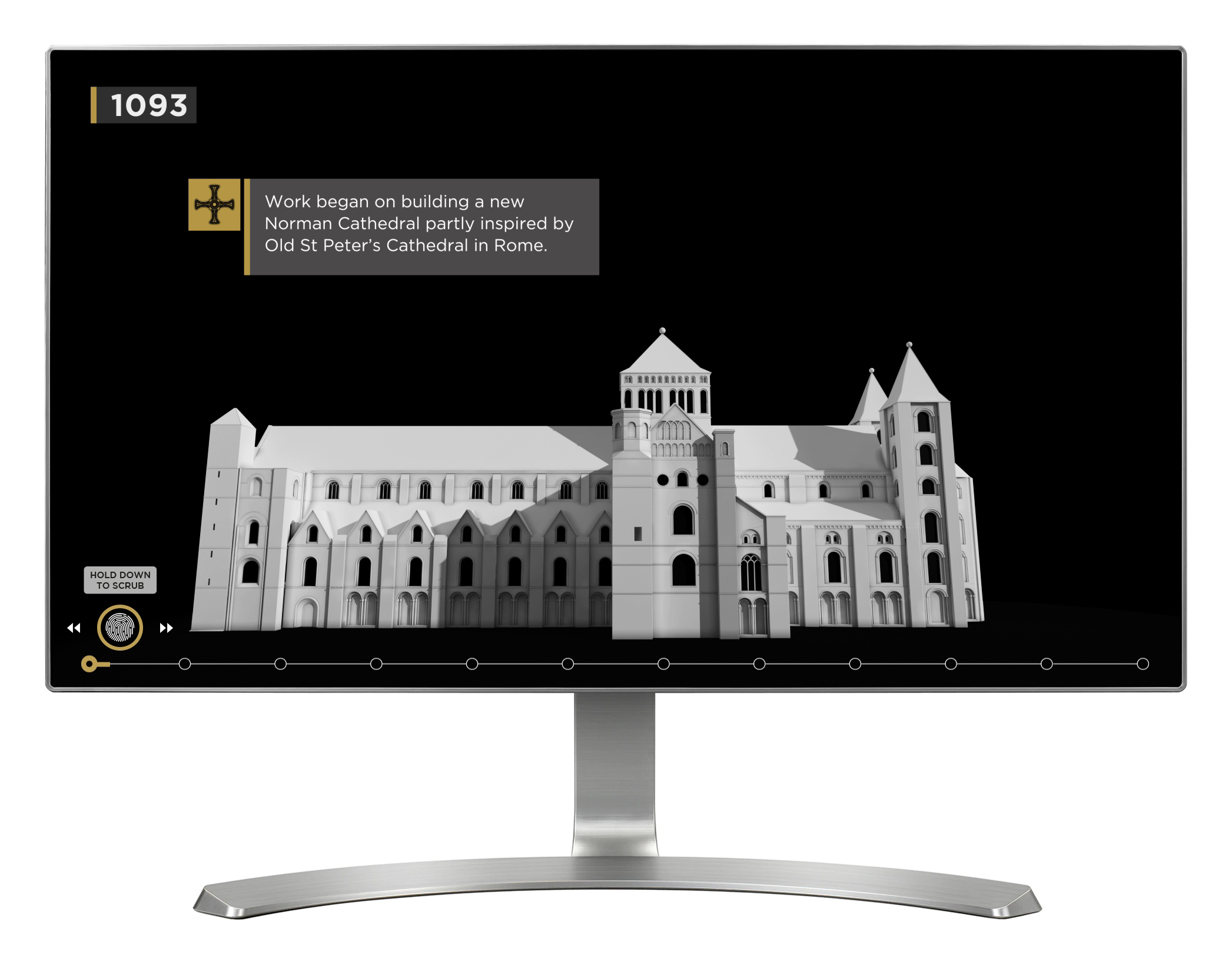
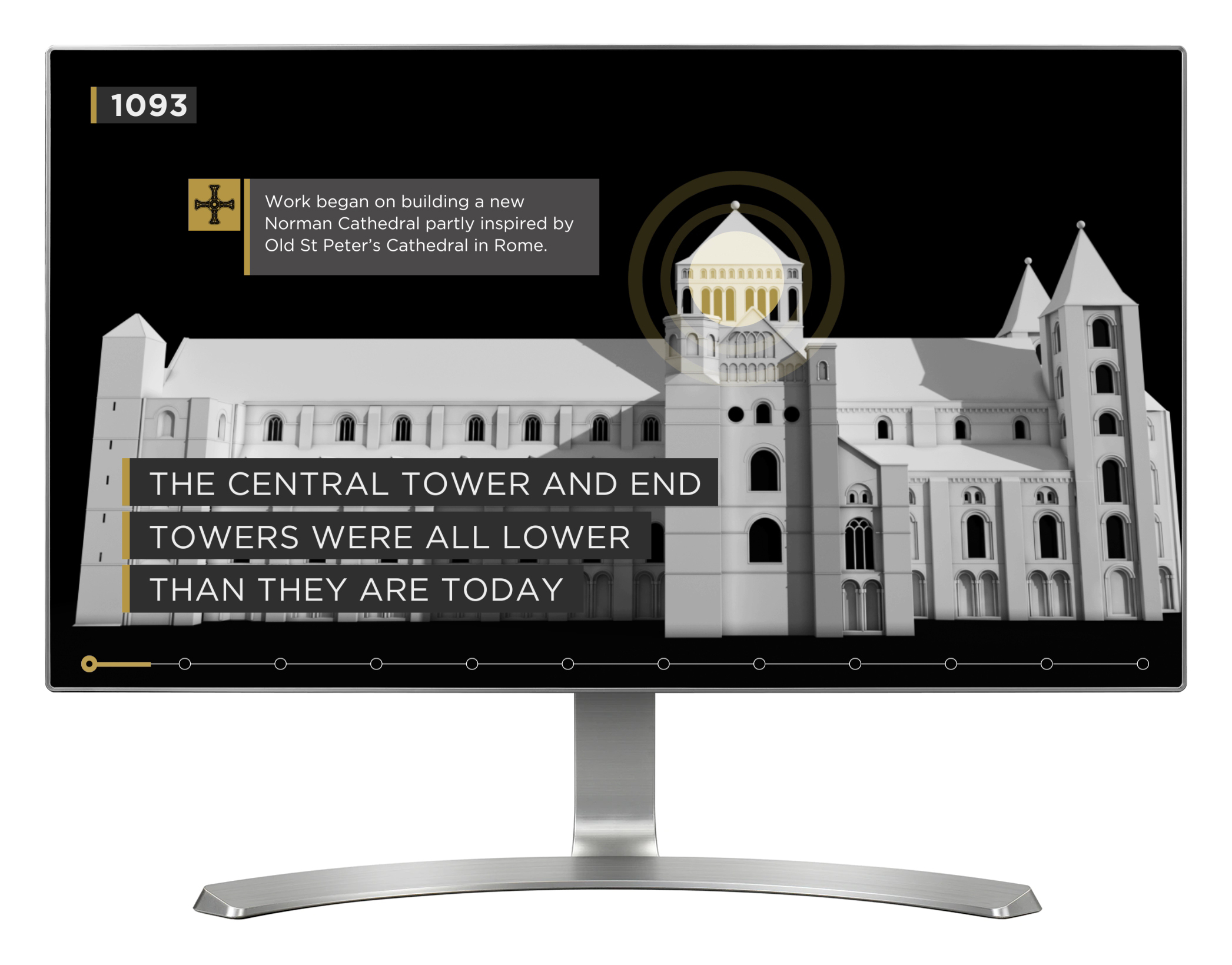
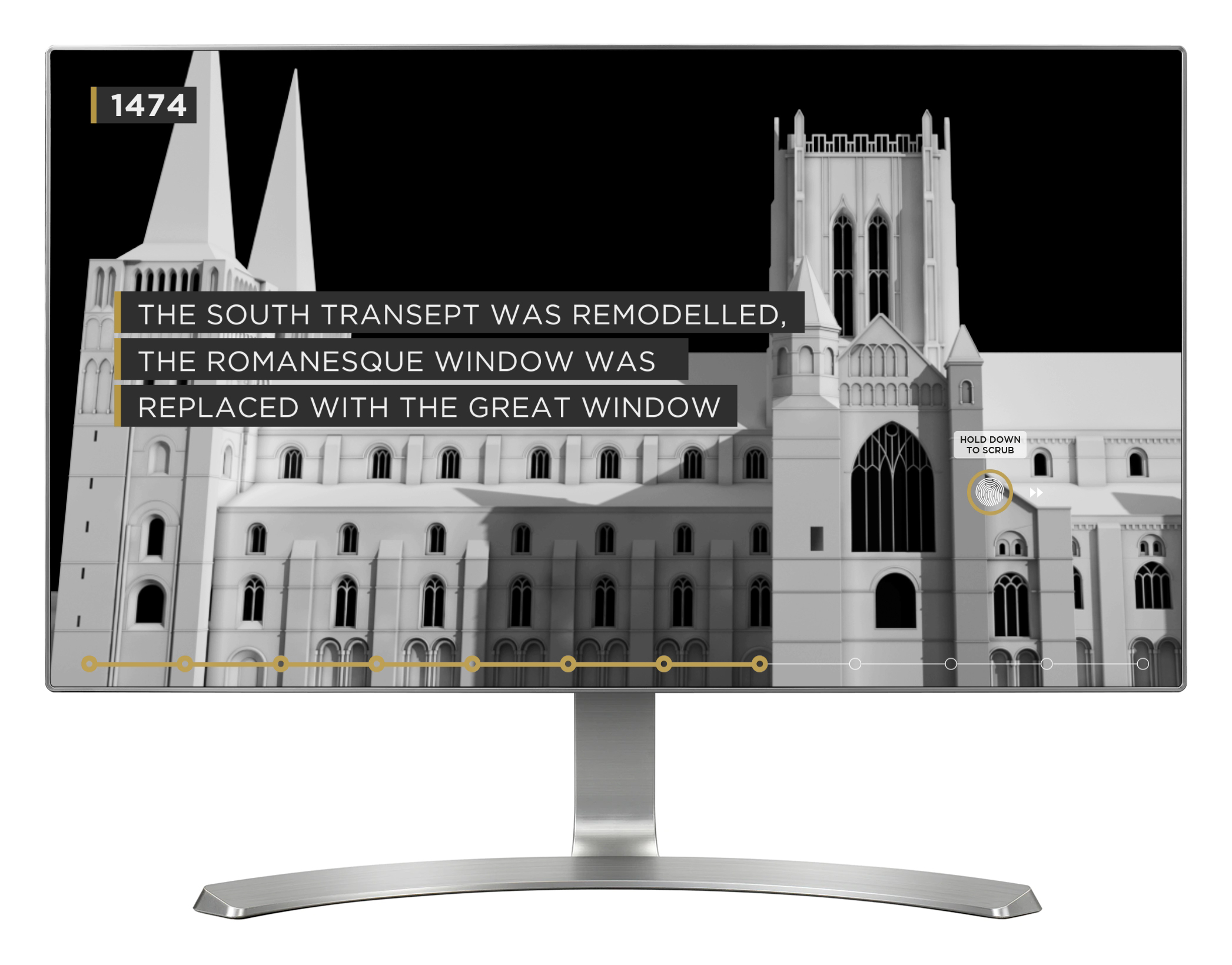
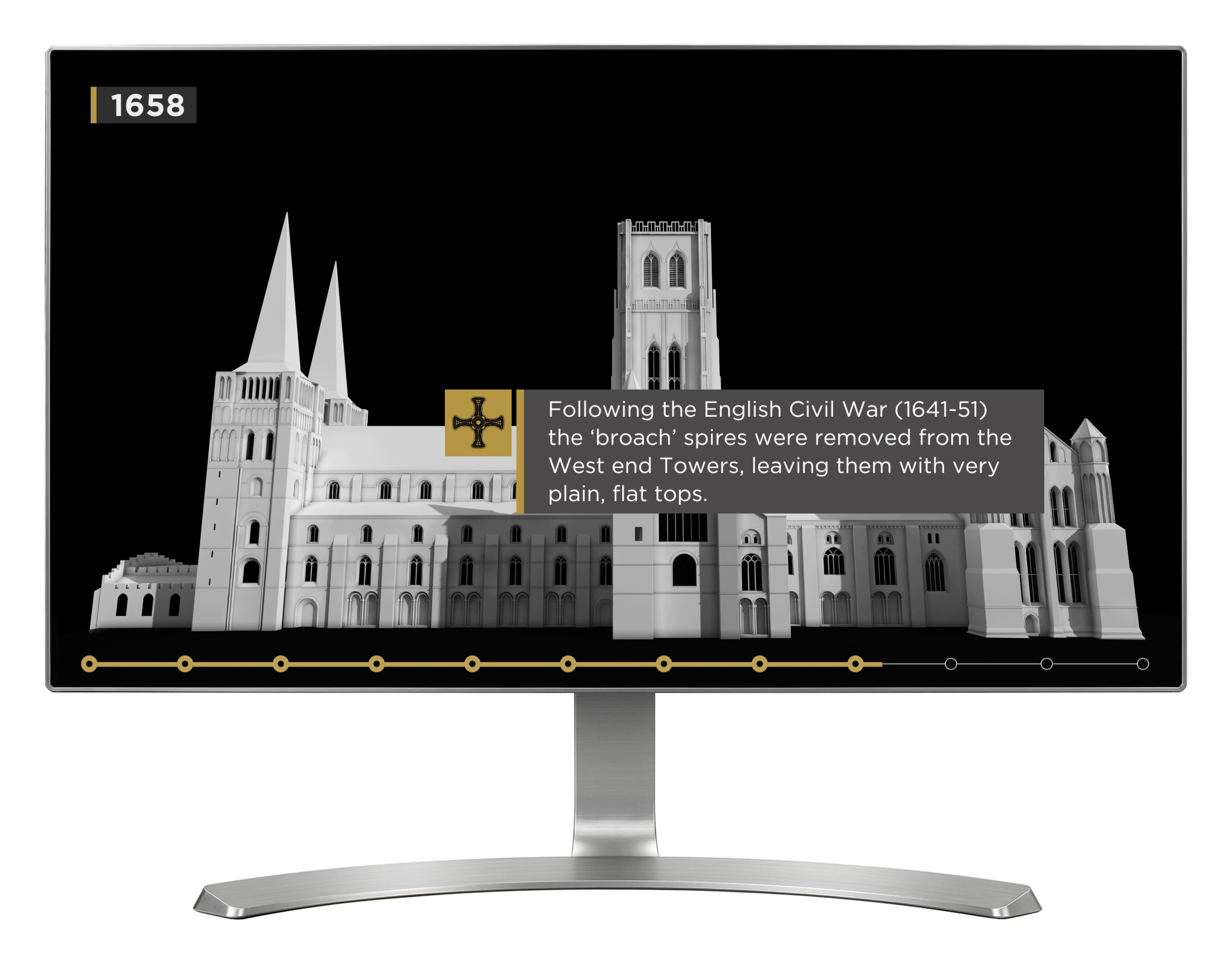
'Peninsula' is a classic touch table interactive that provides an overview of the main architectural changes to Durham Cathedral over the course of 700 years. When a visitor interrupts the screensaver and begins the interactive, it will automatically play through as a linear sequence, showing the changes over time and pausing briefly at key points in history. Additionally, visitors can swipe or drag left and right across the screen if they want to fast forward or rewind the sequence to any point.
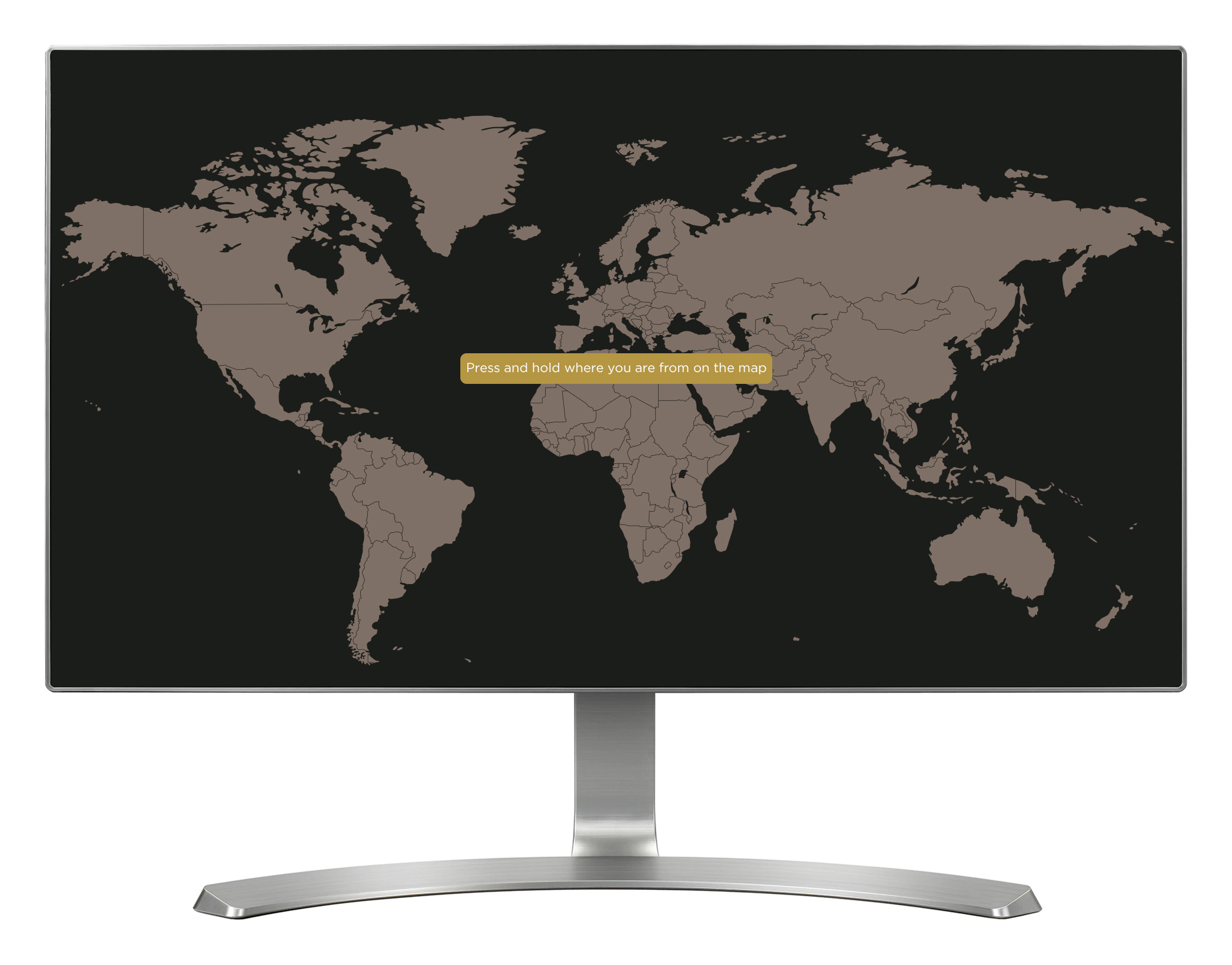
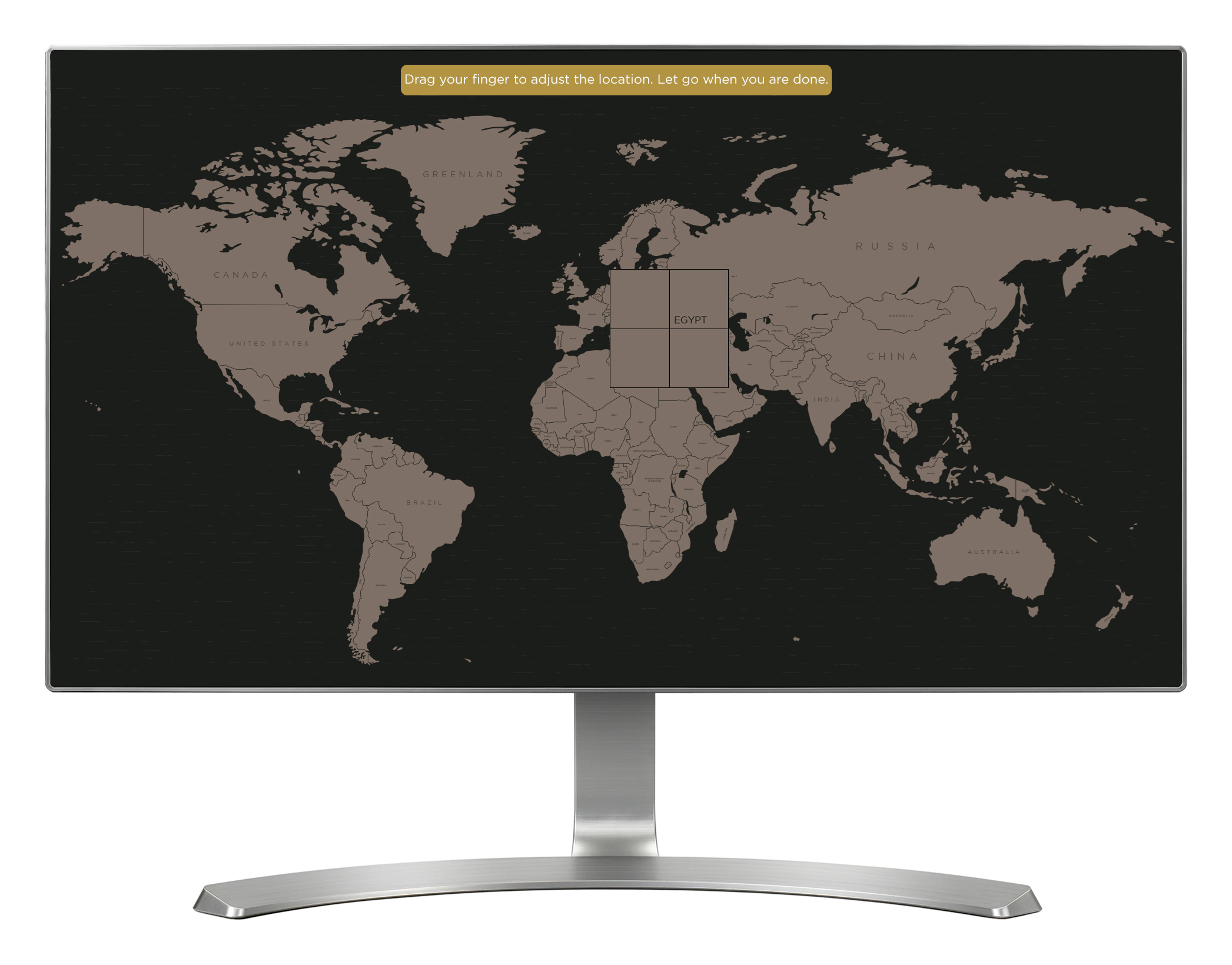
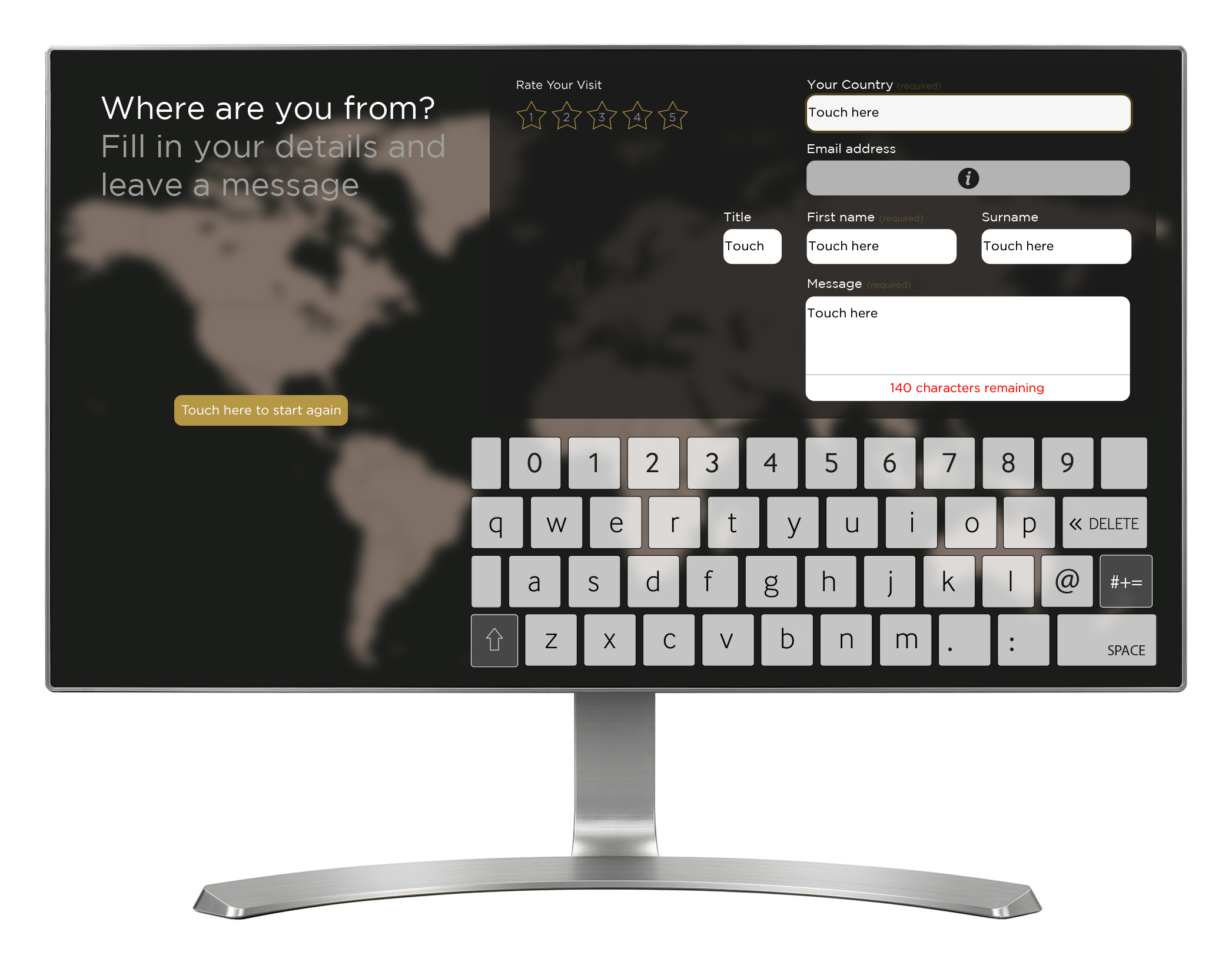
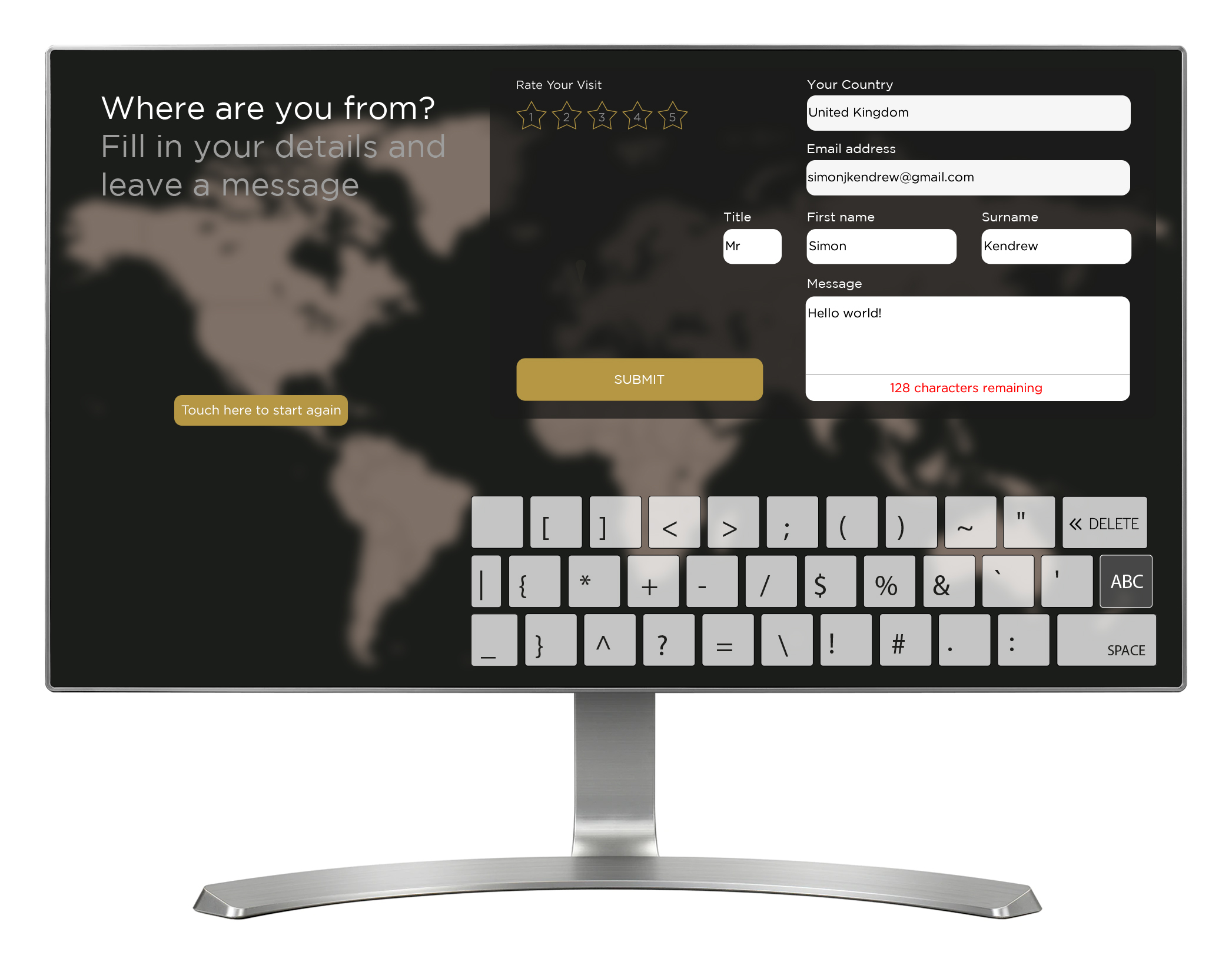
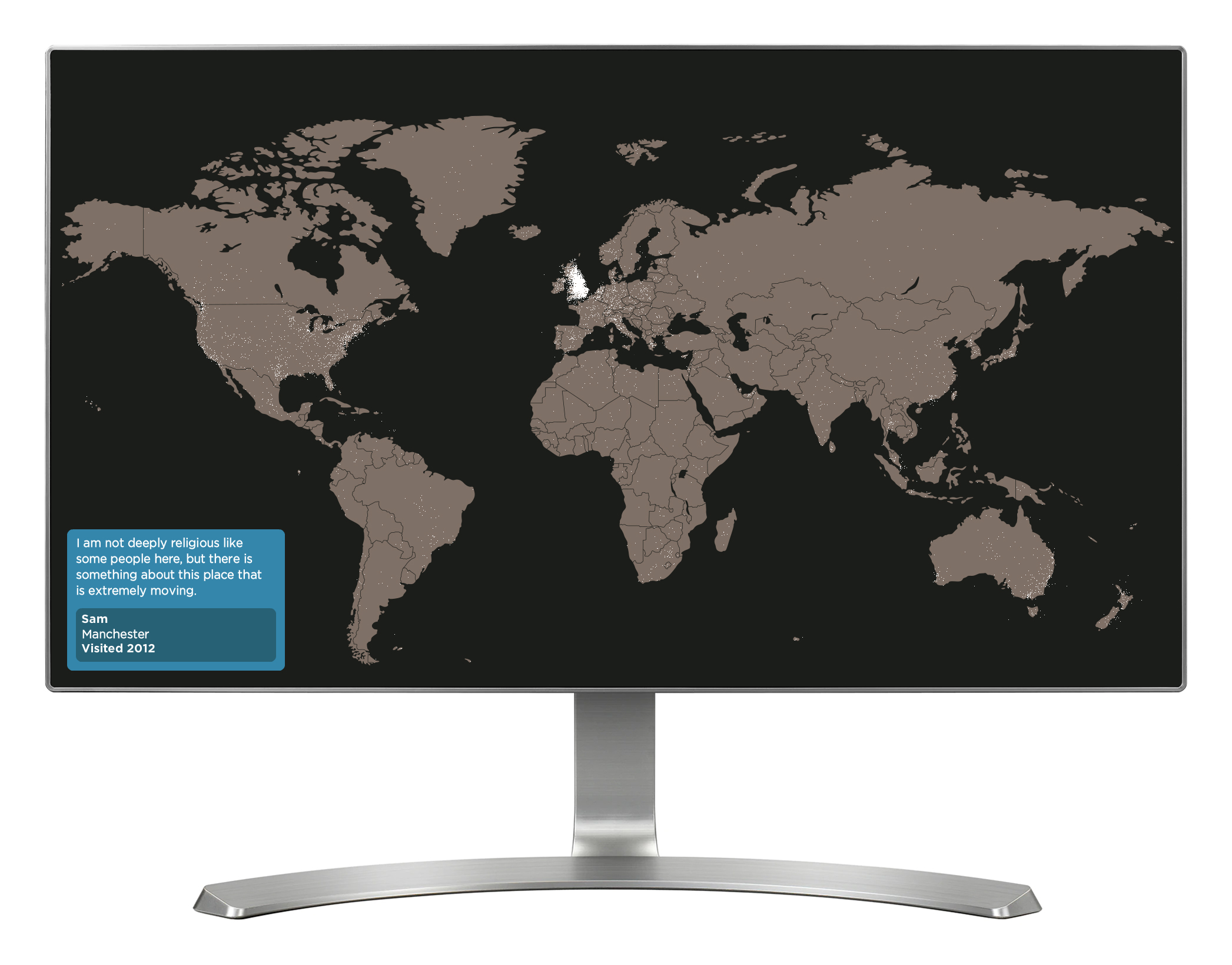
'Pilgrimage Today' allows visitors (or pilgrims) to the exhibition to add their details to a wall-projected world map, and then view details of other previous visitors. The interactive is installed on two touch screens, each located either side of the wall map. Two networked computers run each touch screen, and one of them additionally runs the wall projection. Visitors start by selecting their home town location on the touch screen, done by dragging a magnifying glass around the map until they have their location. Next up, visitors add their name, email address, home country and a short, personal message up to 140 characters. Visitors can optionally rate their visit to the exhibition from one to five stars. On submitting their details, the hometown location is added to the wall map as a white pixel, and the personal message is also displayed on the wall map, but only once in case it contains rude or offensive words. The message is saved so that it can be reviewed remotely by a staff member, and once approved it will be randomly shown again on the wall map (along with historical pilgrim messages). All inputted visitor data is saved locally, and can be extracted remotely later. The pilgrim messages that appear in the bottom left corner of the wall projection are controlled through a CMS, and cycle between historical pilgrim messages and approved visitor messages.
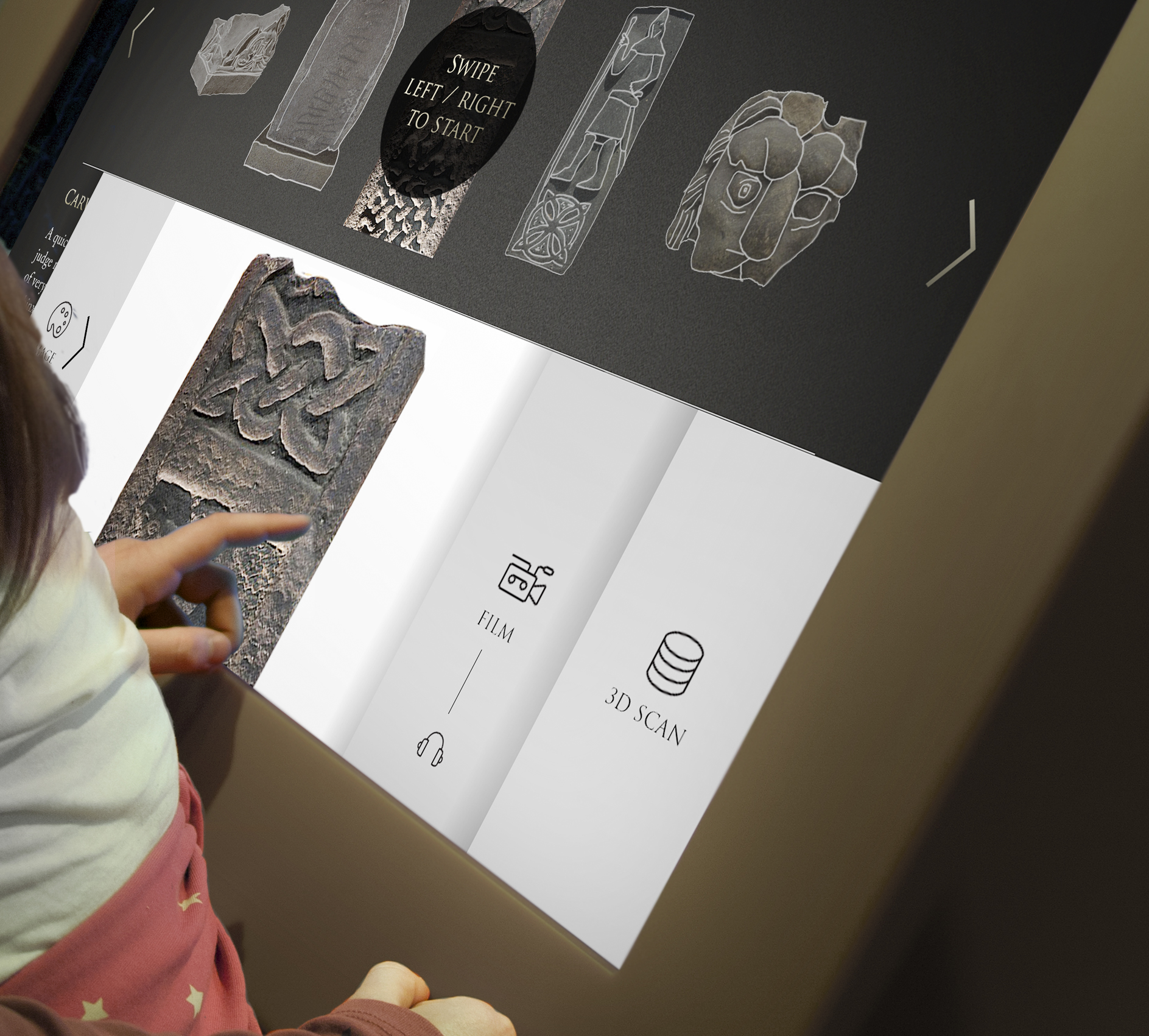
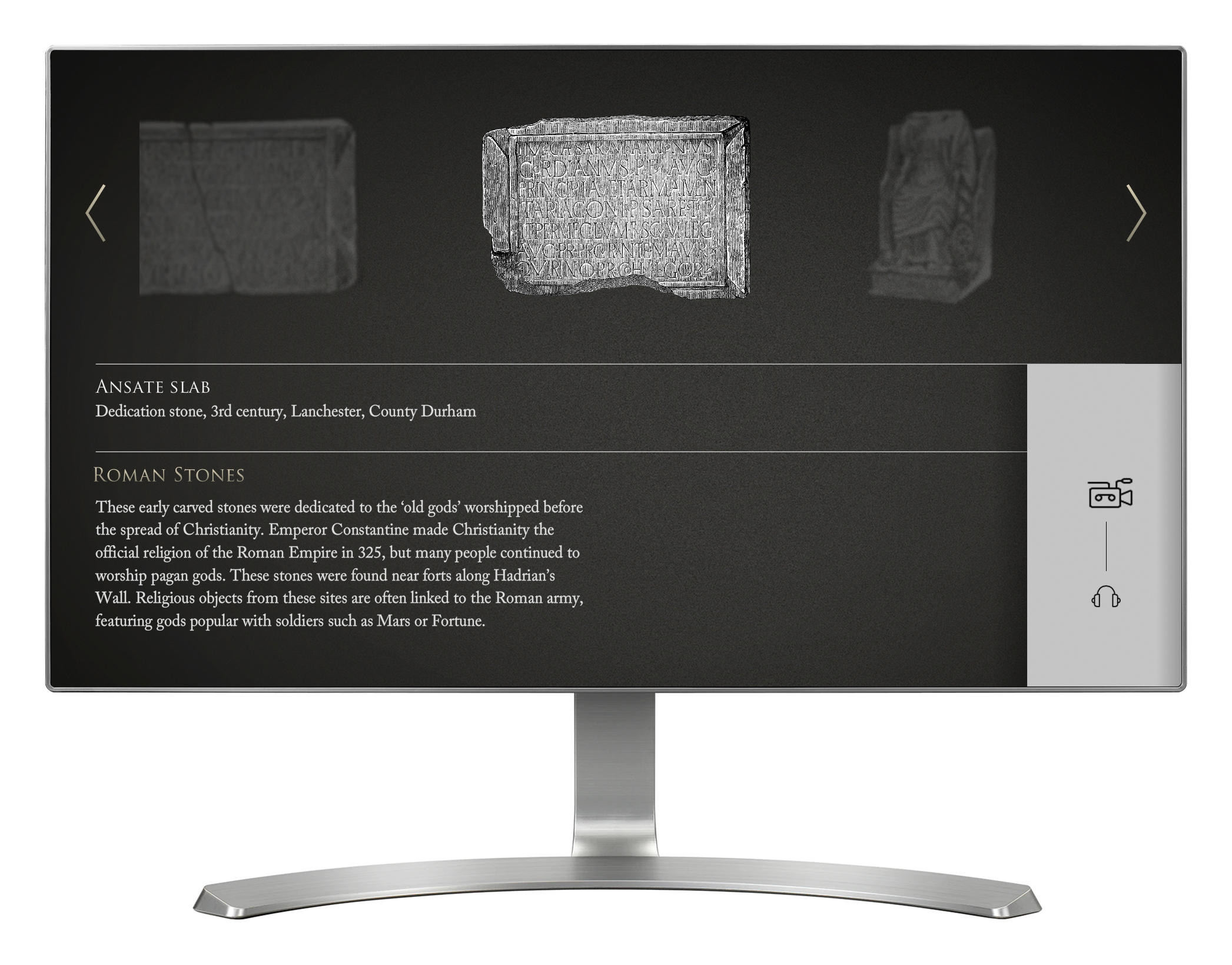
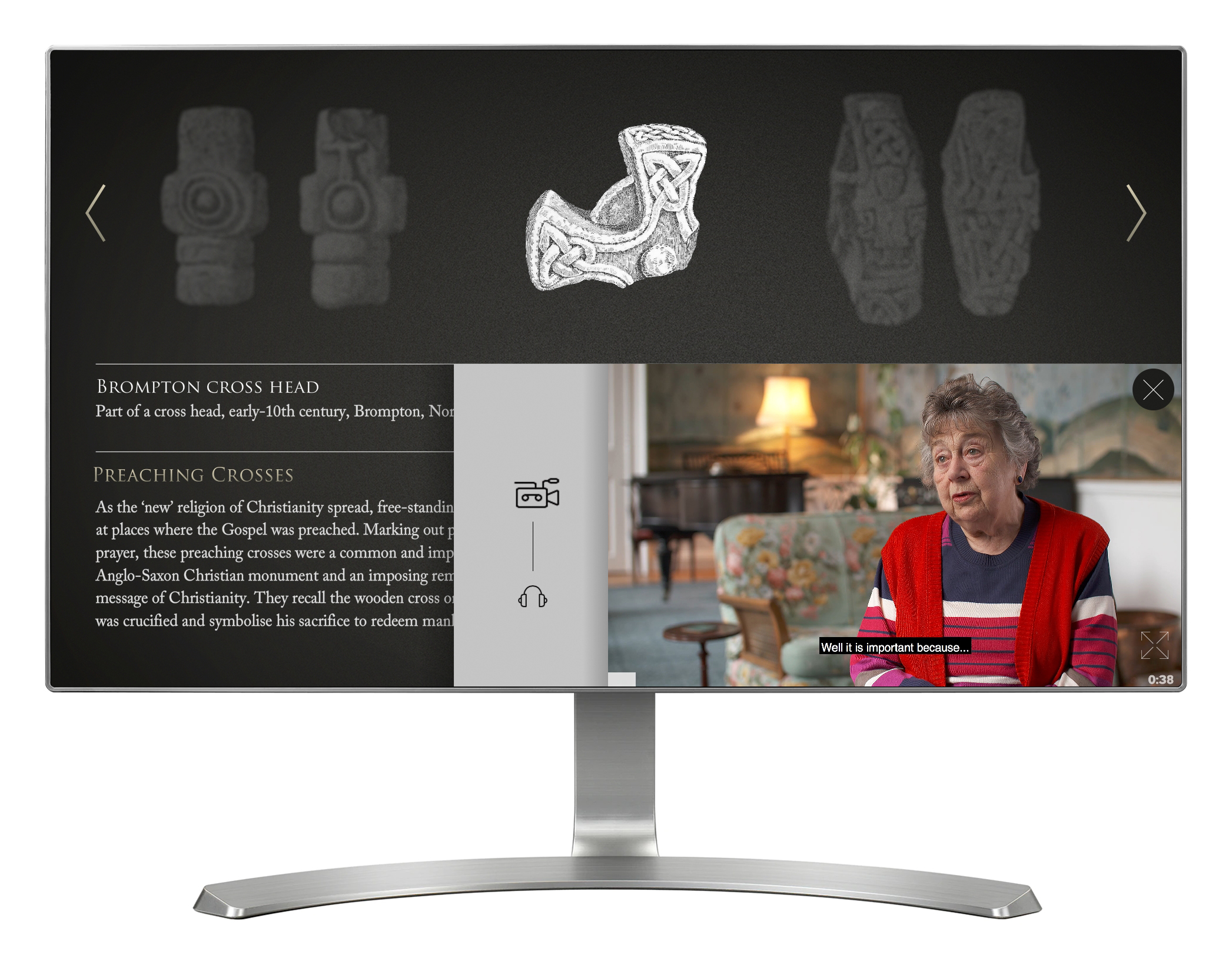
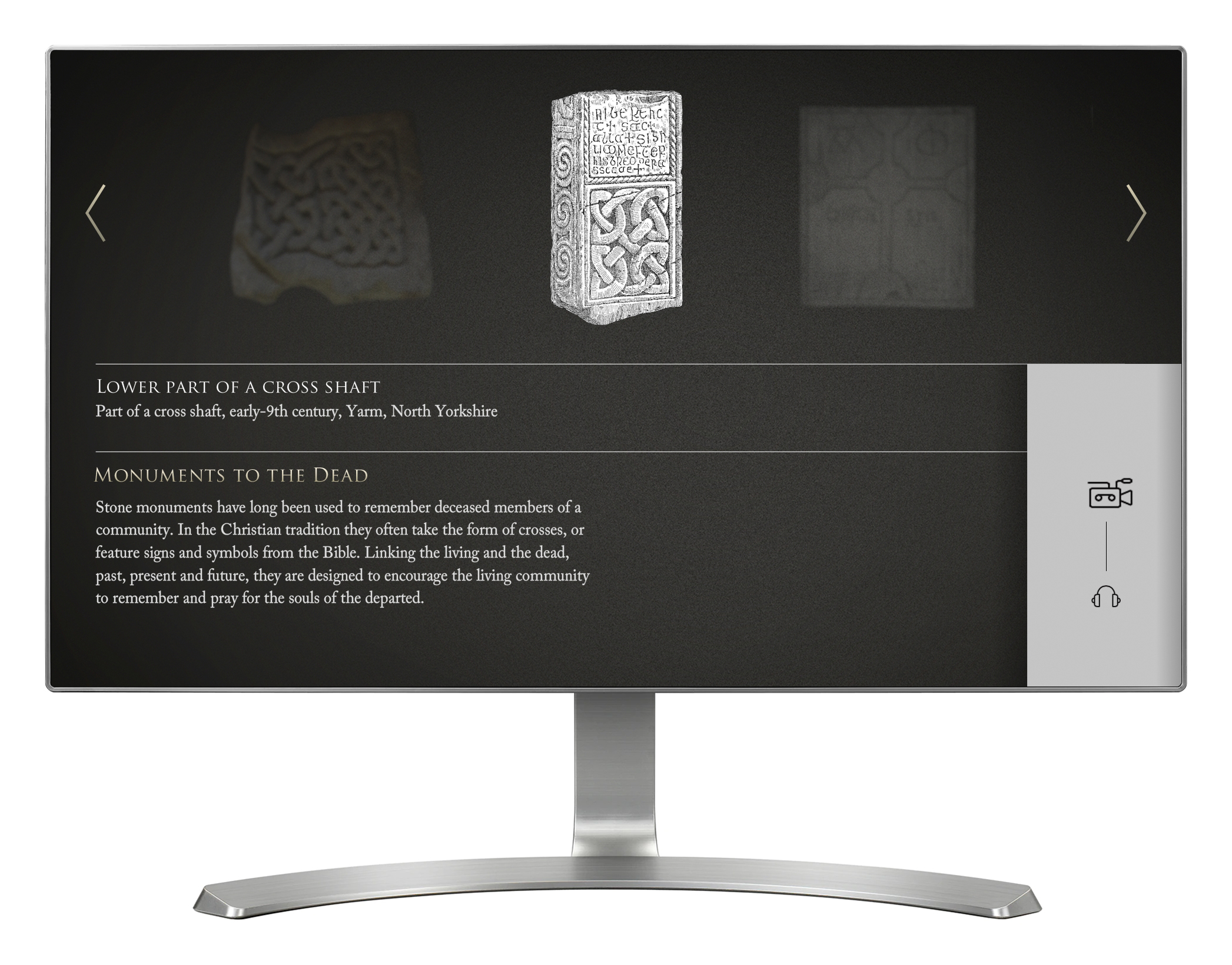
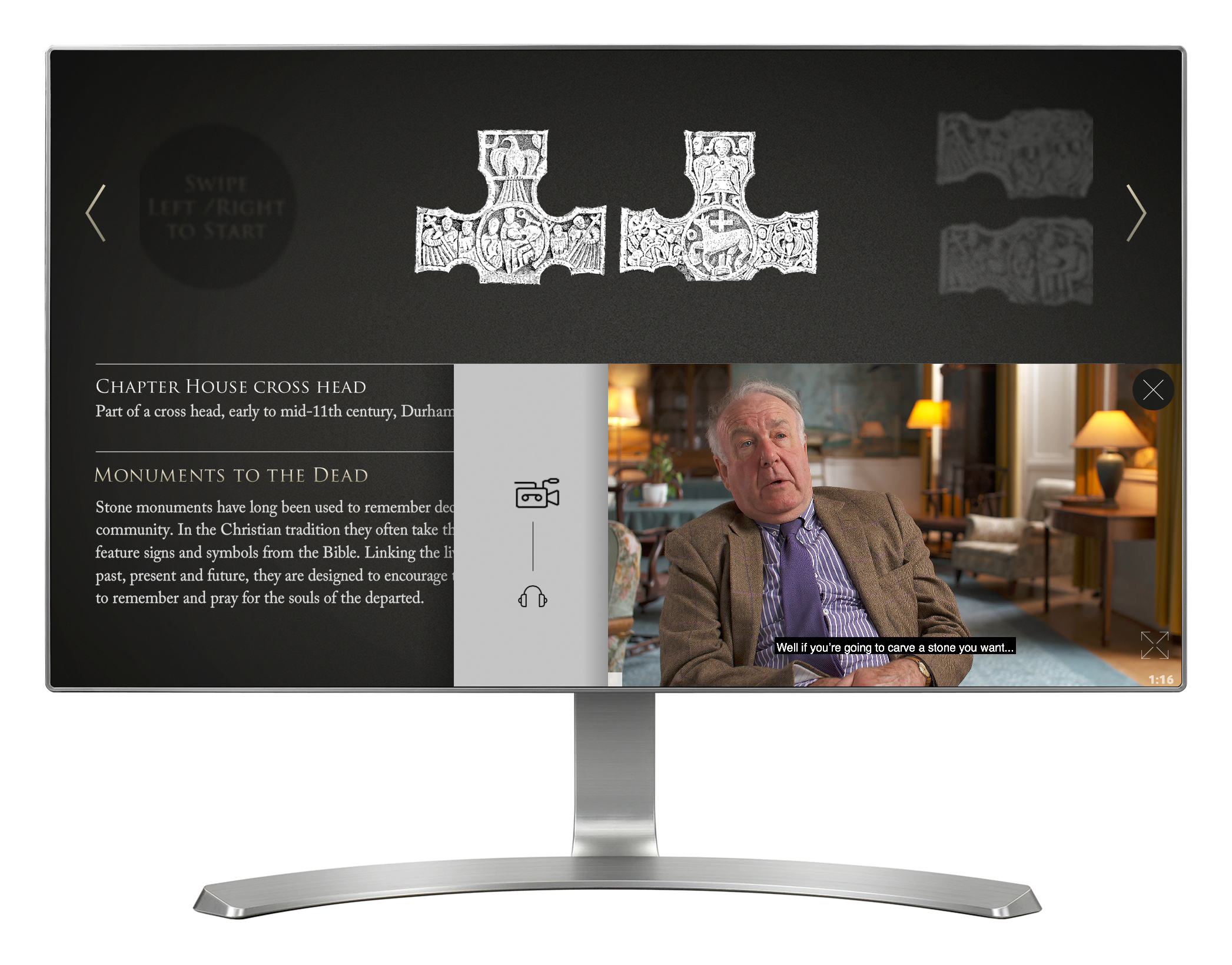
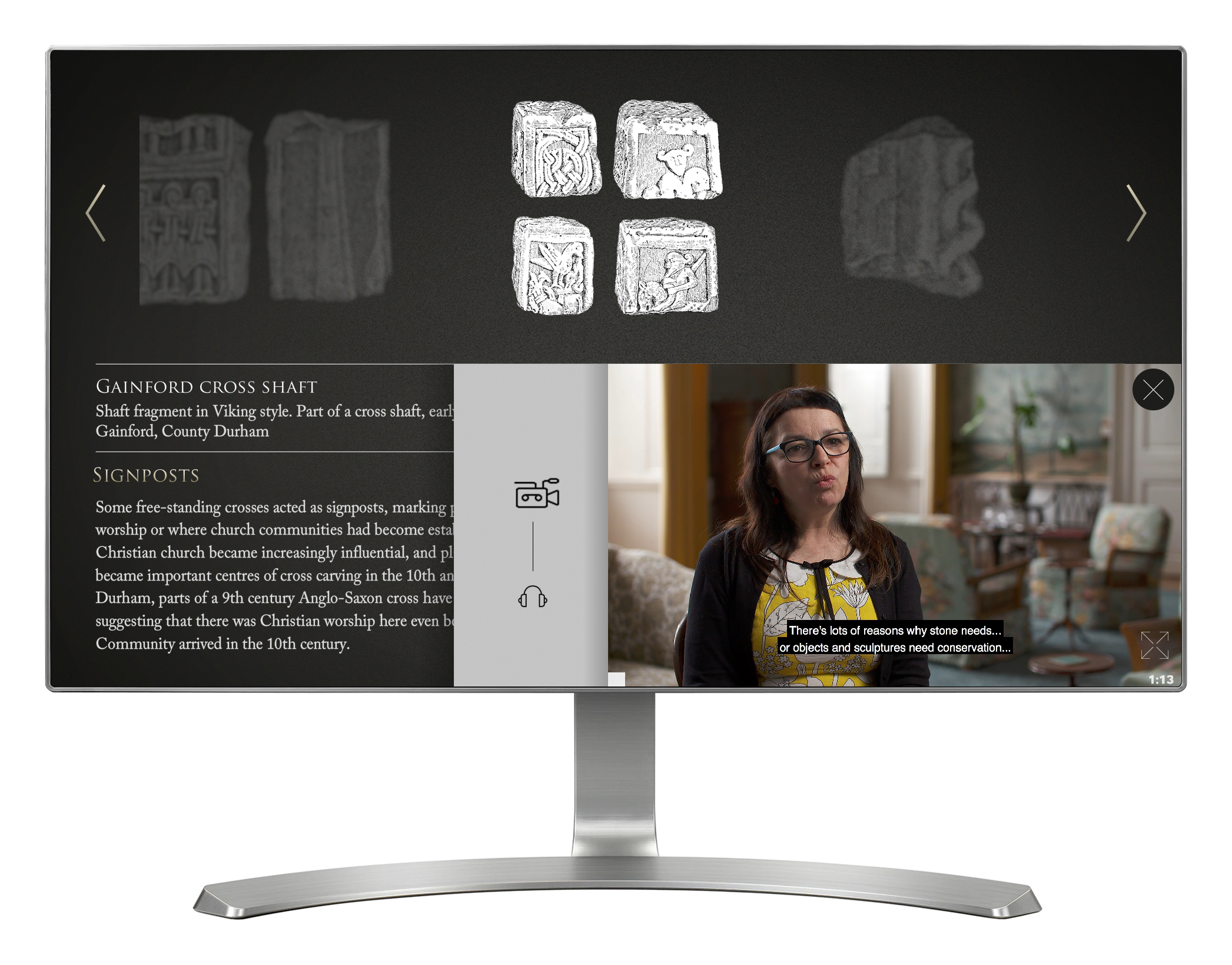
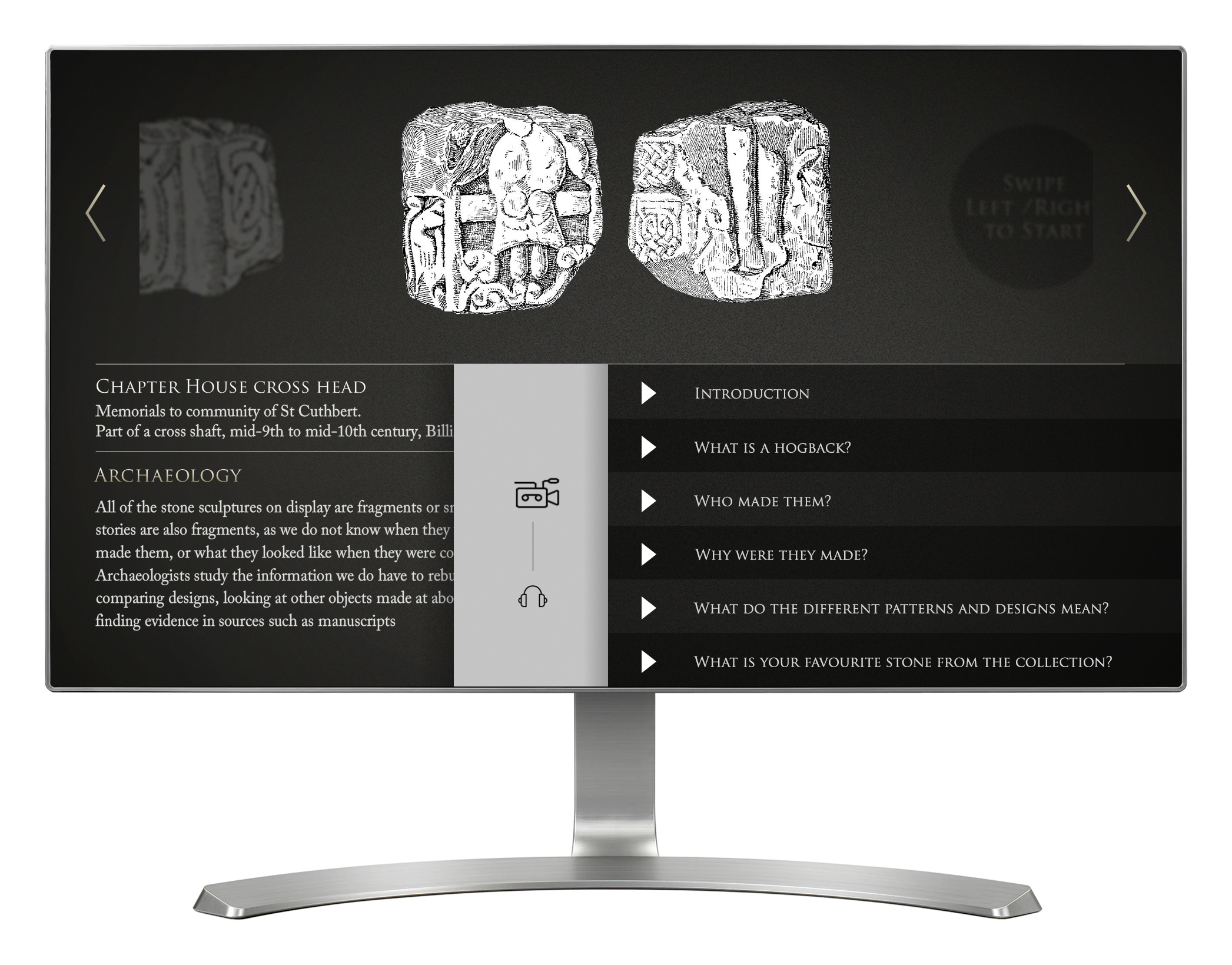
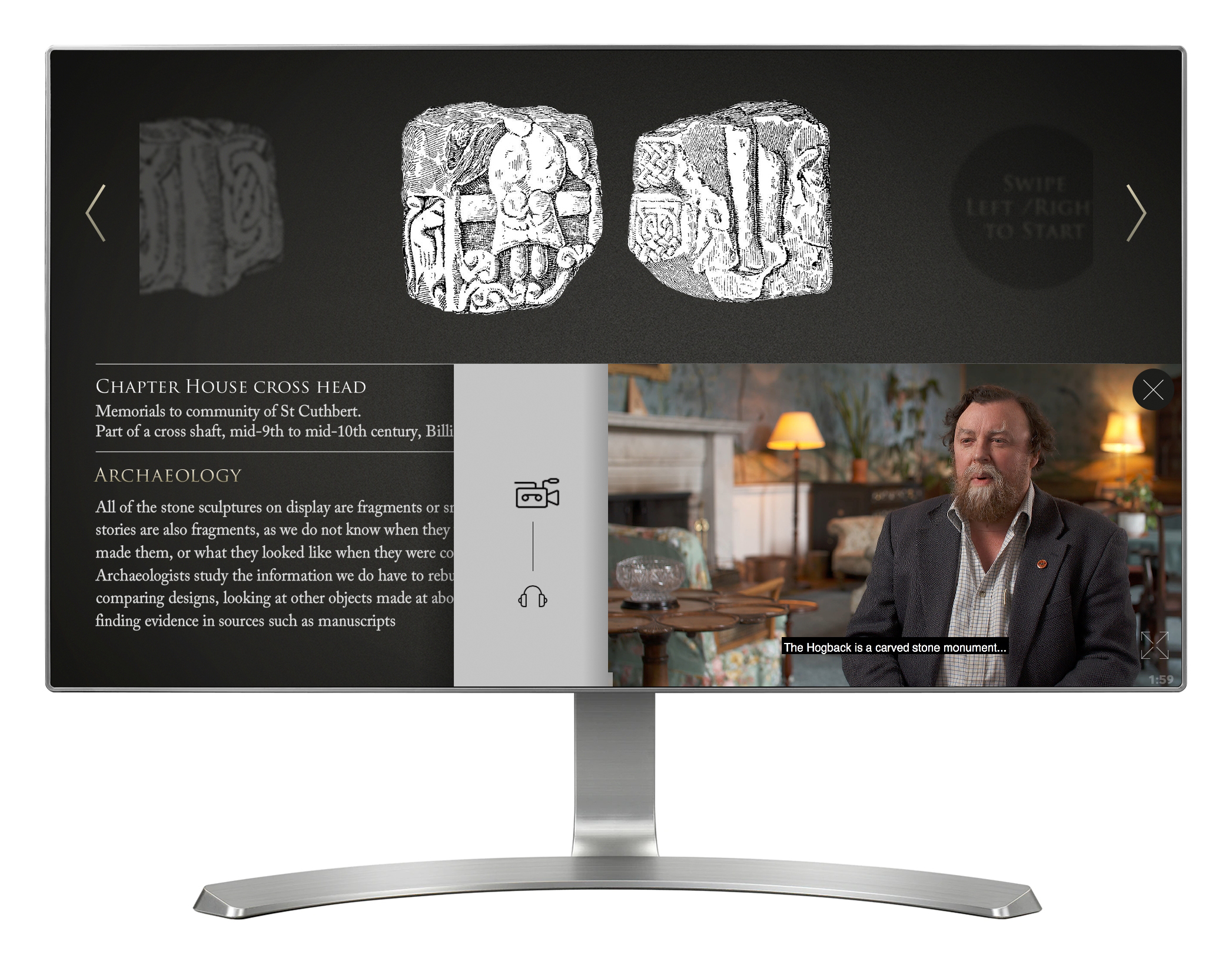
'Stone Collection' is an interactive dedicated to exploring and understanding religious stones from the North East of England. Four separate touch screen installations provide access to seven different themes, including Roman stones, preaching crosses, monuments to the dead, signposts, early monastic stones, memorials to the dead and archaeology. Each of the four installations also provides it's own video questions and answers with an expert. There are 80+ stones across the seven themes, and both the stones and videos are managed through a CMS. This allows any of the four installations to easily shown their own unique themes, and gives the client the ability to easily edit the information.
'The Meaning of Pilgrimage' explores pilgrim badges, souvenirs from the different shrines that were visited. Installed on two touch screens, each allows visitors to explore and learn about a selection of badges. Visitors can also have a go at designing their own themed badge, and then email a copy of it to themselves.
In addition to the software development, I led the on-site installation of the interactives at Durham Cathedral.
Credits
Simon Kendrew: Software development, CMS documentation & client training.
AY-PE: Concept, UI design, installation photos.
Developed for AY-PE while self-employed as Interactive Software Developer.