HMS CAROLINE
EXPERIENCE
2016
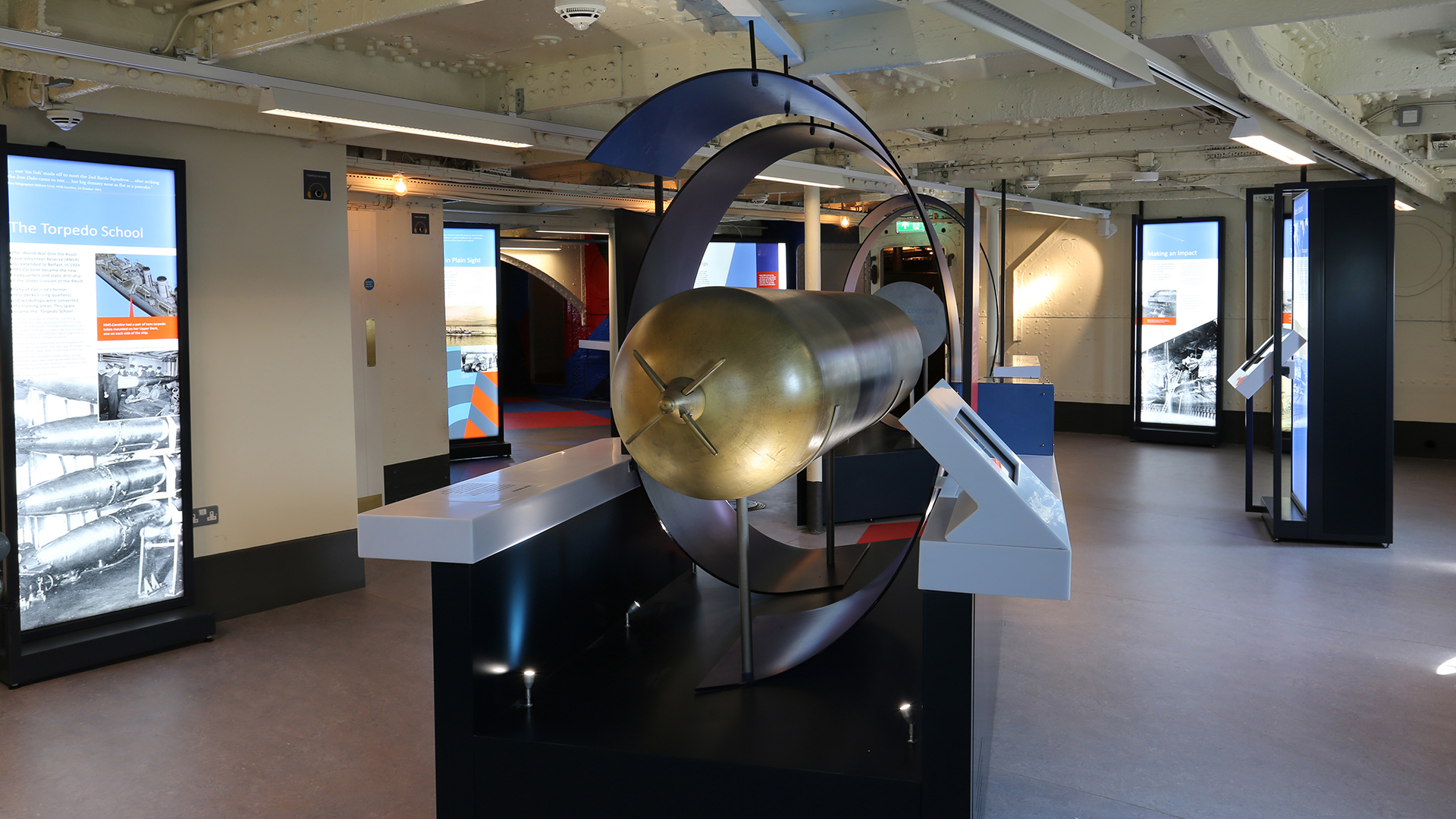
HMS Caroline is a light cruiser built during WW1 and the last surviving ship from the Battle of Jutland in 1916, the largest naval battle in history. In 2016 she opened as a floating museum in Belfast, giving the public a rare opportunity to explore 100 years of her history.
I developed a range of touch screen interactives for HMS Caroline, these are detailed below. One interactive, 'Virtual HMS Caroline', a four user multi-touch installation, has it's own portfolio page here.
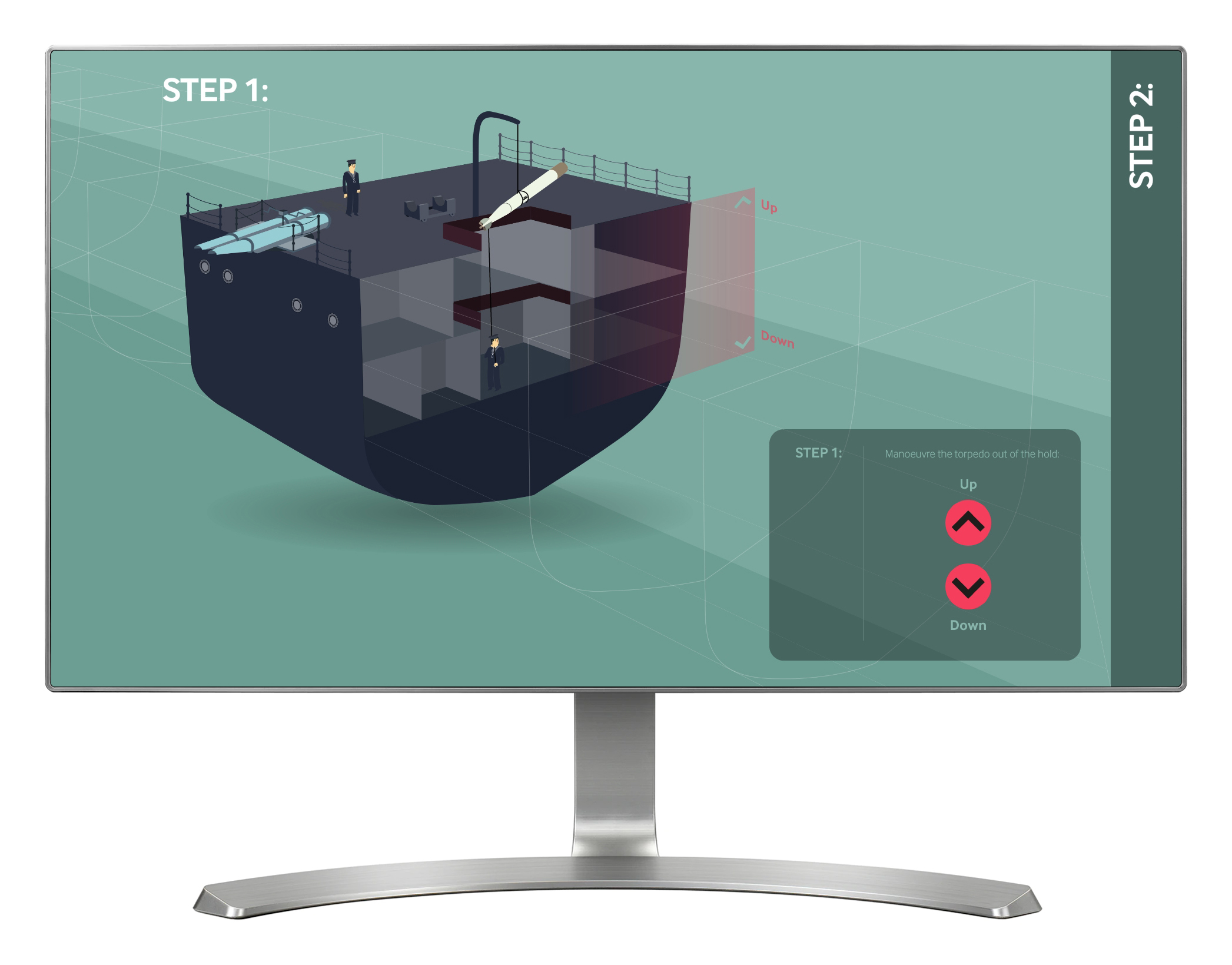
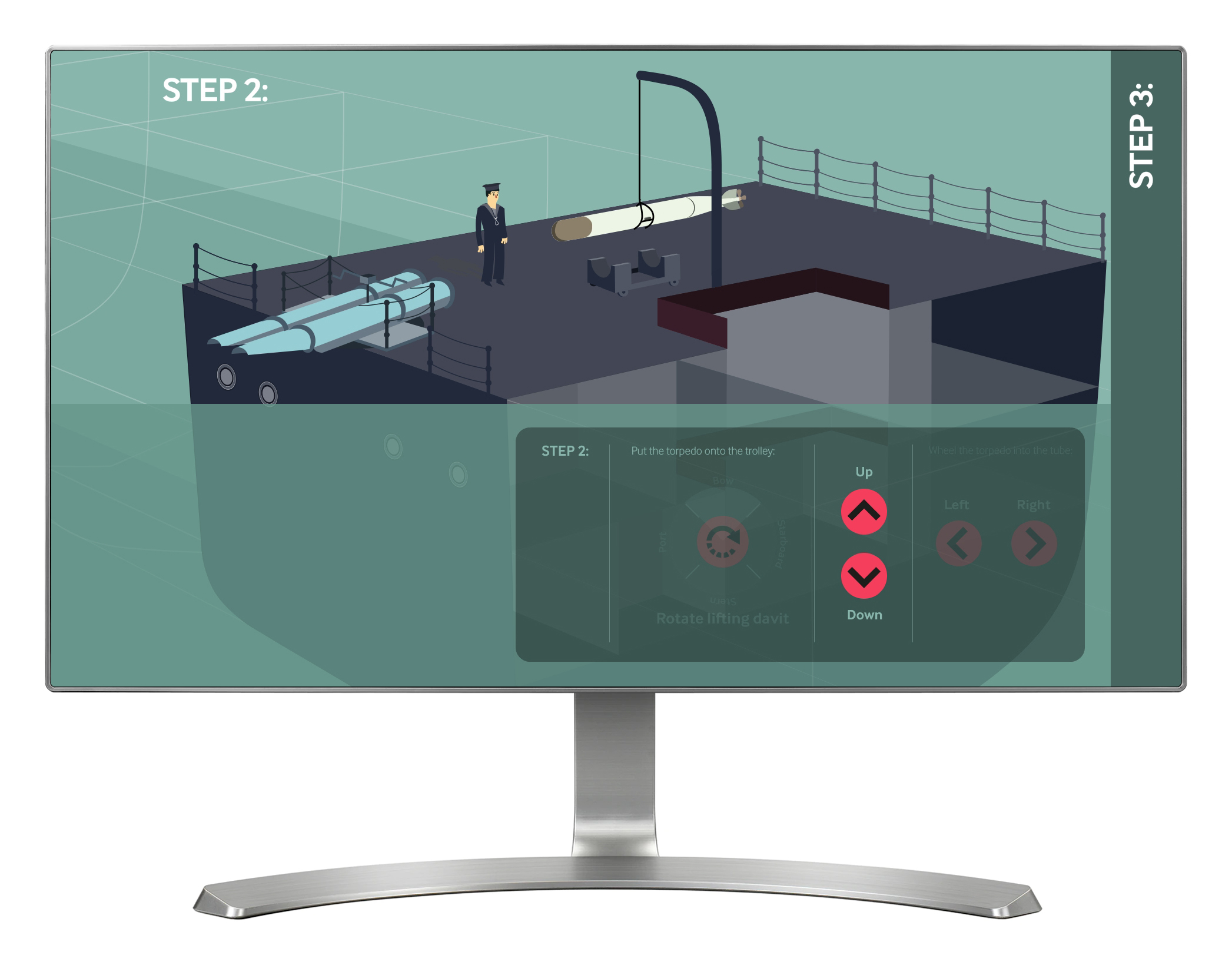
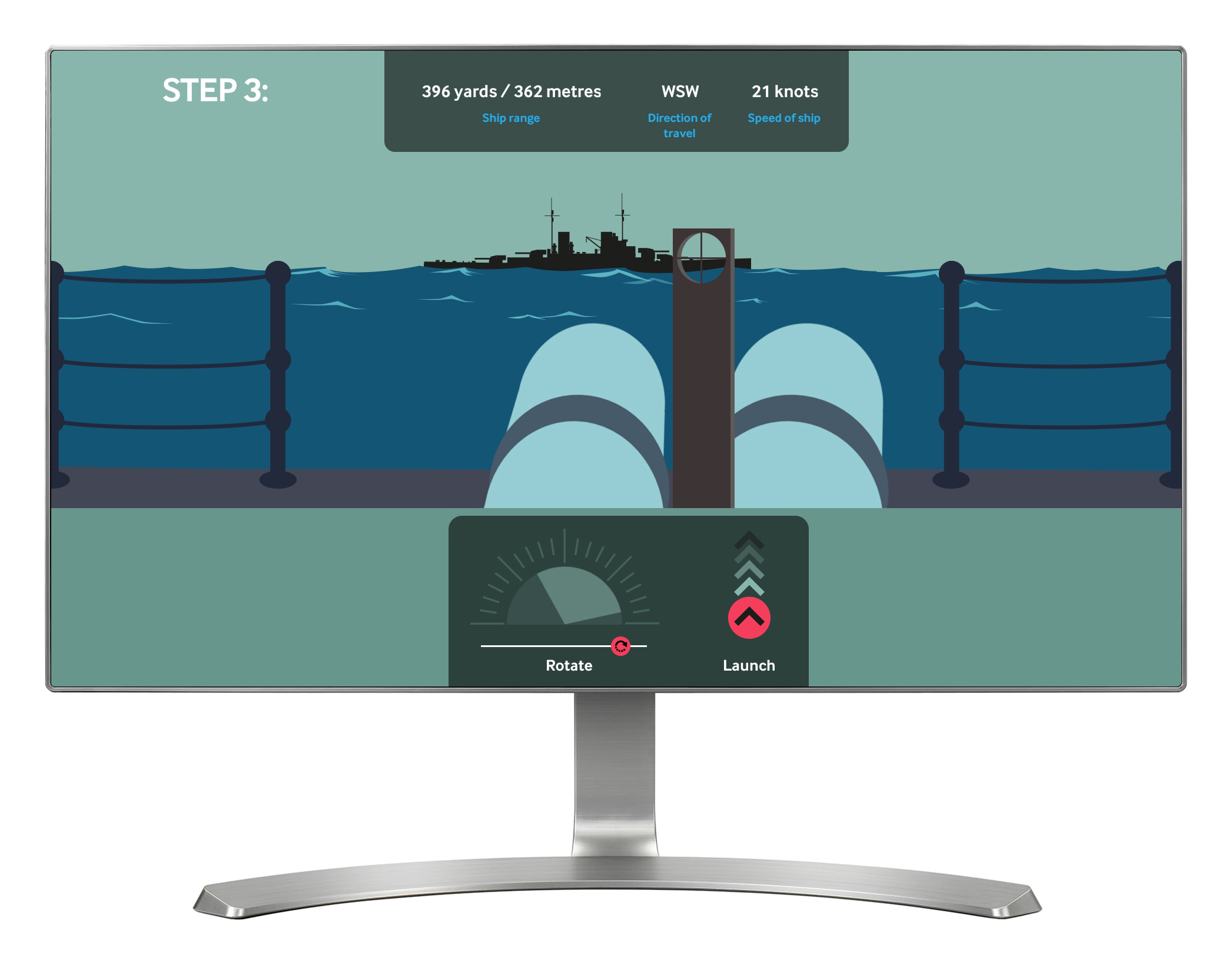
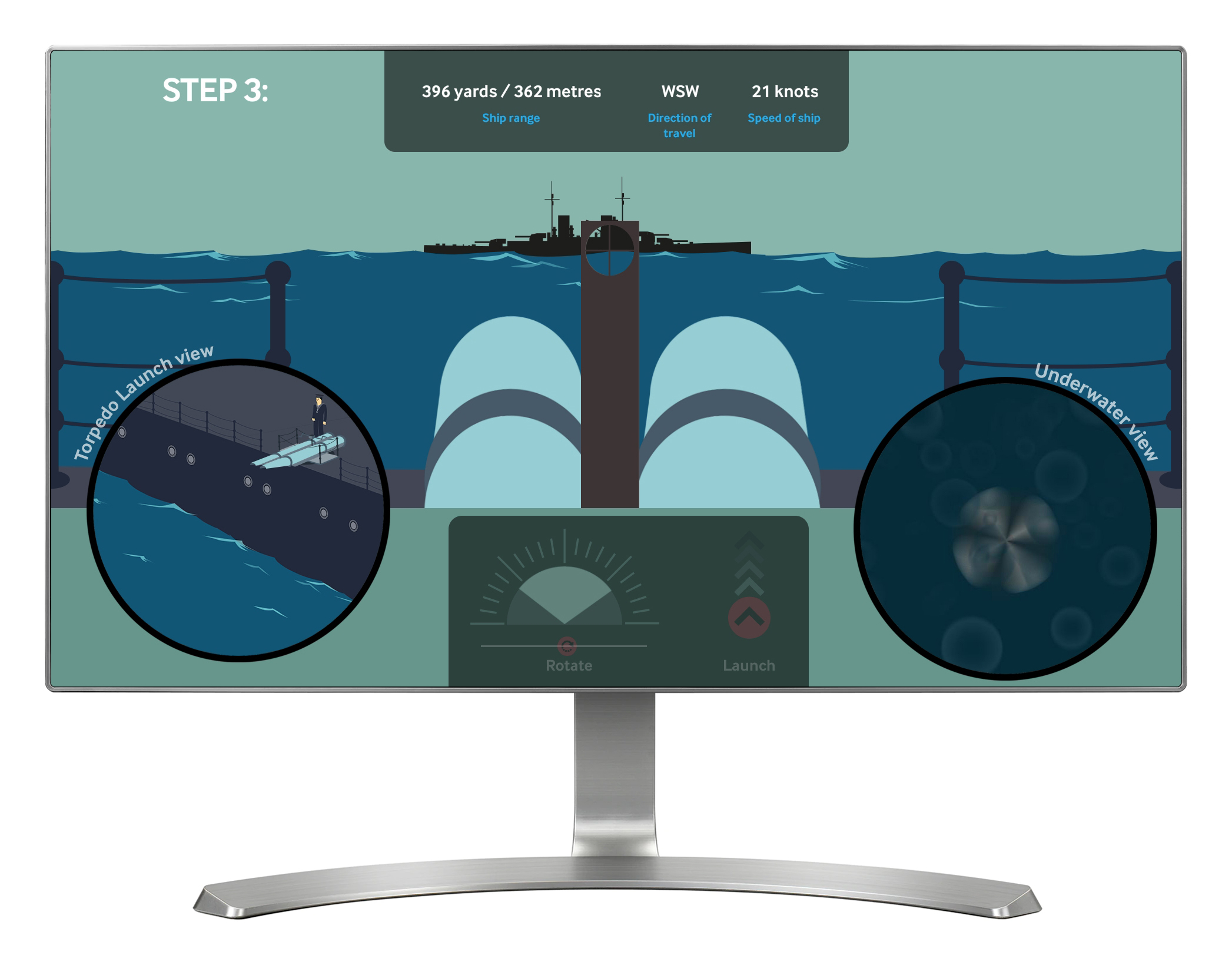
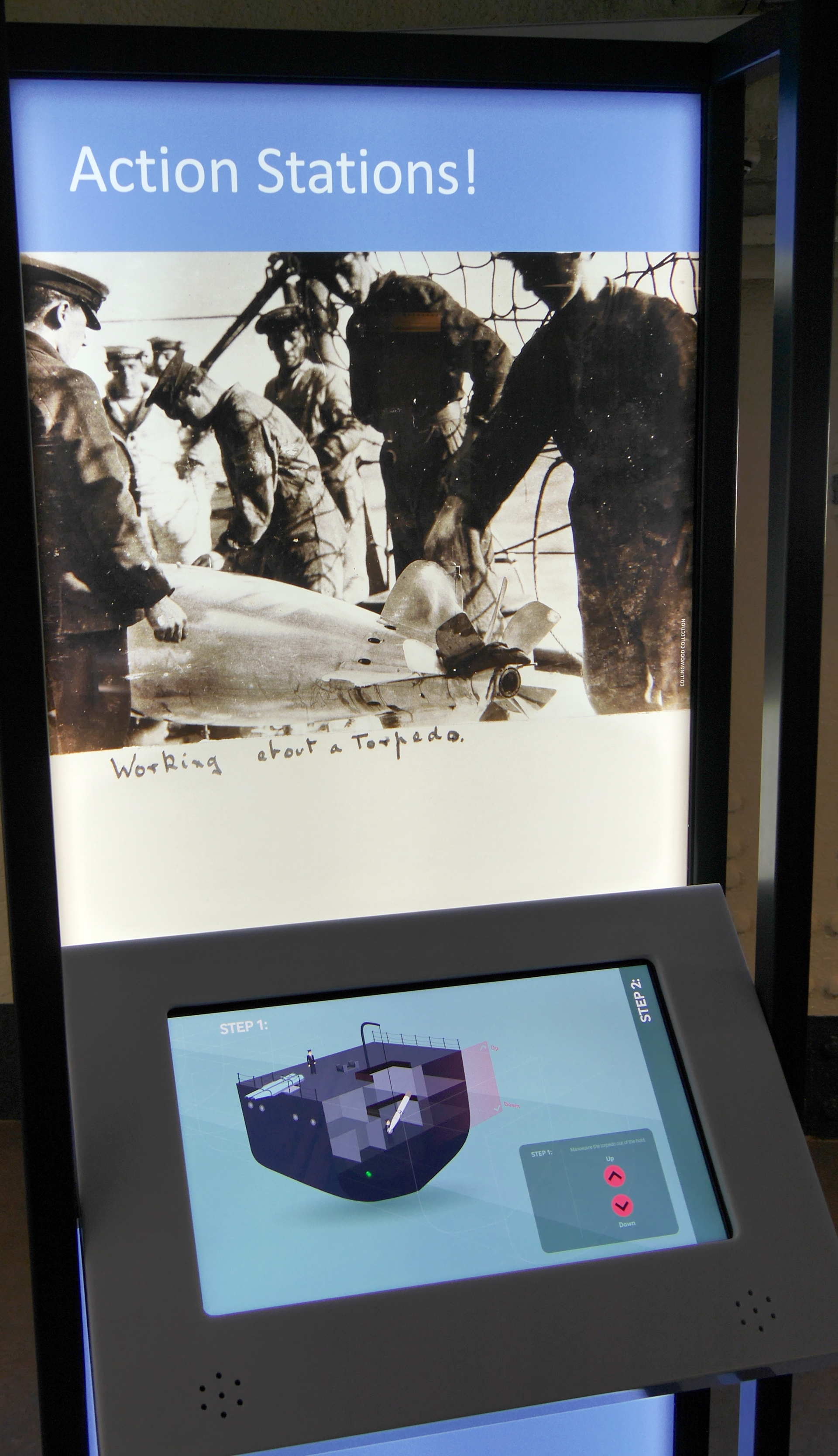
'Action Stations' is an illustrated and animated touch screen game in which visitors have to manoeuvre a torpedo from the ships store, through the ship and onto a launcher, and then take aim and fire it at an enemy ship.
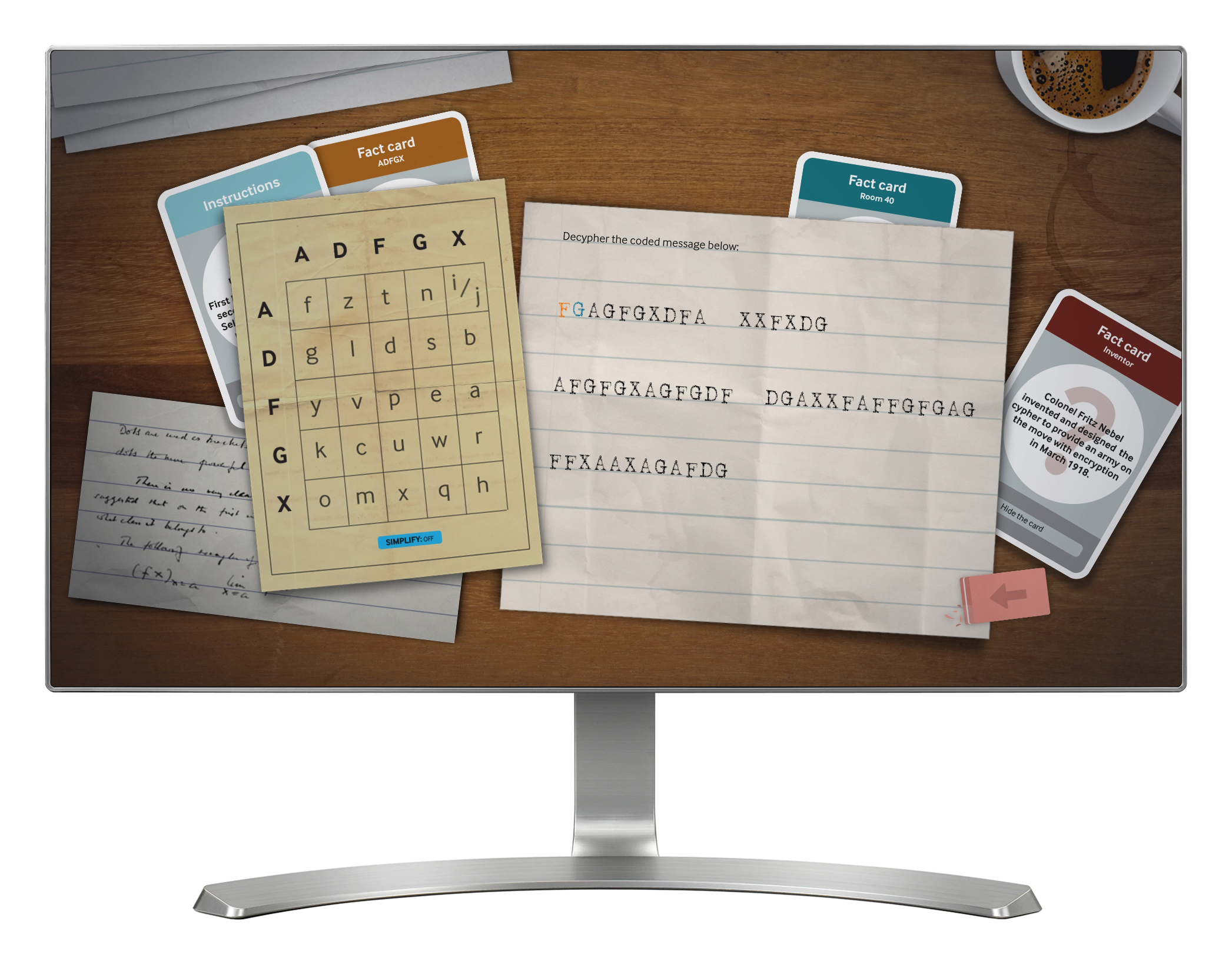
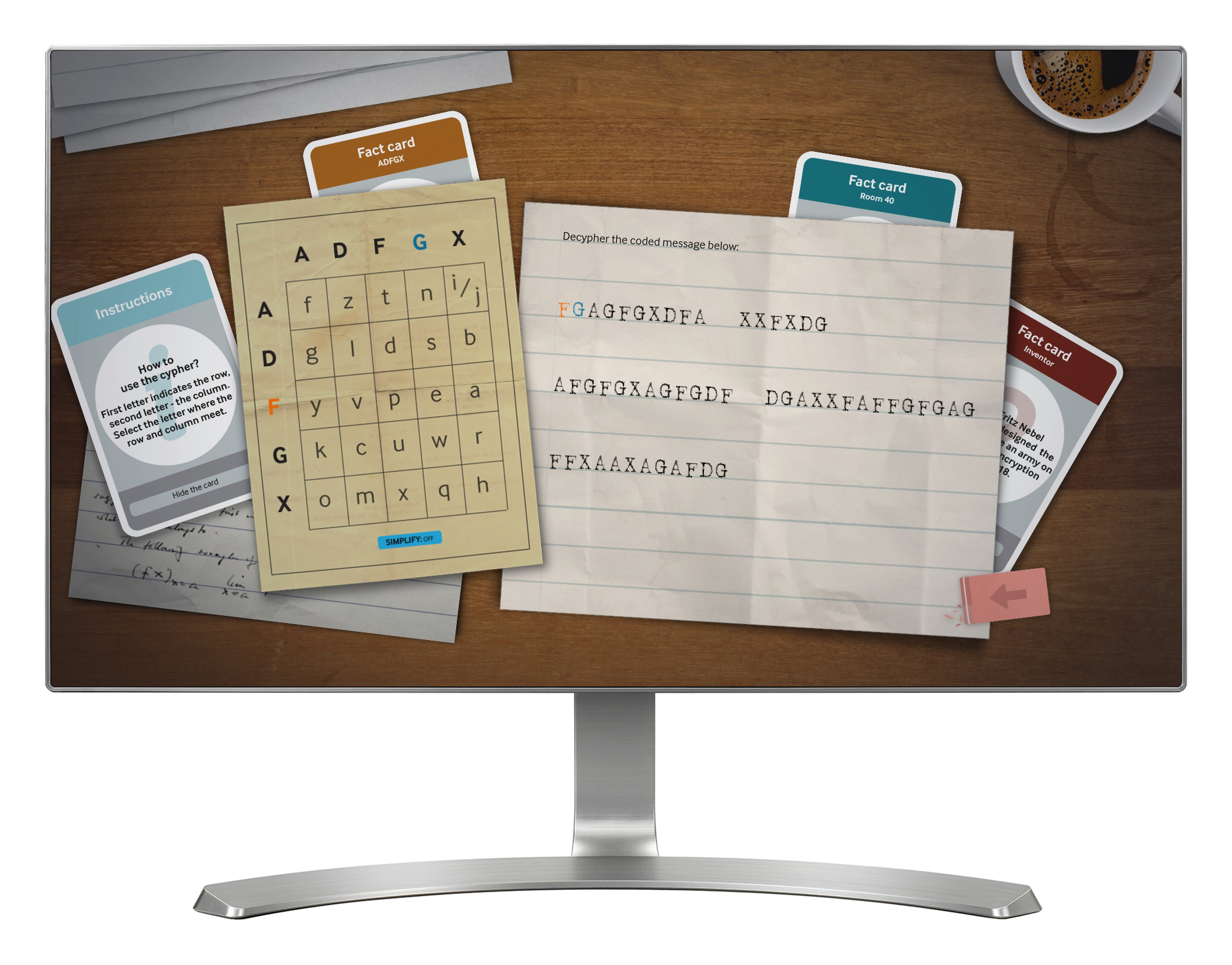
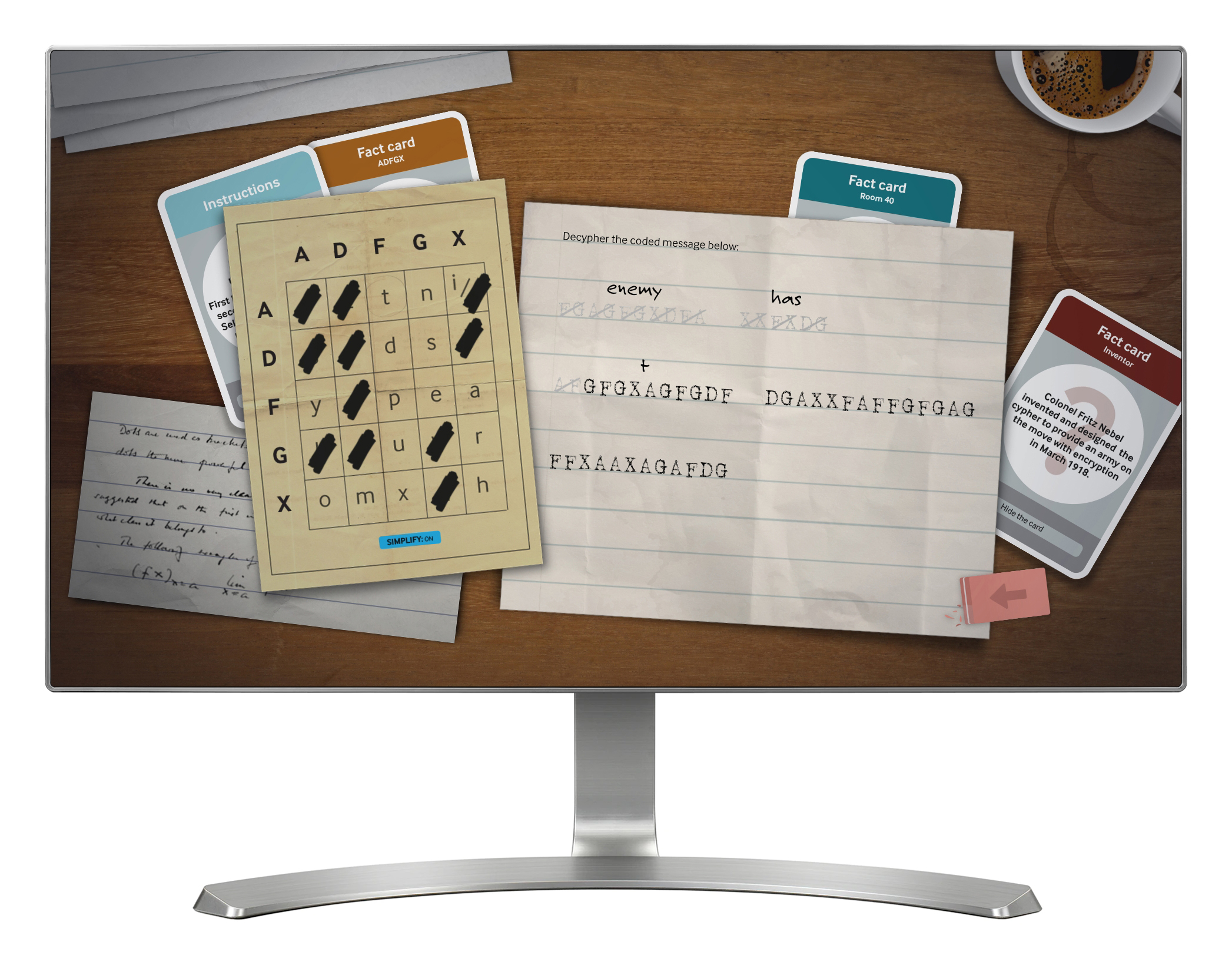
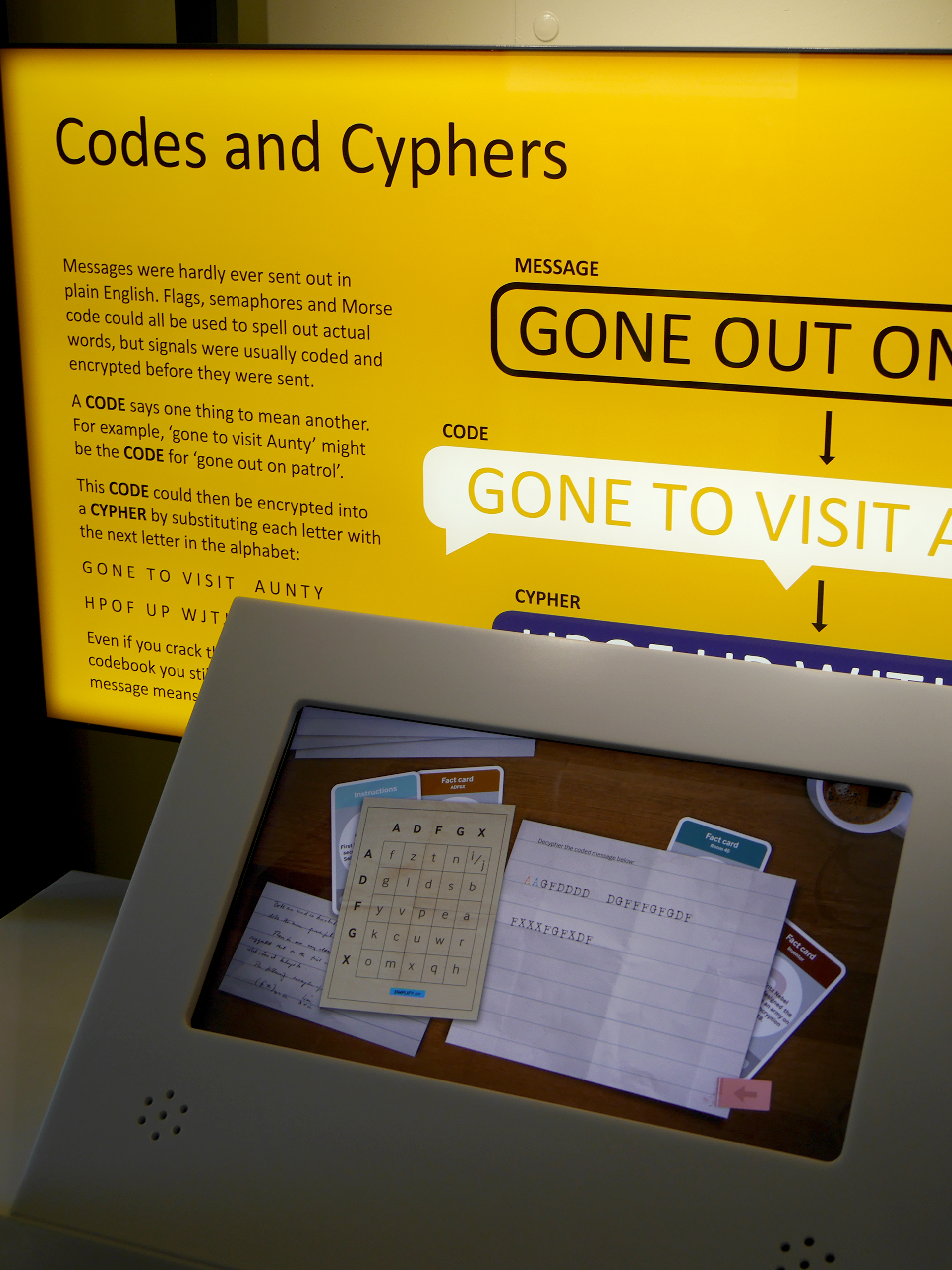
In 'Crack the Code', visitors learn about decoding messages through gameplay. A short message has to be decoded using a simple letter grid. Users are walked through the process of decoding the first few letters in the message. After this, there is an option to simplify the game if some assistance is needed. There is also a selection of playing cards scattered around the interface, each of these contains a fact, hint or tip.
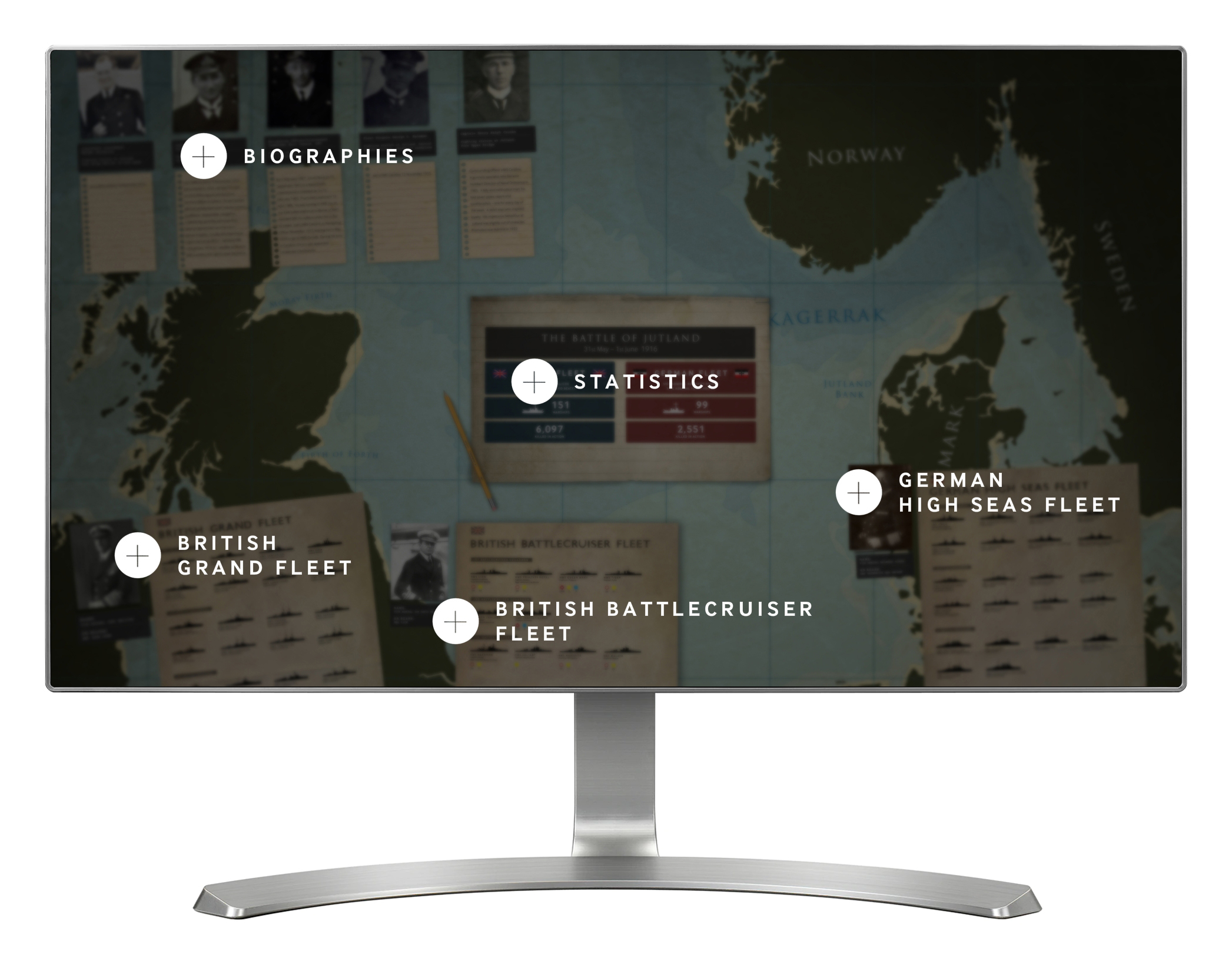
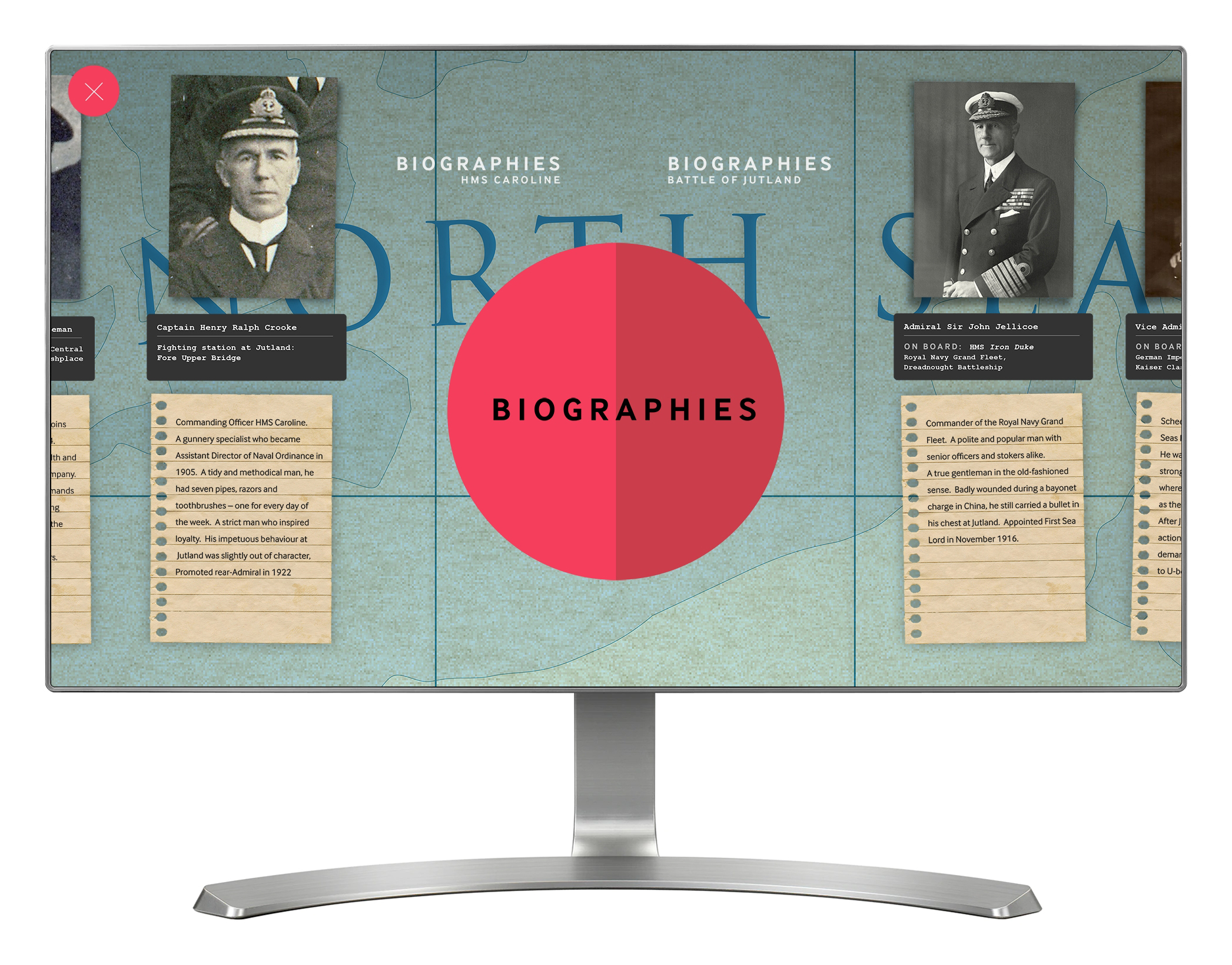
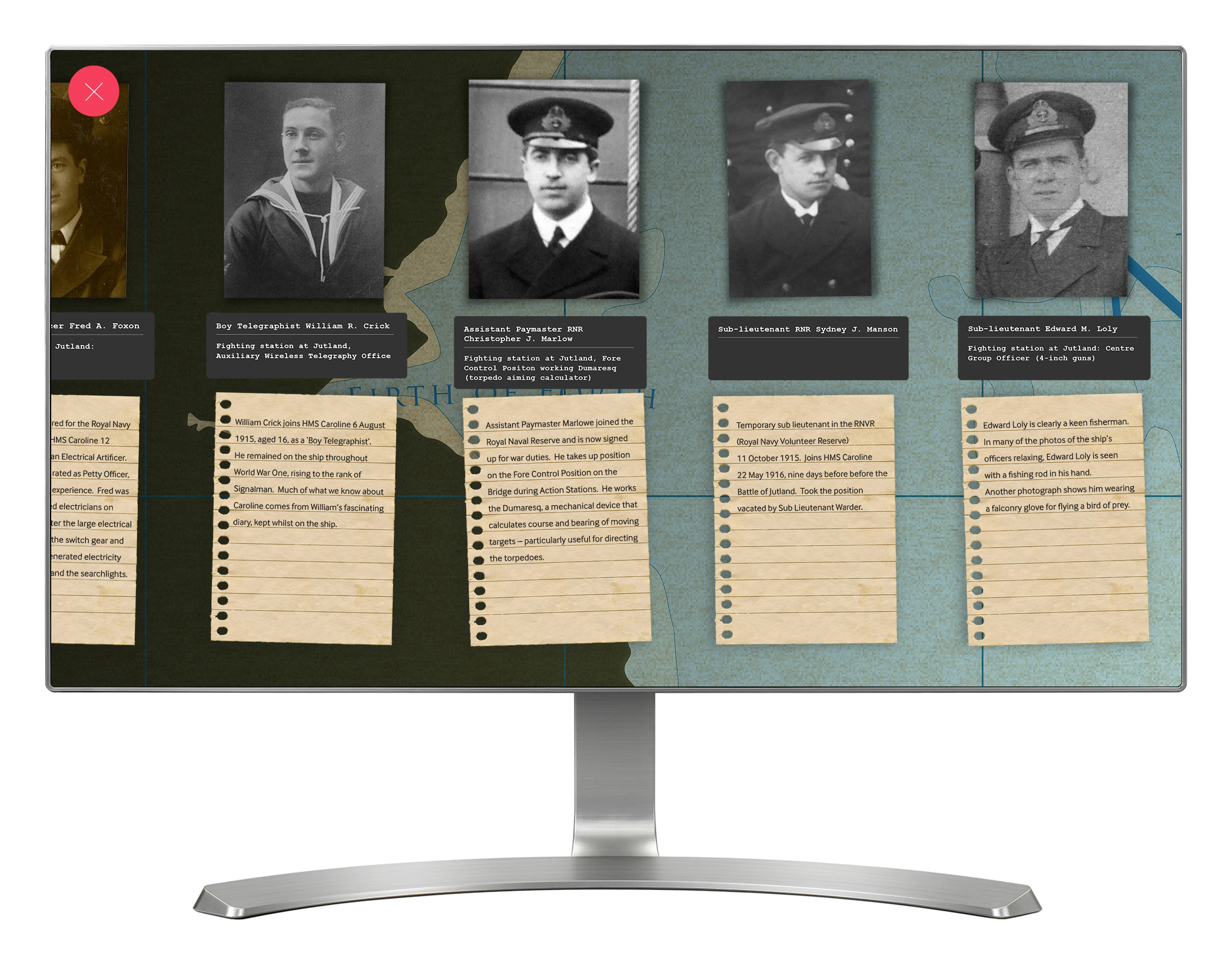
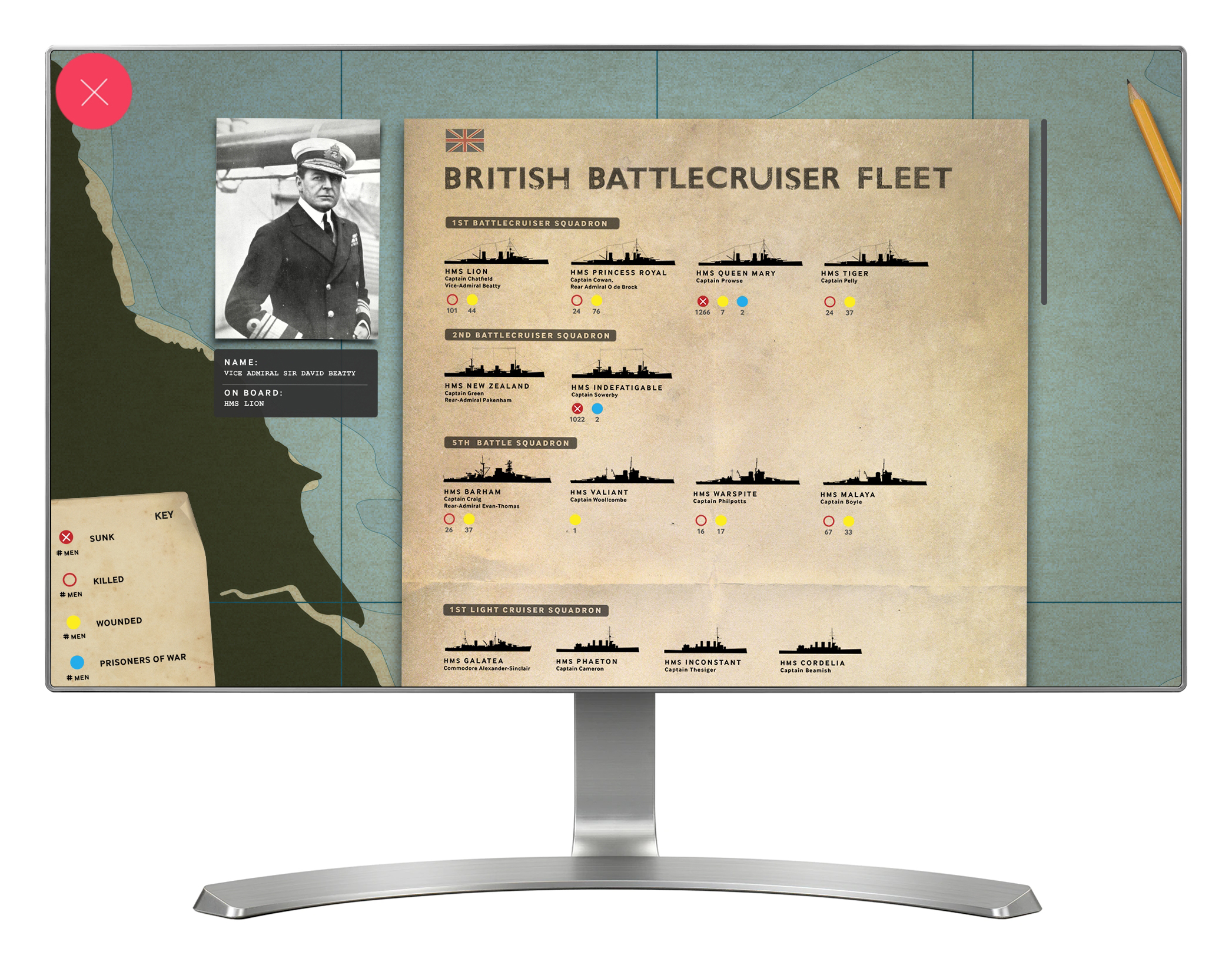
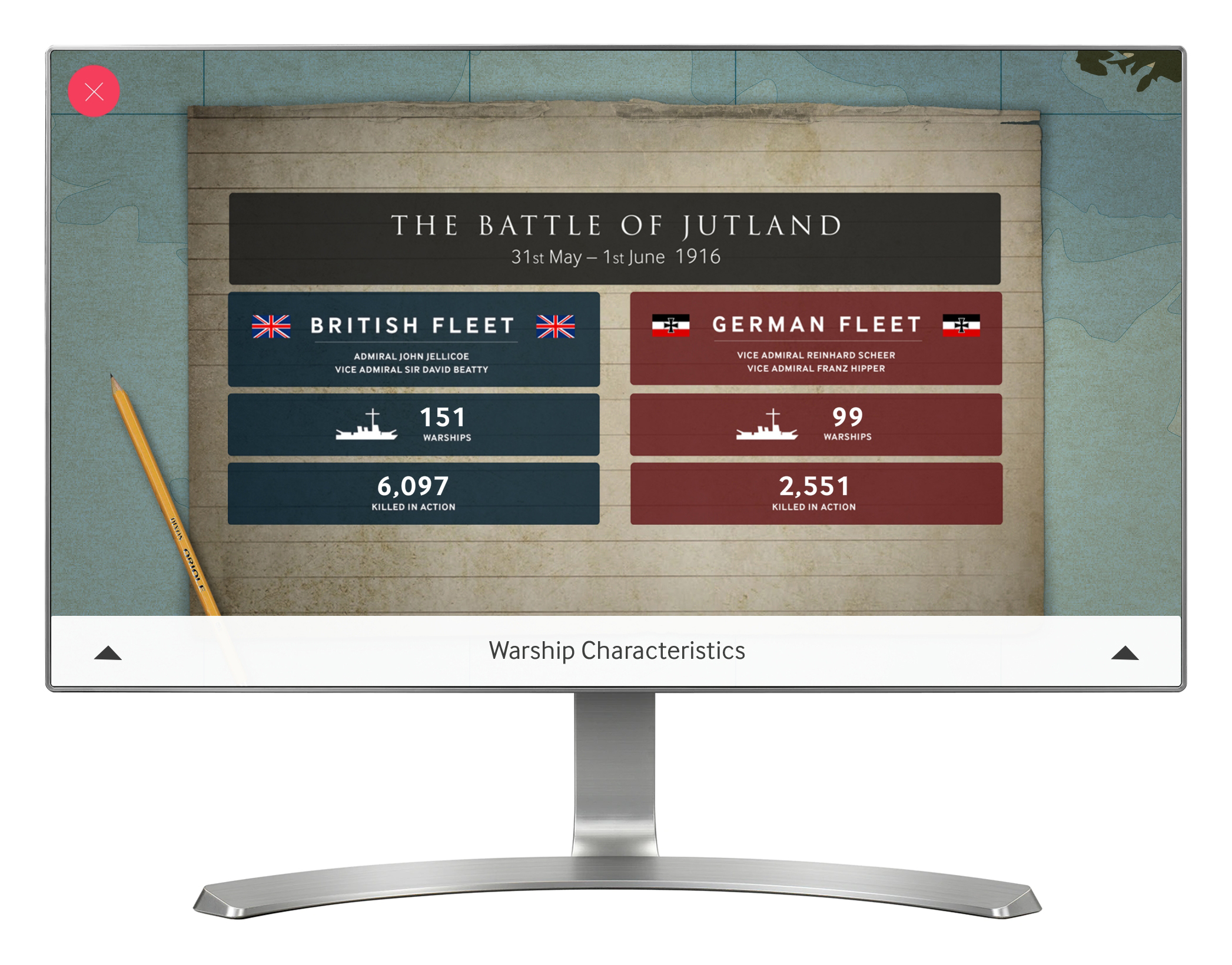
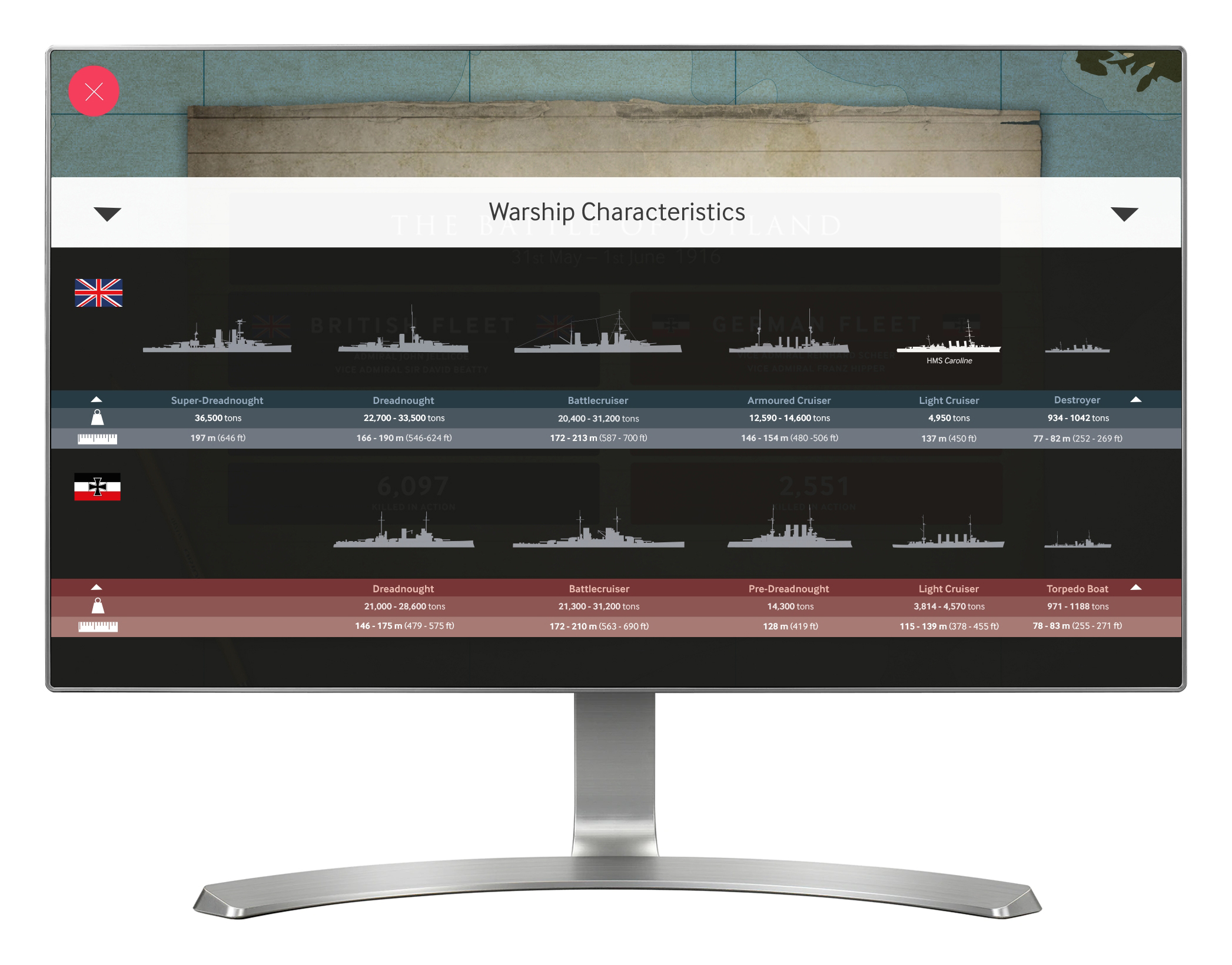
'Fleet Explorer' provides an overview of the men and ships that were involved and lost in the Battle of Jutland, on both the British and German sides. There are biographies of the key people, and details of every ship involved, including how many men on each were killed or wounded. A statistics screen shows a simplified tally of the total numbers of ships and men. A warships screen shows the key details of each class of warship involved.
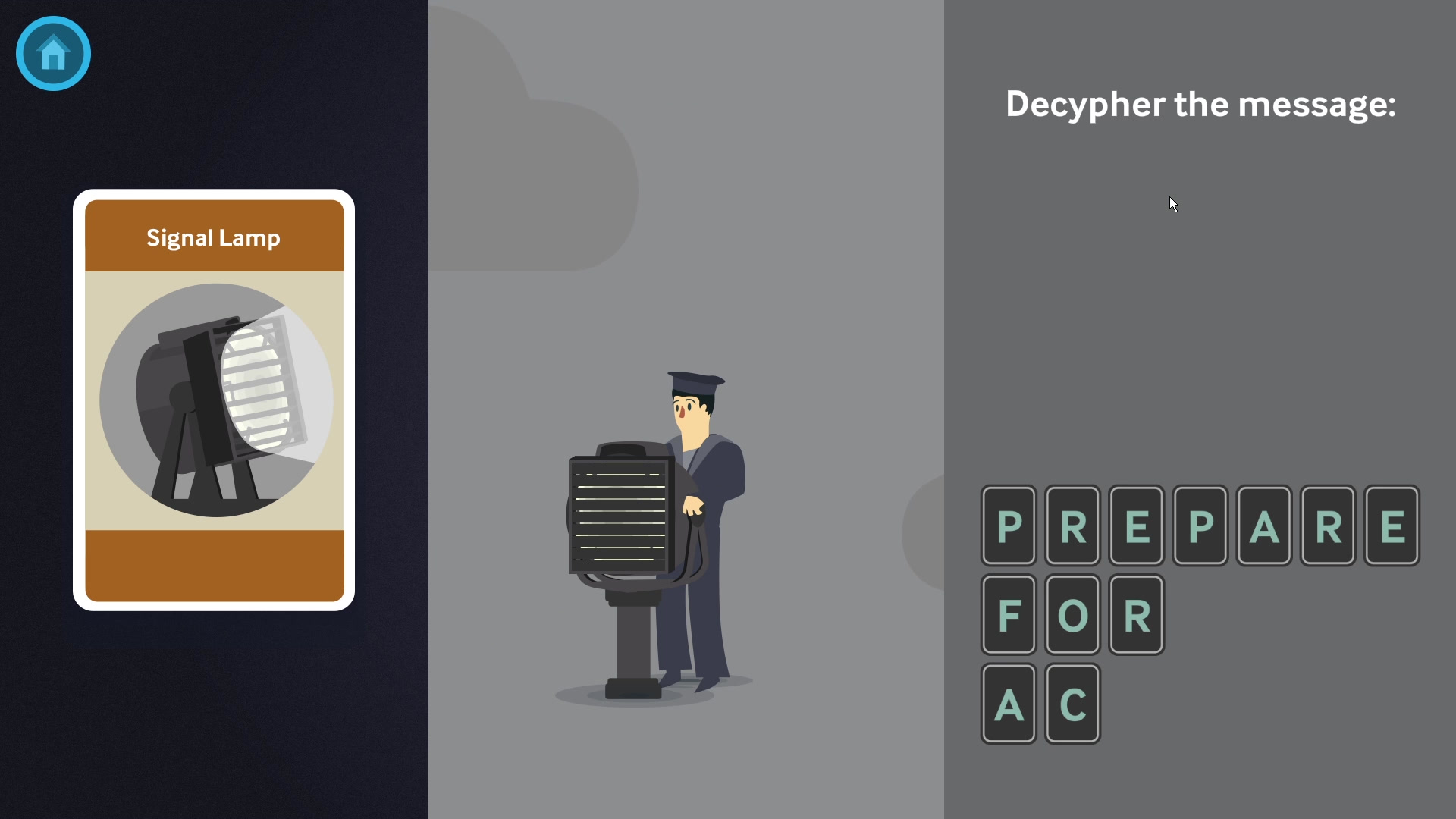
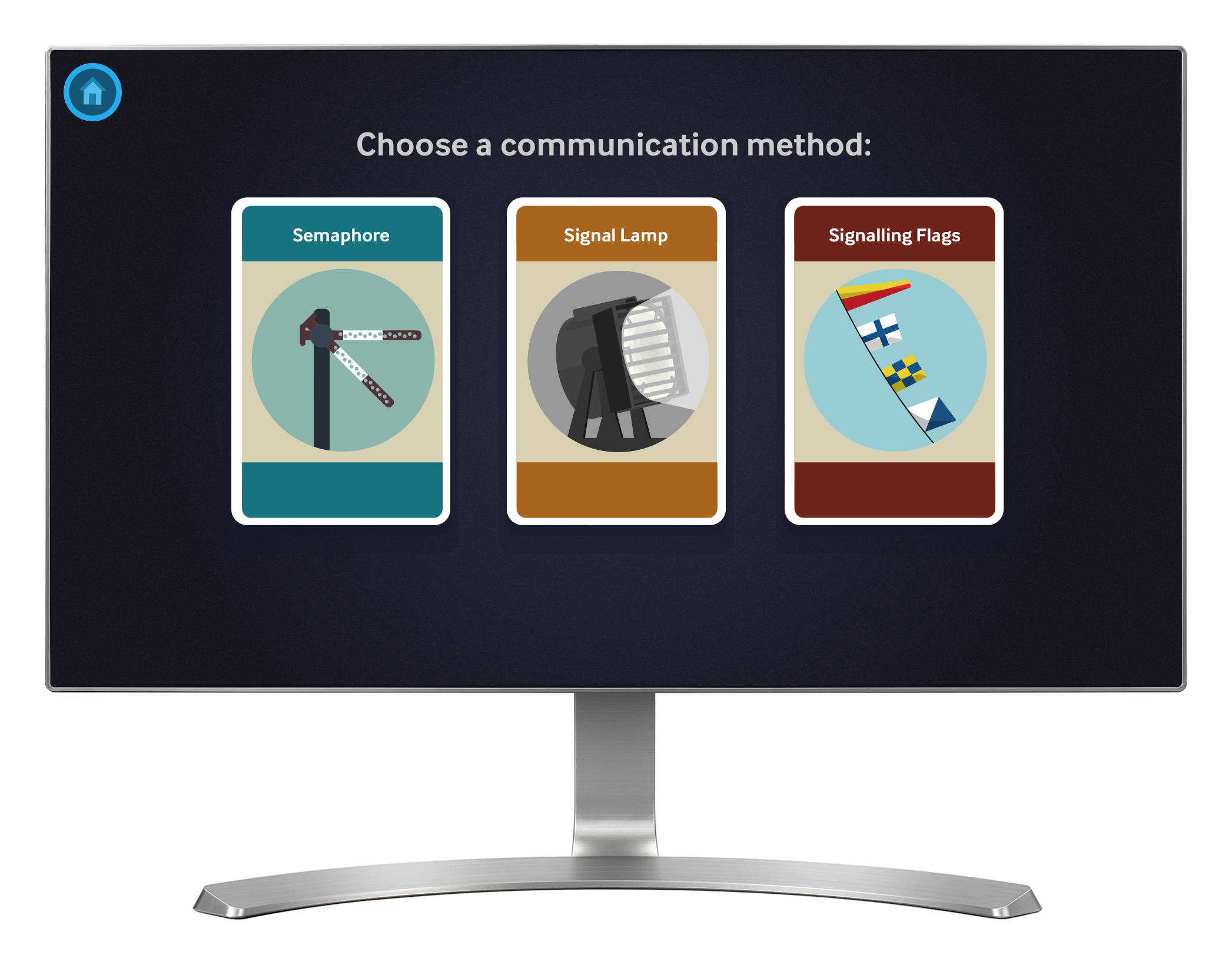
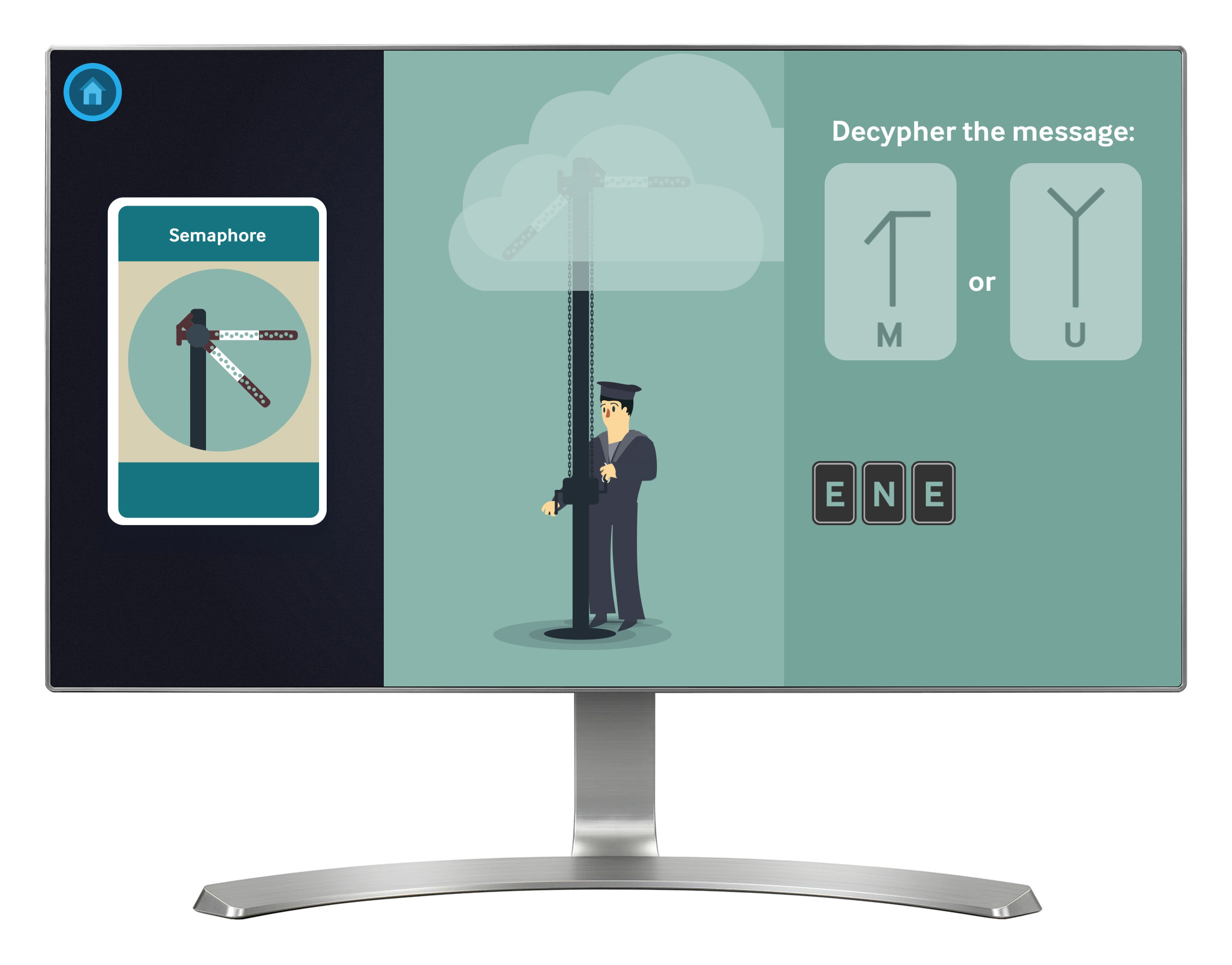
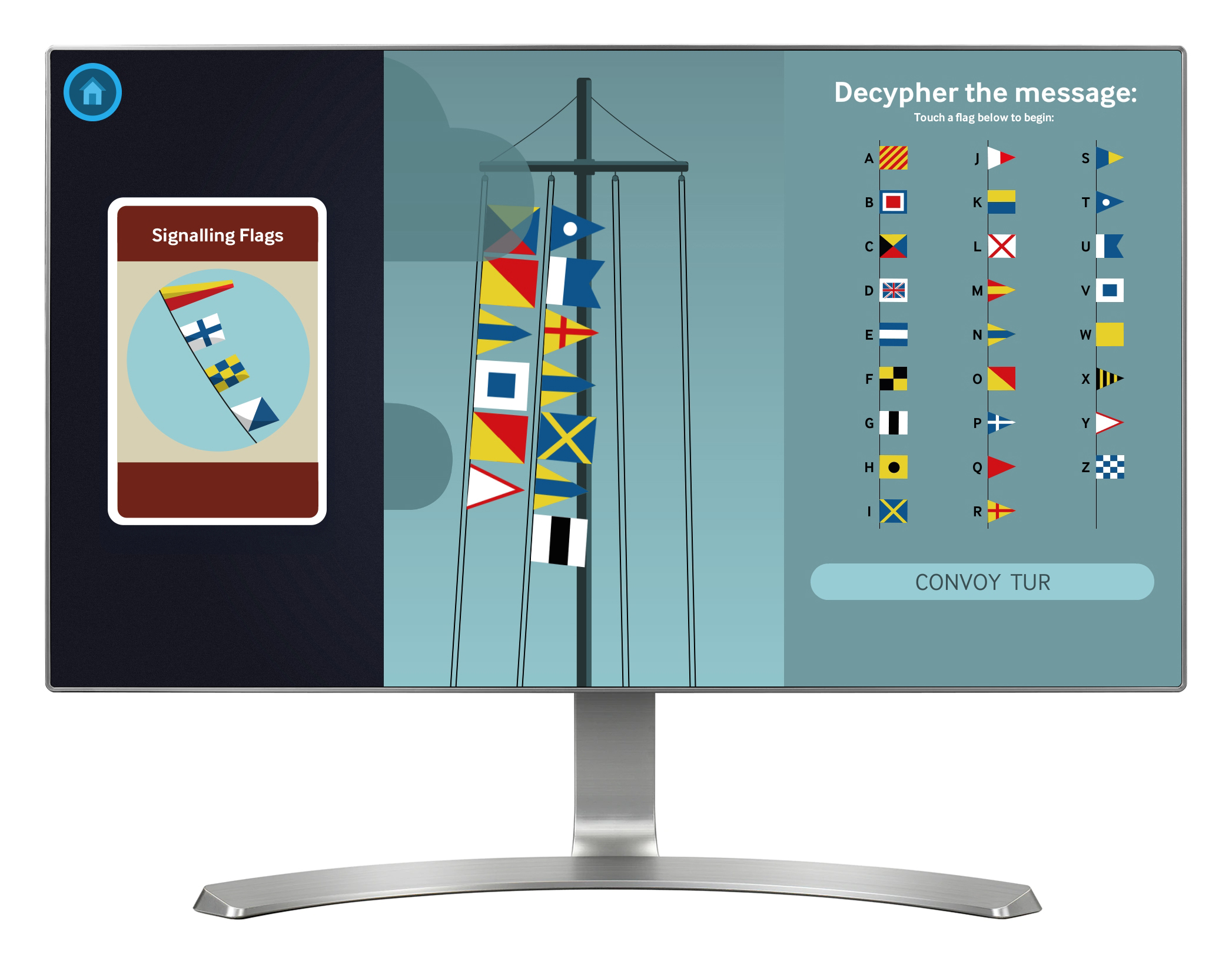
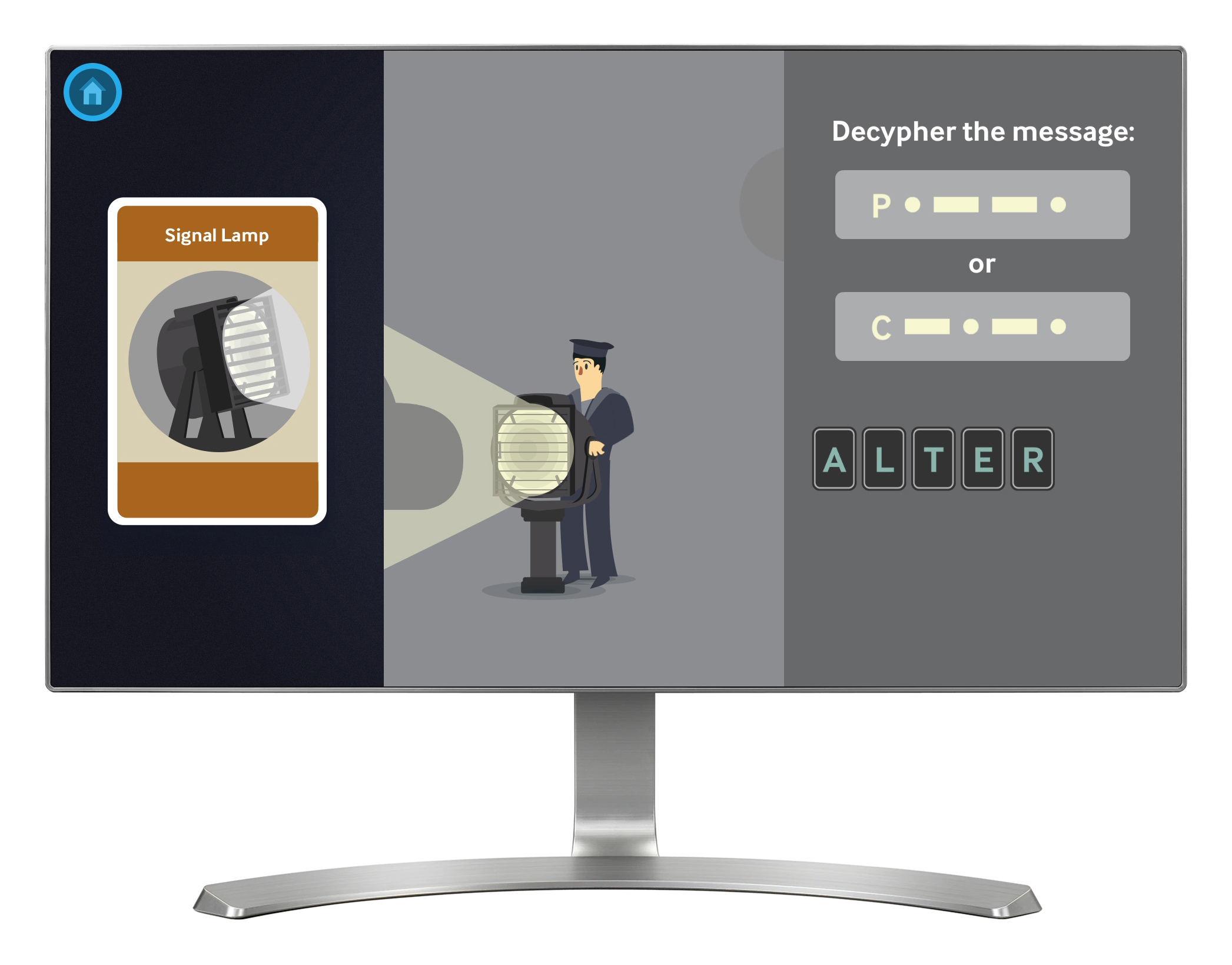
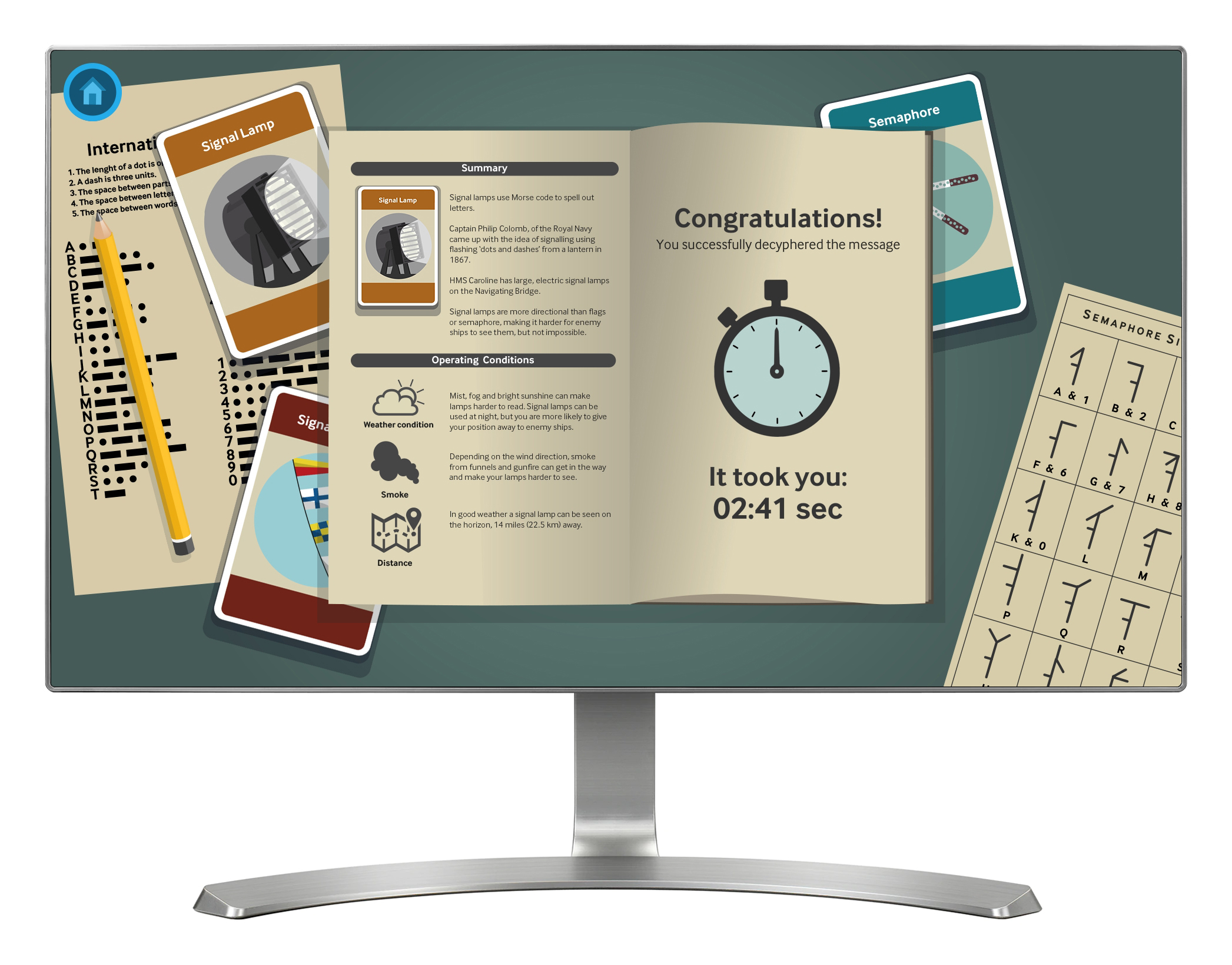
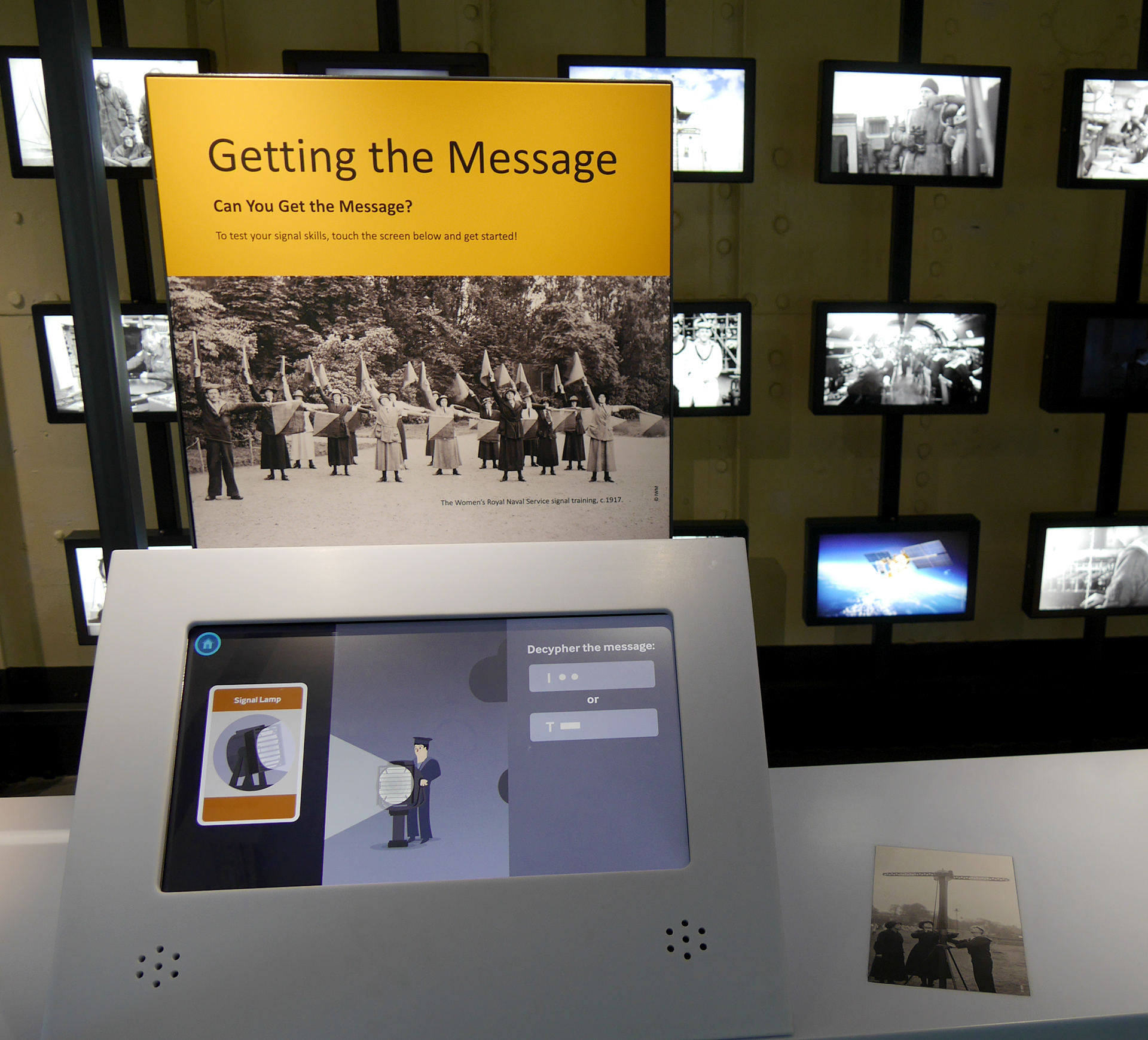
'Getting the Message' is another touch screen game, and is all about signals and communications. Visitors can choose from three types of communication: semaphore masts, signalling flags and morse code signal lamps. A message is spelt out one letter at a time, and visitors have to work out each letter in order to reveal the message. At the end of each game visitors see how well they have done, and are presented with more information about their chosen method of communication.
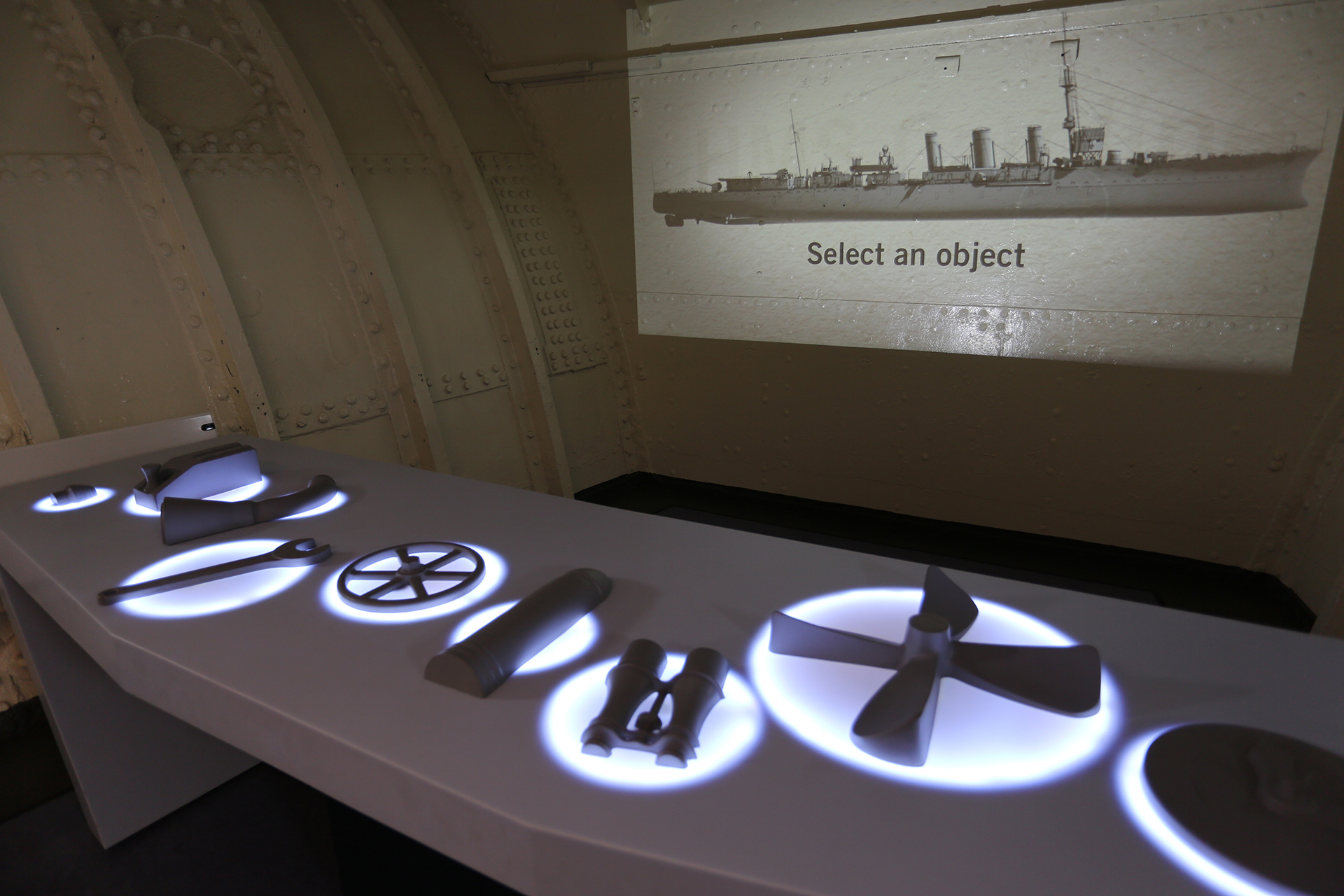
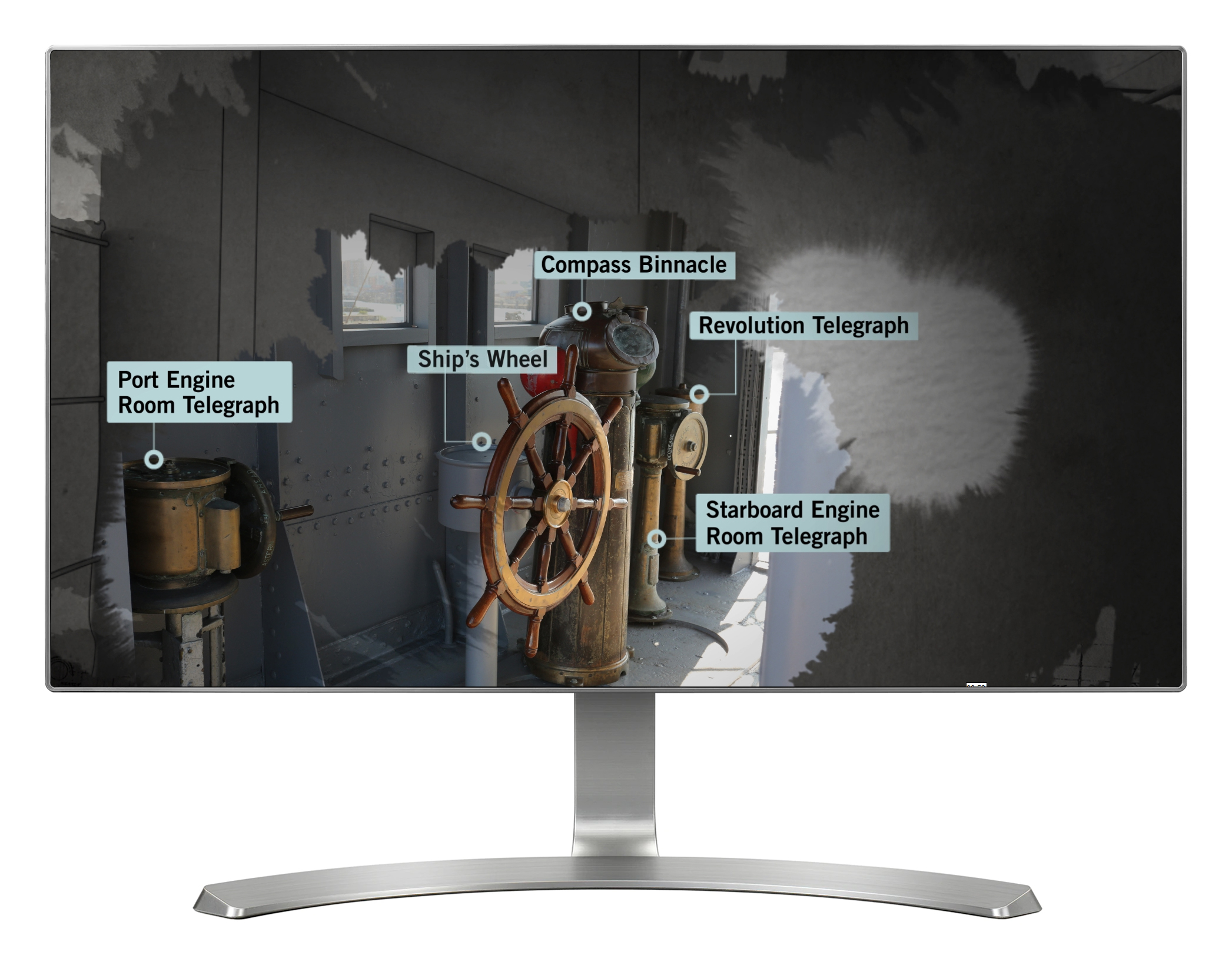
'How She Worked' lets visitors watch a narrated tour to nine key areas on the ship. By touching a physical object on a tabletop, visitors can trigger a video sequence to play, projected onto the wall in front of them. Areas of the ship include the guns, engine and boiler rooms, navigation and communication systems, torpedo workshop and steering gear.
'Media Archive' is a touch screen, searchable archive of historical and modern day images and videos. There are five installations of this interactive onboard HMS Caroline, three of them provide access to content themed around people and individuals, and the other two installations provide access to archive and conservation media. In each installation the content is organised into nine categories. Visitors can choose a category in order to see a Pinterest-style scrolling menu of thumbnails in that category. Selecting a thumbnail opens up that media item in full, revealing an image or video and accompanying text information. Additionally, visitors can use the on-screen keyboard to search all the media items by keyword and refine their selection. The content can be fully edited by the client using a content management system (CMS). This provides the ability to edit all records, add new records and remove existing records.
'Razzle Dazzle' is all about the camouflage that was used to make it harder for the enemy to identify ships, or determine their distance and direction. An introduction screen sets the scene, after which visitors can explore an interactive fact file library of razzle dazzle ships. Visitors can also design their own ship camouflage and see how well it works against the enemy.
'The Battle of Jutland' is an interactive video player that takes visitors through all of the key moments in the battle. Left to play on it's own, the interactive will show the battle from start to finish, but visitors can interrupt at any time to navigate to any of the key moments.
In addition to developing the software, I was a key player in the concept development of many of these interactives. I also managed the text, video and image content that was provided from the client team for the Media Archive interactive. I oversaw the on-site installation and setup of all the software interactives onboard HMS Caroline.
Credits
Simon Kendrew: Software development, concept development, content management, CMS documentation & client training, on-site installation, installation photos.
AY-PE: Concept & interface development, installation photos.
Jef Maytom: Installation photos
Developed for AY-PE while self-employed as Interactive Software Developer.