HMS CAROLINE
VIRTUAL BRIDGE
2024
HMS Caroline is a light cruiser built during WW1 and the last surviving ship from the Battle of Jutland in 1916, the largest naval battle in history. In 2016 she opened as a floating museum in Belfast, giving the public a rare opportunity to explore 100 years of her history.
I previously developed a range of touch screen interactives for HMS Caroline, you can find out about these here, and also read about 'Virtual HMS Caroline', a four user multi-touch installation, it has its own portfolio page here.
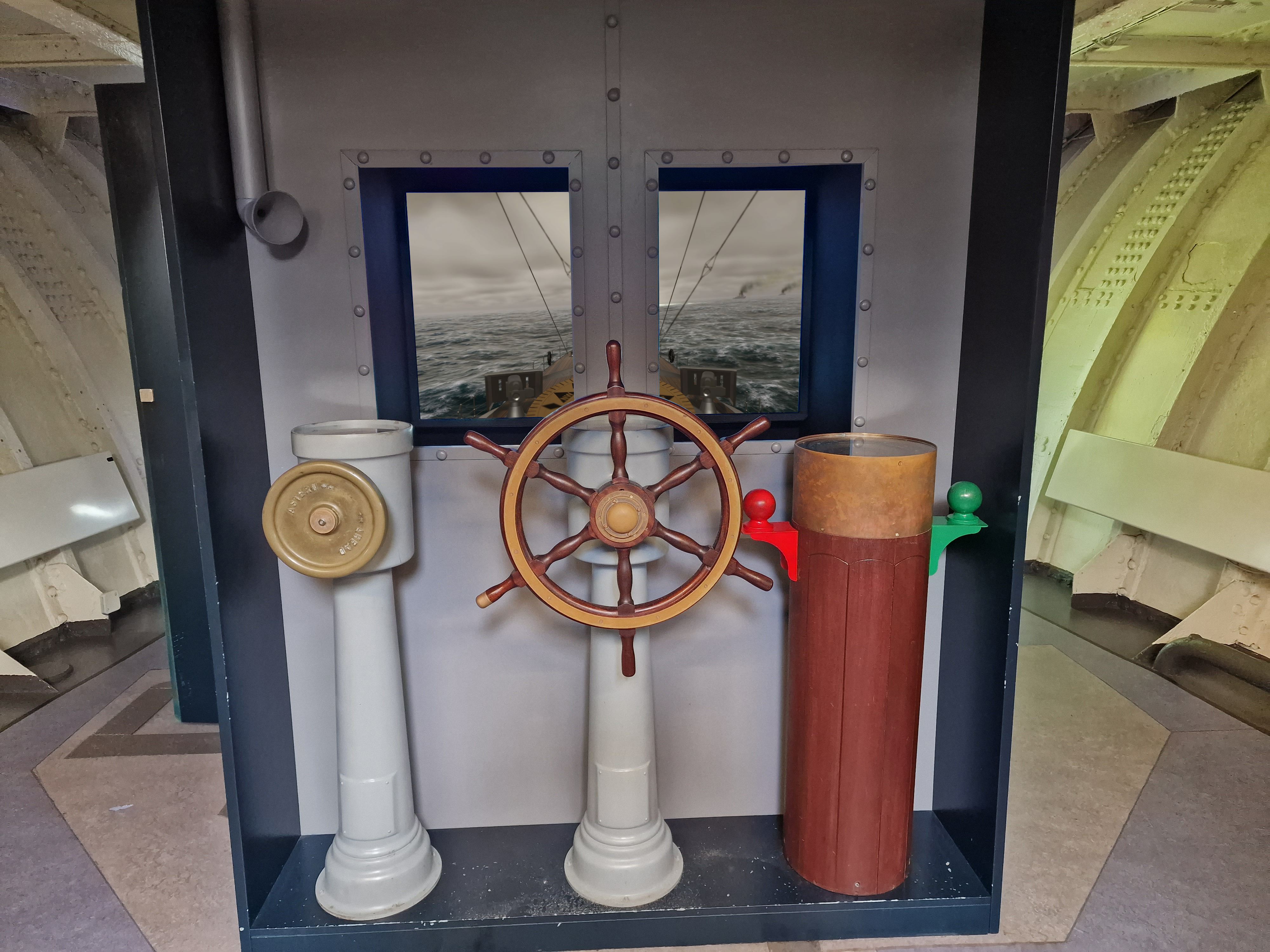
During the development of these previous interactives, there was another interactive called Virtual Bridge. Due to time constraints this was outsourced, and I didn't get to develop it. This was a real-time 3D game that gives visitors an opportunity to control and steer HMS Caroline in order to join a convoy, and maintain position within it until a destination point is reached. Fast forward to 2023, the client got in touch to commission a redesign and redevelopment of the Virtual Bridge game from the ground up. This became my personal project to research, design and develop, reusing only the original sound effects, speech audio clips and 3D model of HMS Caroline from the original version. I had complete freedom to develop the game, constrained only by reusing the audio speech instructions from the previous version of the game, and the existing physical steering wheel and telegraph speed control hardware. The previous version also had a physical rotating compass, but it was decided to replace this with a virtual on-screen compass instead.
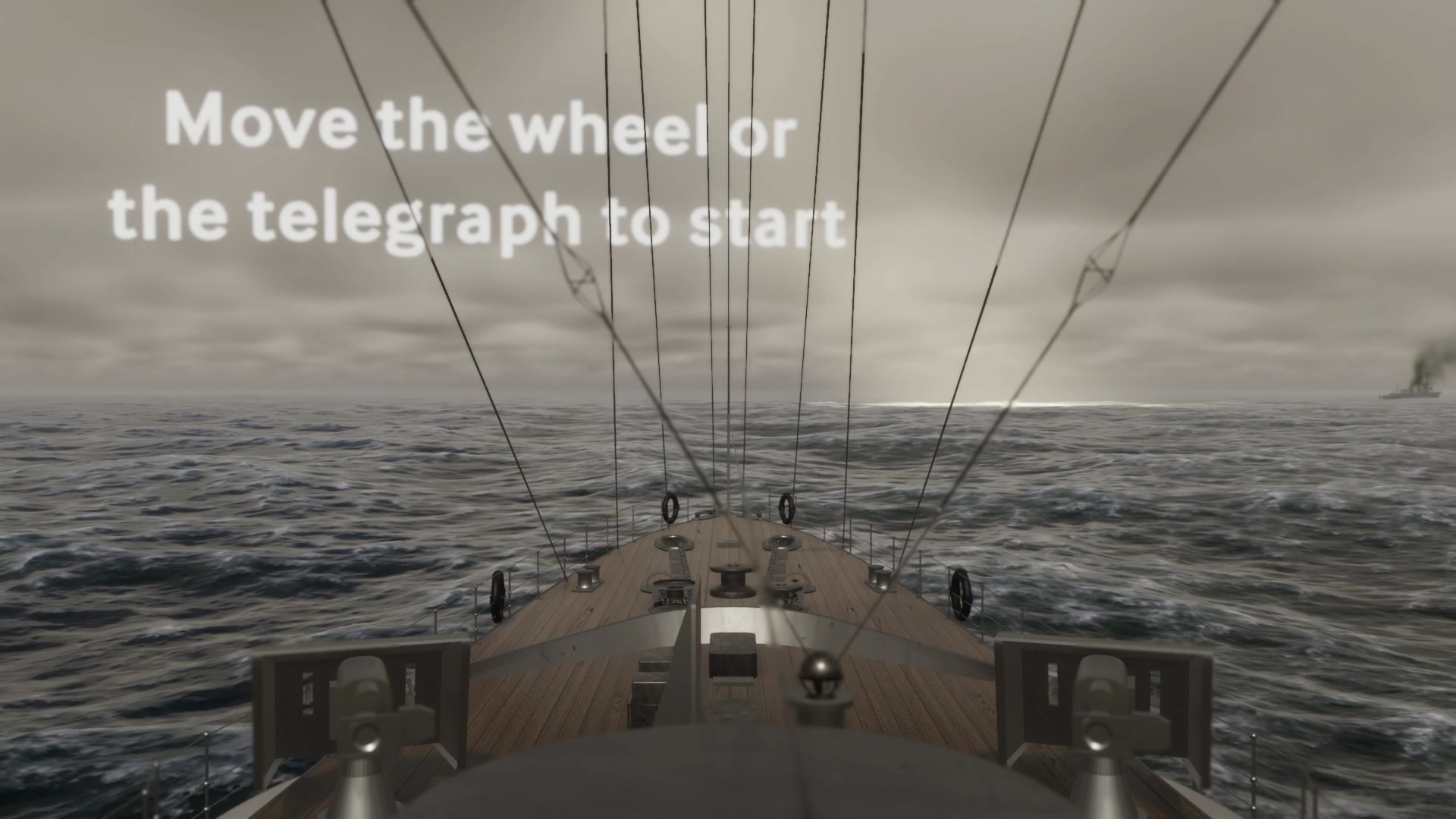
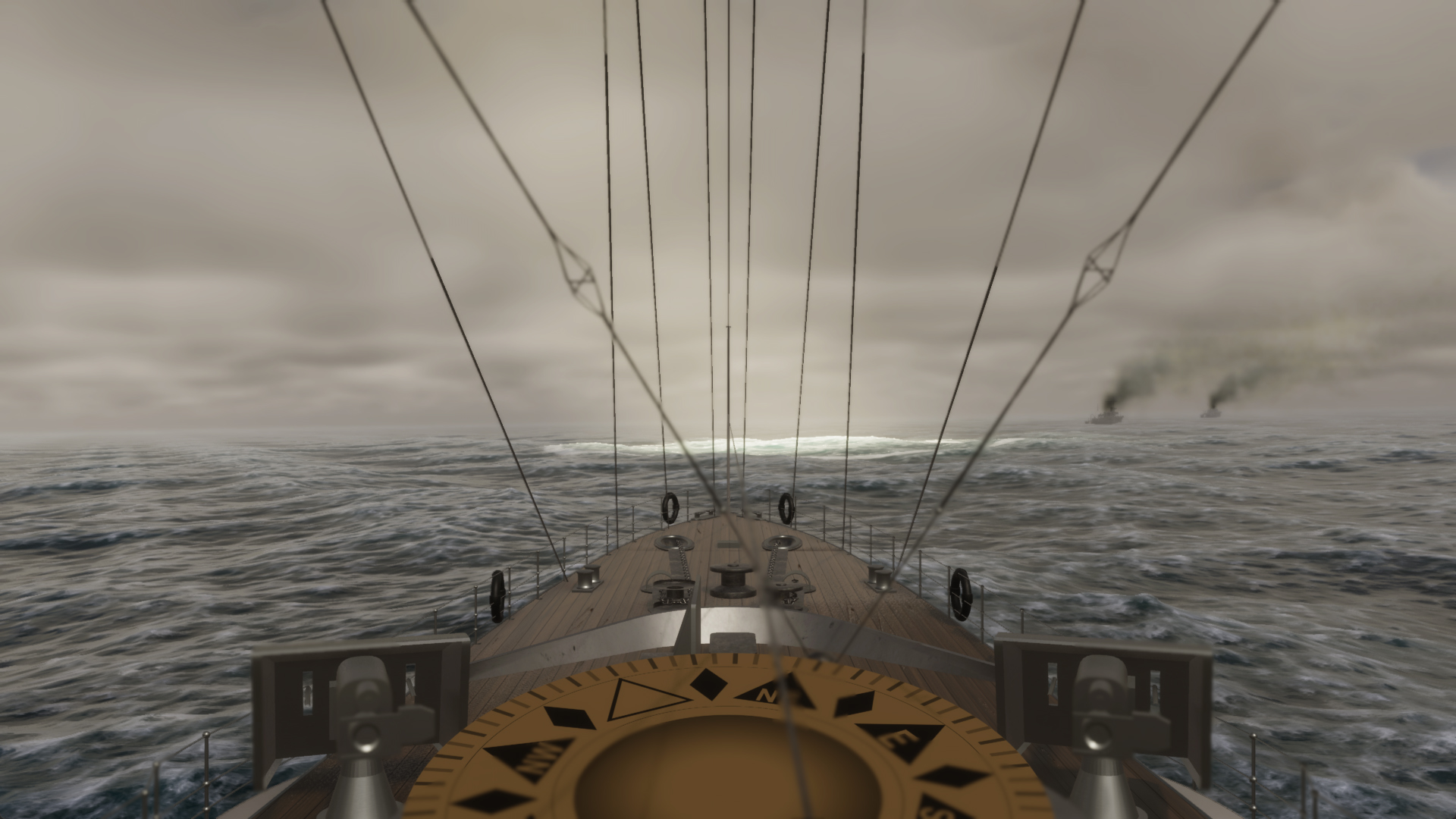
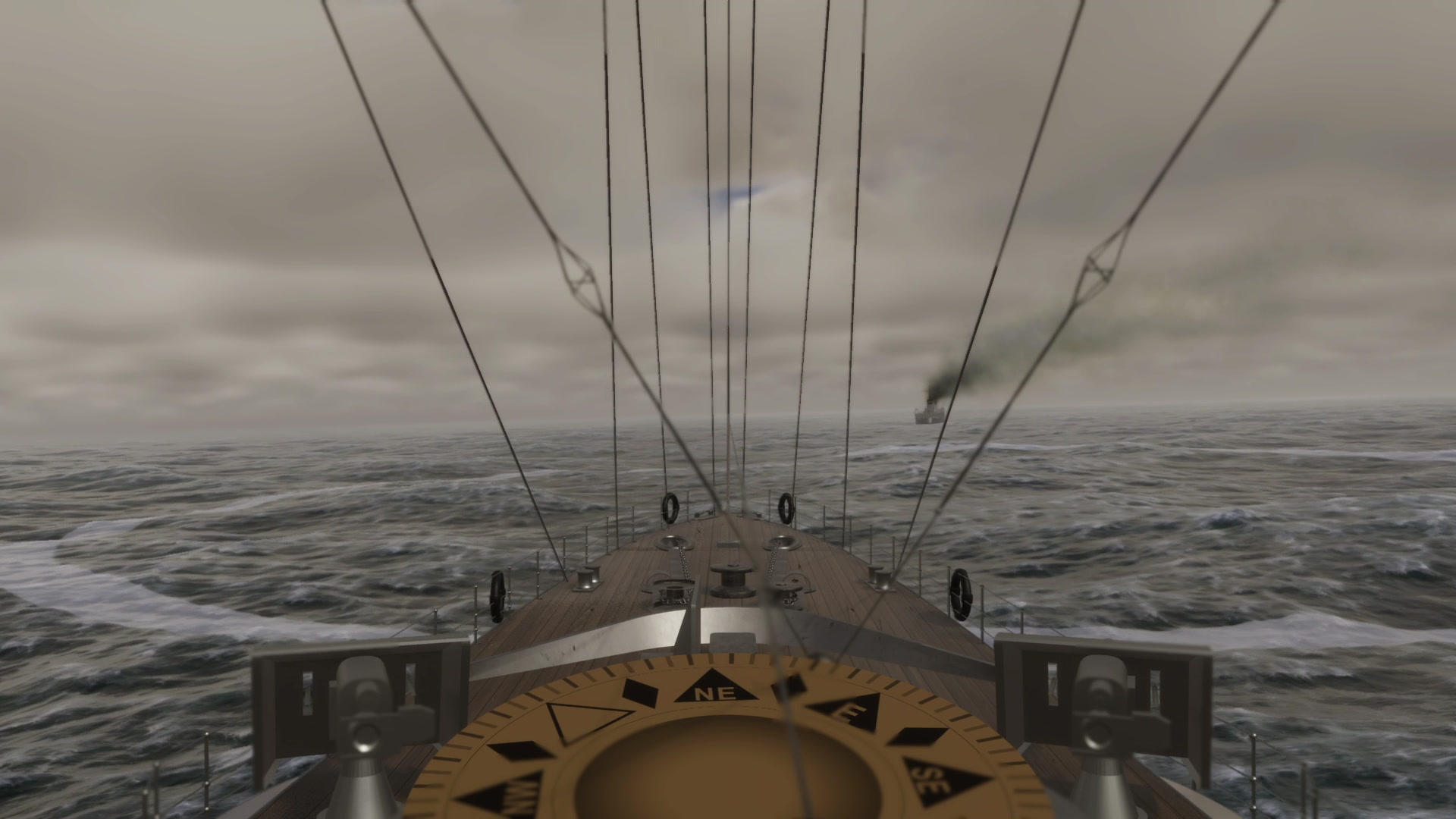
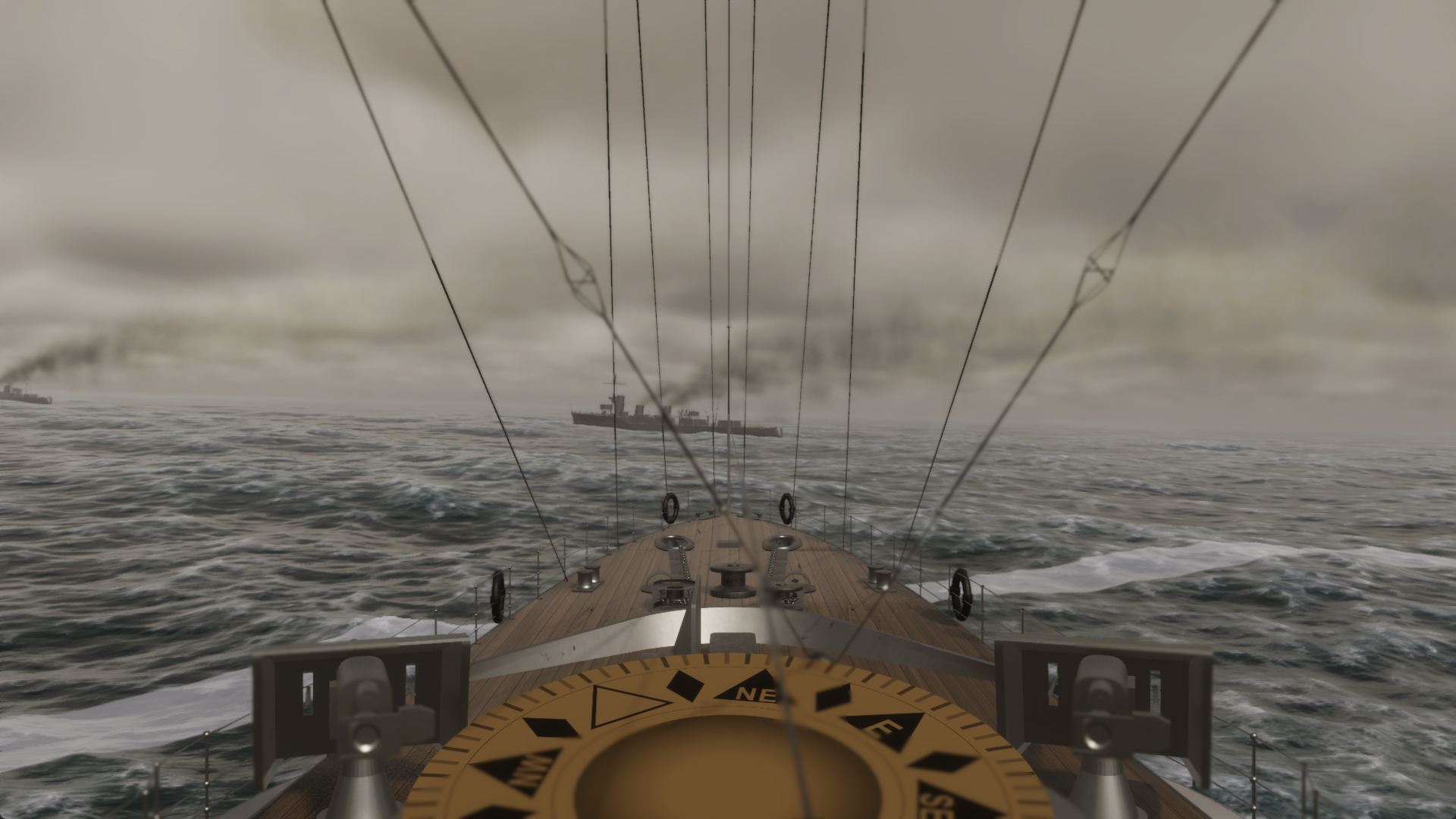
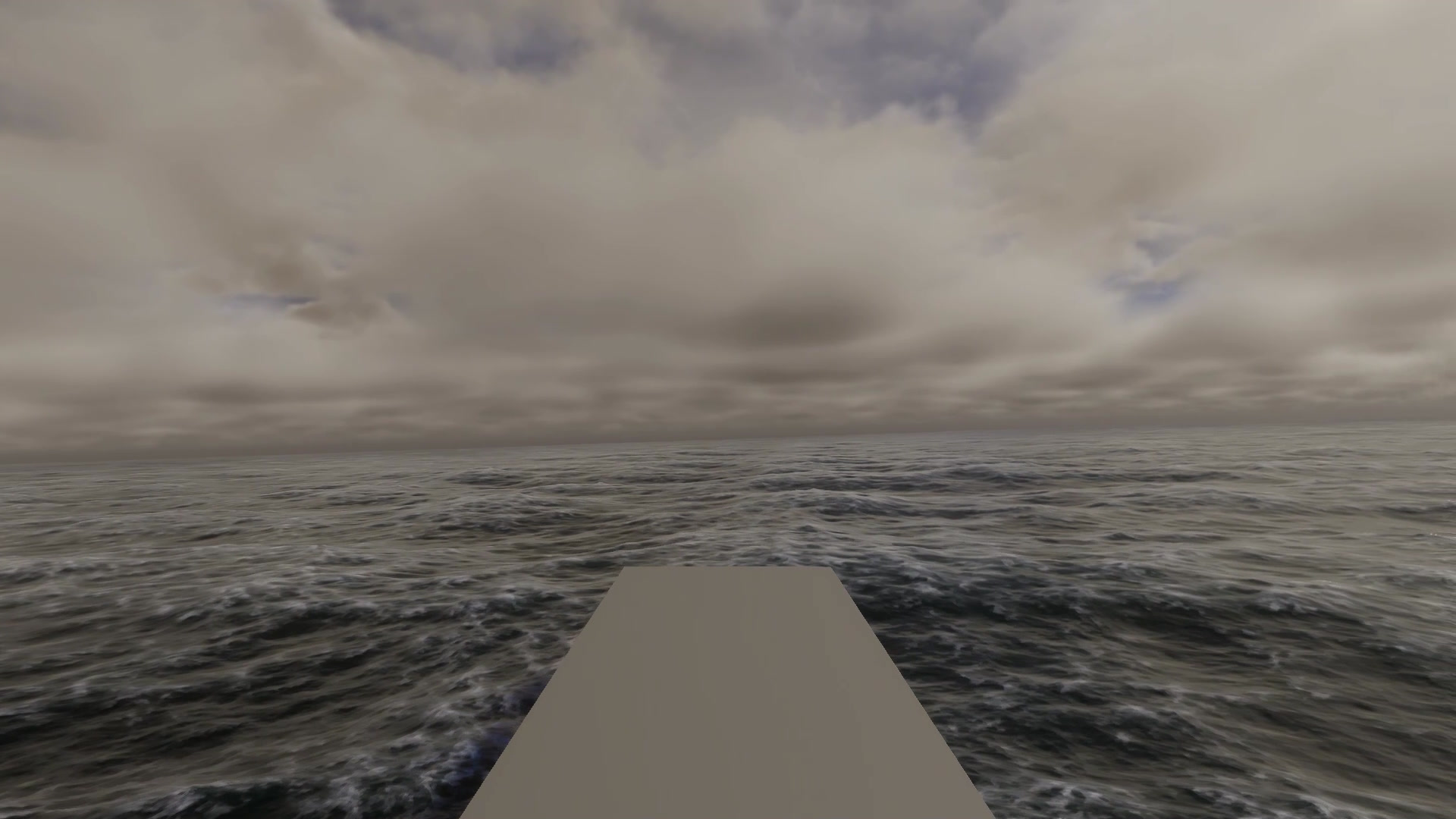
The game begins with the ship stationary, bobbing up and down on the water. The only on-screen text to appear in the game is shown here, prompting the player to move either of the two physical controls (steering wheel, telegraph speed control), in order to start the game. Ahead of the player there is another ship on the horizon, motionless but emitting smoke from its funnels. This is the second ship in the convoy. The lead ship is just ahead of it, off screen. Some distance behind the second ship, an area on the water is indicated by a ray of sunlight and a white circular outline. This is known as the third marker, it is the players position within the convoy. When either of the two input controls are moved, a voice instructs the player on how to control the ship, and commands them to move towards the third marker. The other ships in the convoy now start to move along their route in order to reach their destination. The convoy changes speed and turns many times along the journey. The player’s challenge is to join the convoy at the rear position, indicated by the third marker, and follow the convoy along its route until the destination, while keeping within the marker. The player must not only steer, but constantly change speed to maintain the correct distance, not falling behind and not getting too close that a collision might occur. A successful journey takes about six minutes to complete. There are many voice instructions to provide assistance where needed: giving compass bearing steering instructions and how to control speed when needed. If the player heads in completely the wrong direction or gets too far away, there are instructions to help get back on course. If by chance the player gets too close to another ship, an ‘autopilot’ feature takes over, rapidly steering the ship away to avoid a collision, and then returning control to the player when safe to do so. The player fails and the game is over if they don’t join the convoy in time, or if the player leaves their convoy position and doesn’t rejoin in sufficient time. Audio instructions and advice are given to aid the player in correcting these issues, should they occur.
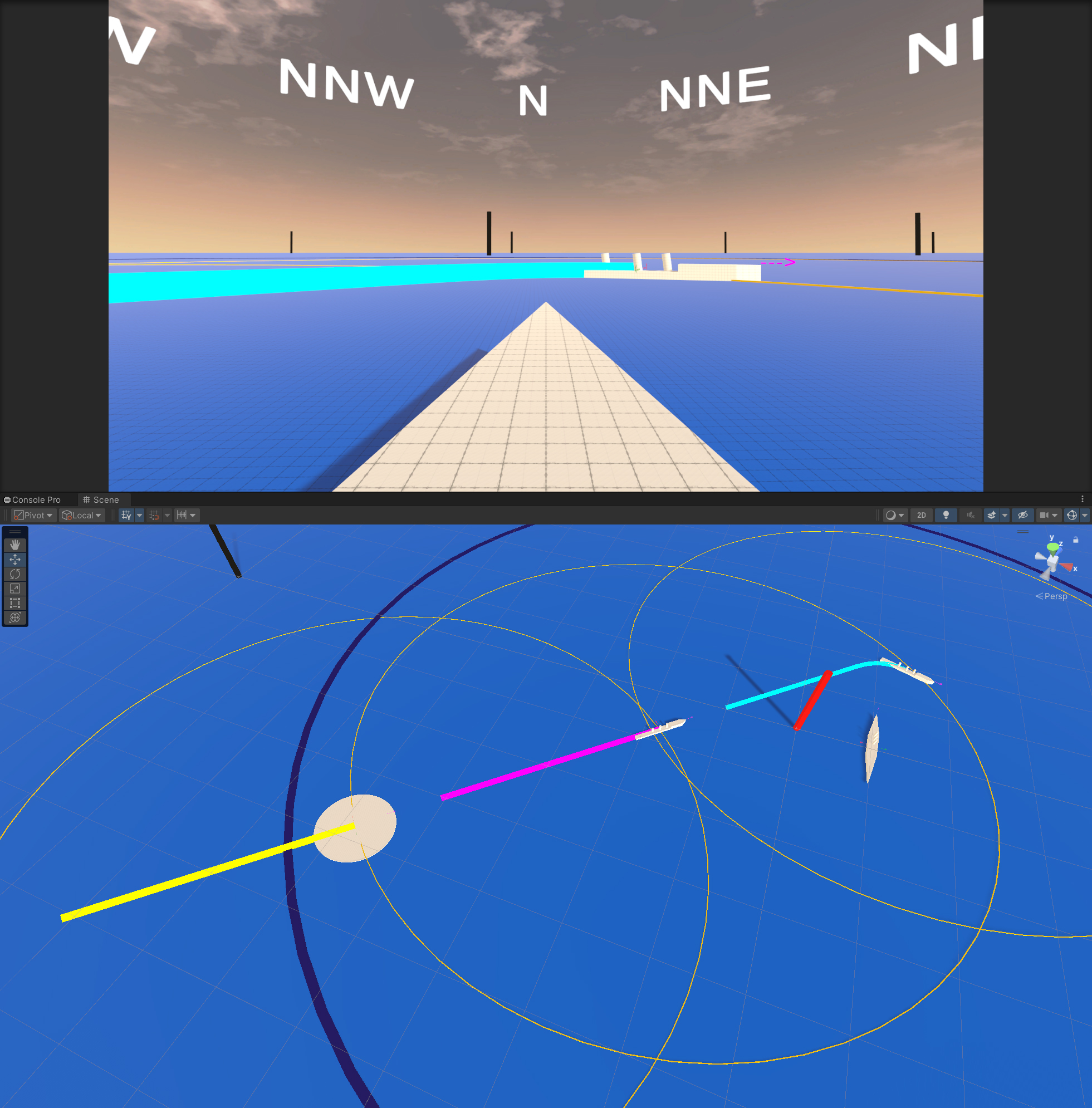
Early in development I knew that the convoy mechanics would be one of the most important features to develop, as this would likely set the pace and duration of the game. Having researched the other two ships in the convoy, based on HMS Fortune (Acasta-class destroyer), I had an idea of the size and speed of all the ships, including the player ship (HMS Caroline). The game was intended to be neither a simulator nor an arcade game, but somewhere between the two, that offered a challenging and not easy experience. I started by building a simple convoy system in order to experiment with speeds, maintaining distances between ships, and convoy routes and speed changes that were interesting enough to play, but not too long in their duration. I tried many different convoy routes and paths, eventually settling on one that lasted around six minutes.
At specific timings during the game, commands are issued directly to the lead ship to change course or speed. The second ship uses steering behaviours to automatically follow the path of the lead ship, and the third marker also uses steering behaviours to automatically follow the path of the second ship. The player uses a physical steering wheel and telegraph speed control, connected to the PC via Phidgets hardware to control HMS Caroline.
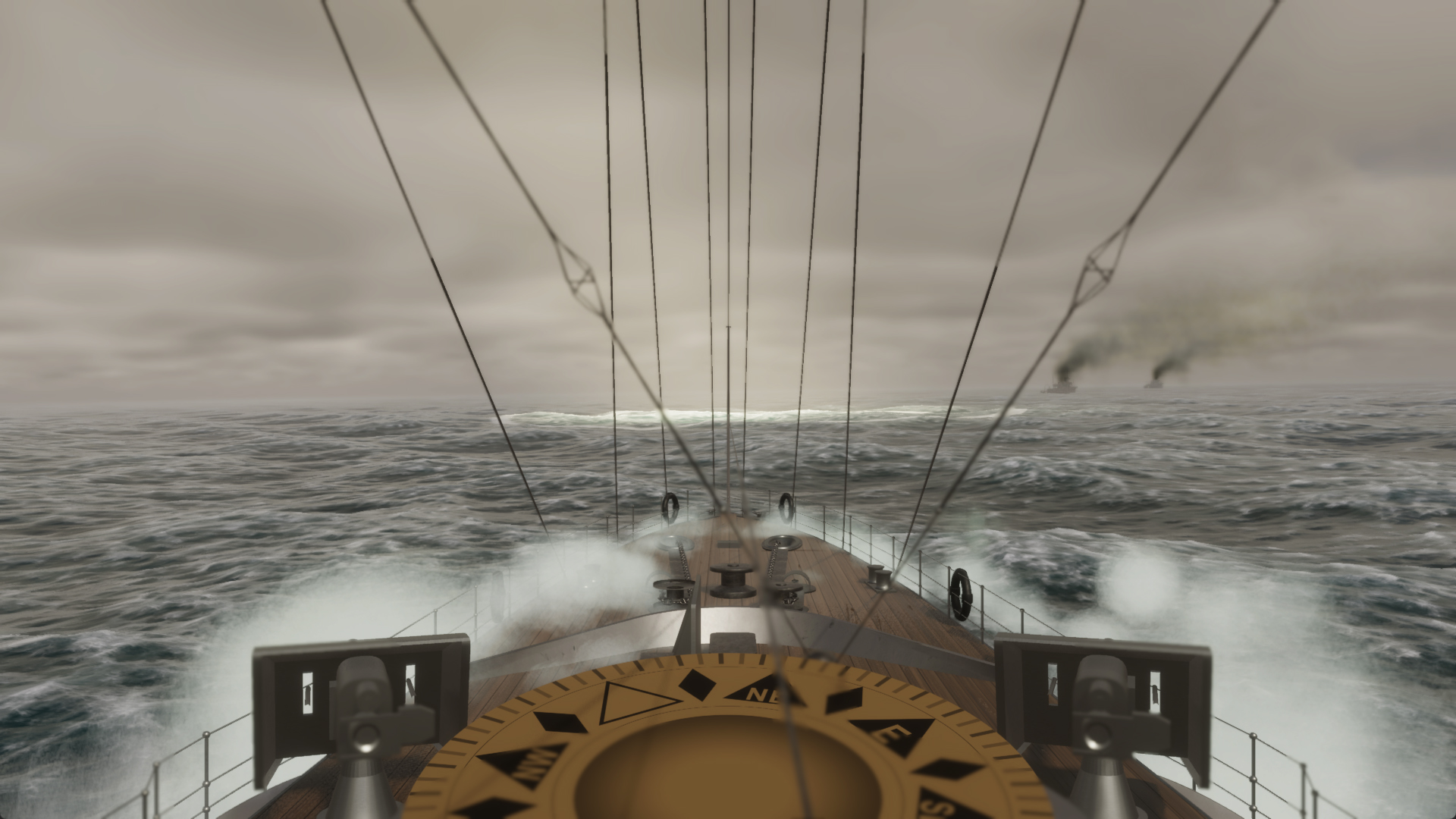
I developed the game to make the most of Unity’s HDRP, particularly the water and cloud systems. I also created VFX for the funnel smoke and water spray. The player ship is configured on a gimbal, allowing it to pitch and roll relative to its speed and steering. The water spray VFX over the bow of the ship is synced with the forward movement and pitch of the ship, so that it occurs only when the ship is moving forward at speed and the bow of the ship pitches down towards the water. In addition to the audio speech instructions that drive the game, it also includes ambient audio and sound effects to enhance the experience.
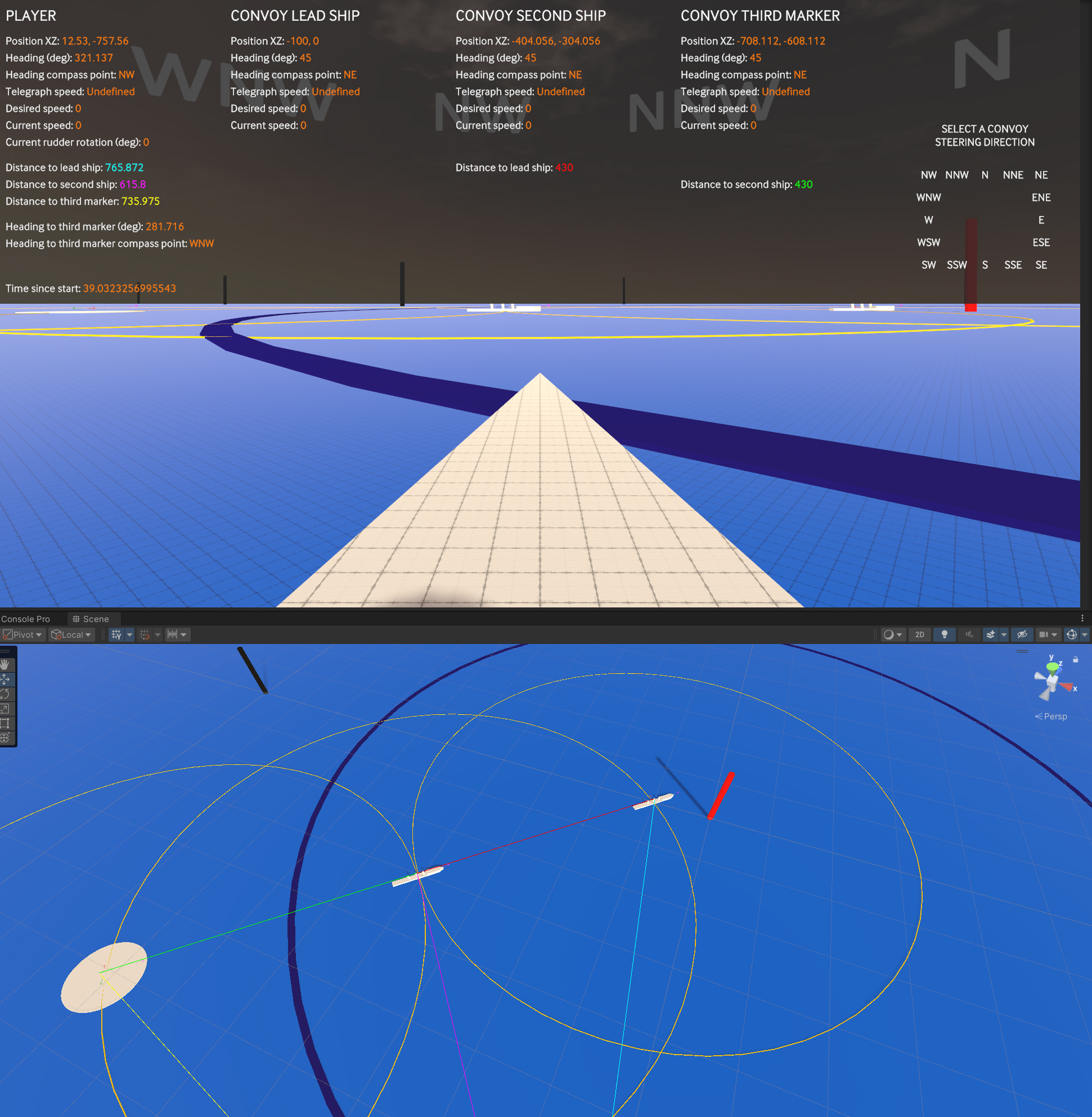
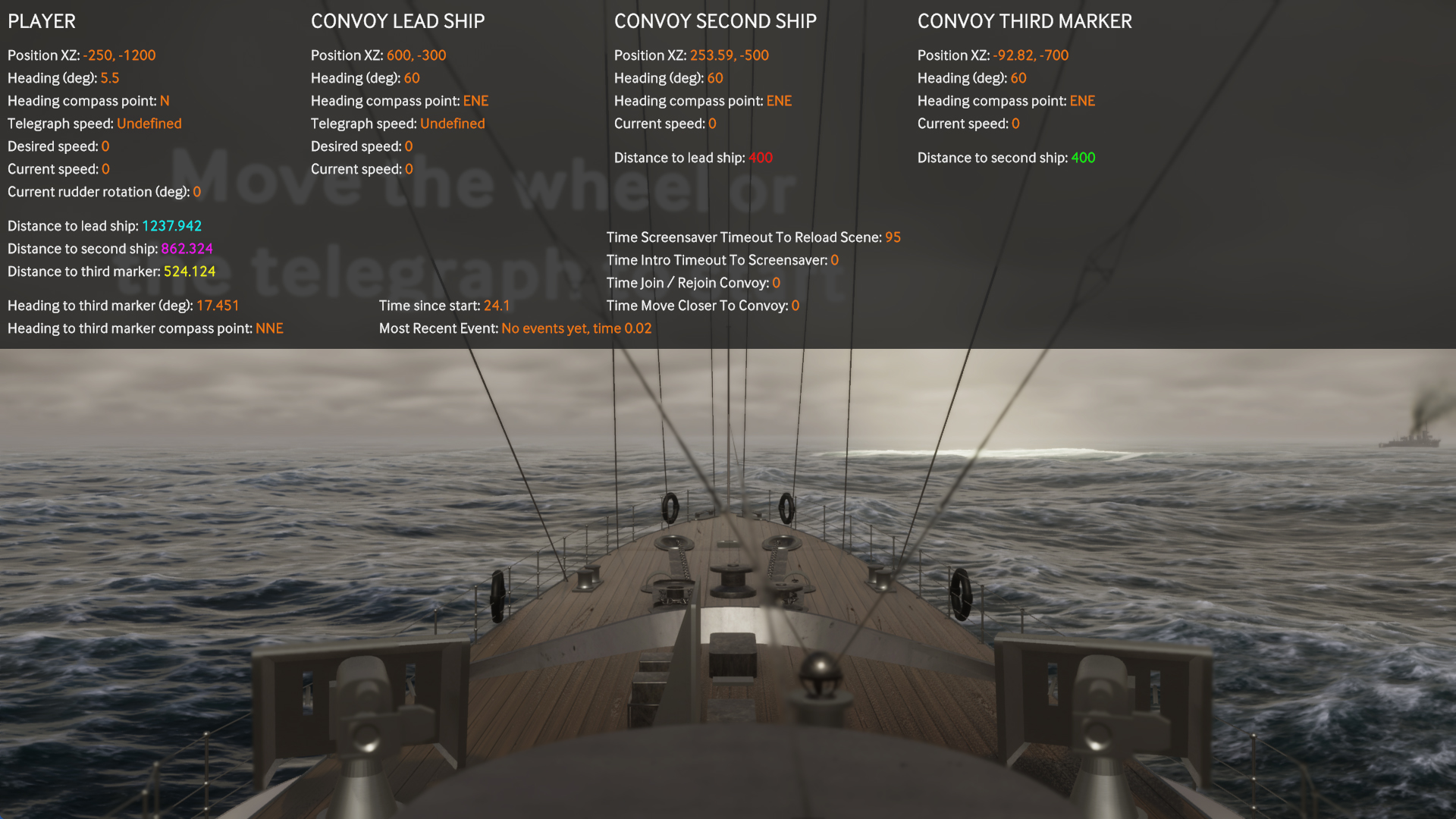
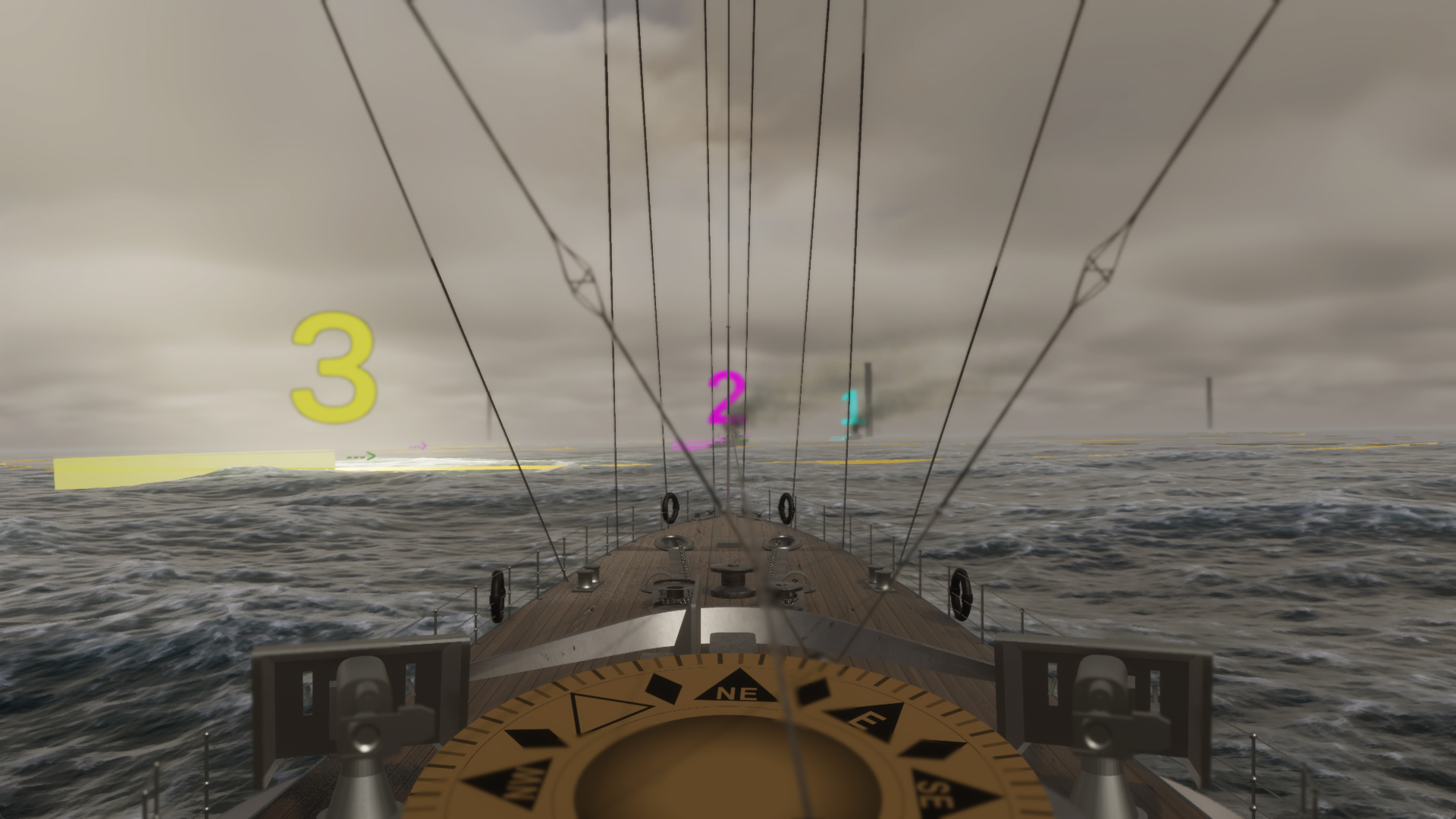
Early in development I built an in-game console that shows all the key properties and stats I would need to monitor. I also added some debug options that allowed additional data to be shown in the 3D world, including convoy numbers, trails and 1 km marker posts.
Credits
Simon Kendrew: Research, design, software development, VFX.
AY-PE: Ship 3D models, sounds effects, installation photo
Developed while employed as Senior Software Developer at AY-PE.