
THE INVERNESS
CASTLE EXPERIENCE
2025
In December 2025, the Inverness Castle Experience opened to the public, celebrating the region's people, culture and heritage through a unique mix of storytelling, vivid exhibitions and interactive installations. I developed the interactive touch screen software for the Inverness Castle Experience, outlined below. The exception is the Creating Tartan interactive, which has its own dedicated page. All interactive experiences support English and Gaelic, with language switching available at any time. I also created several virtual reality mockups of room concepts, allowing technical and creative ideas to be developed and tested before these ideas were pitched to the client.
1. Digital Book
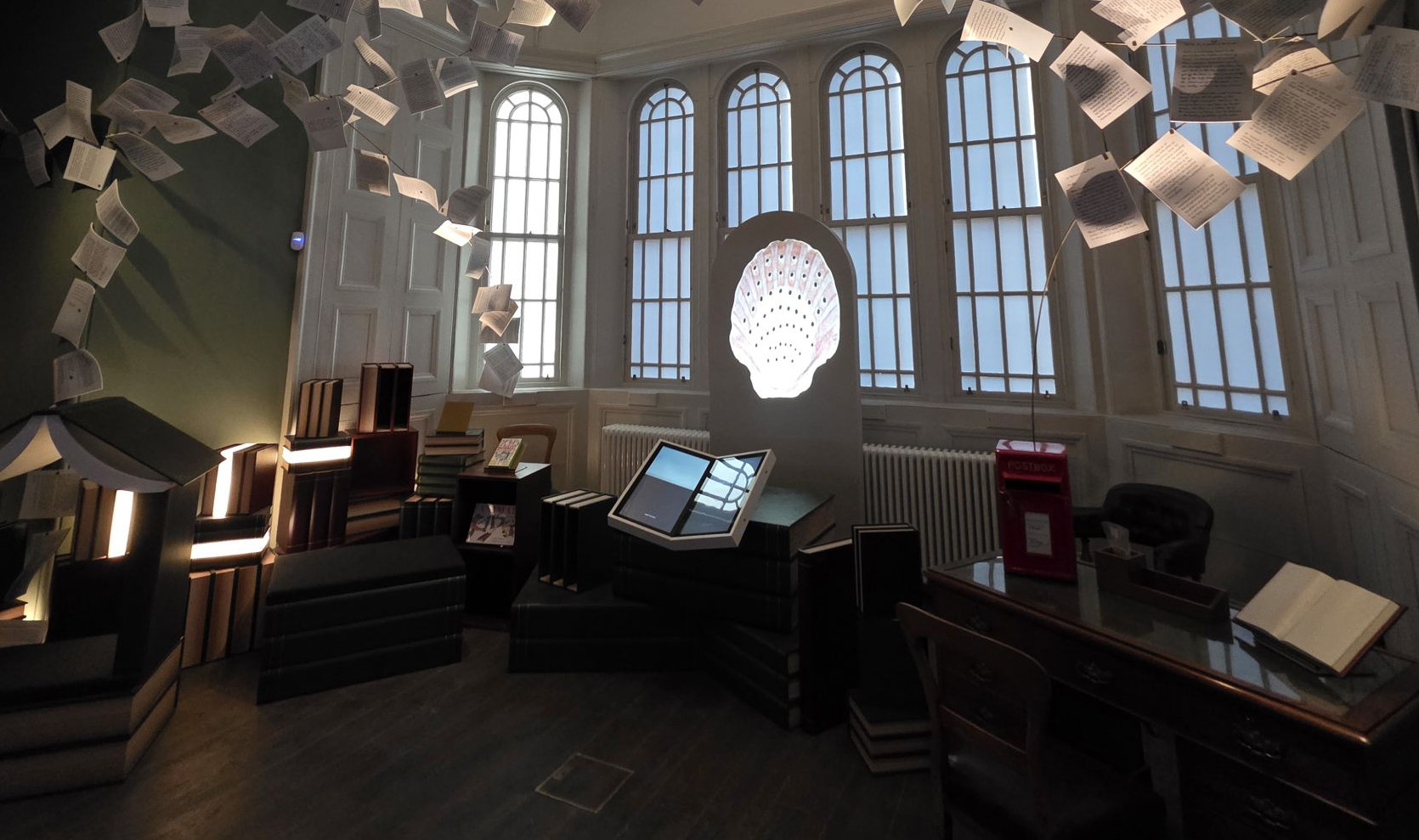
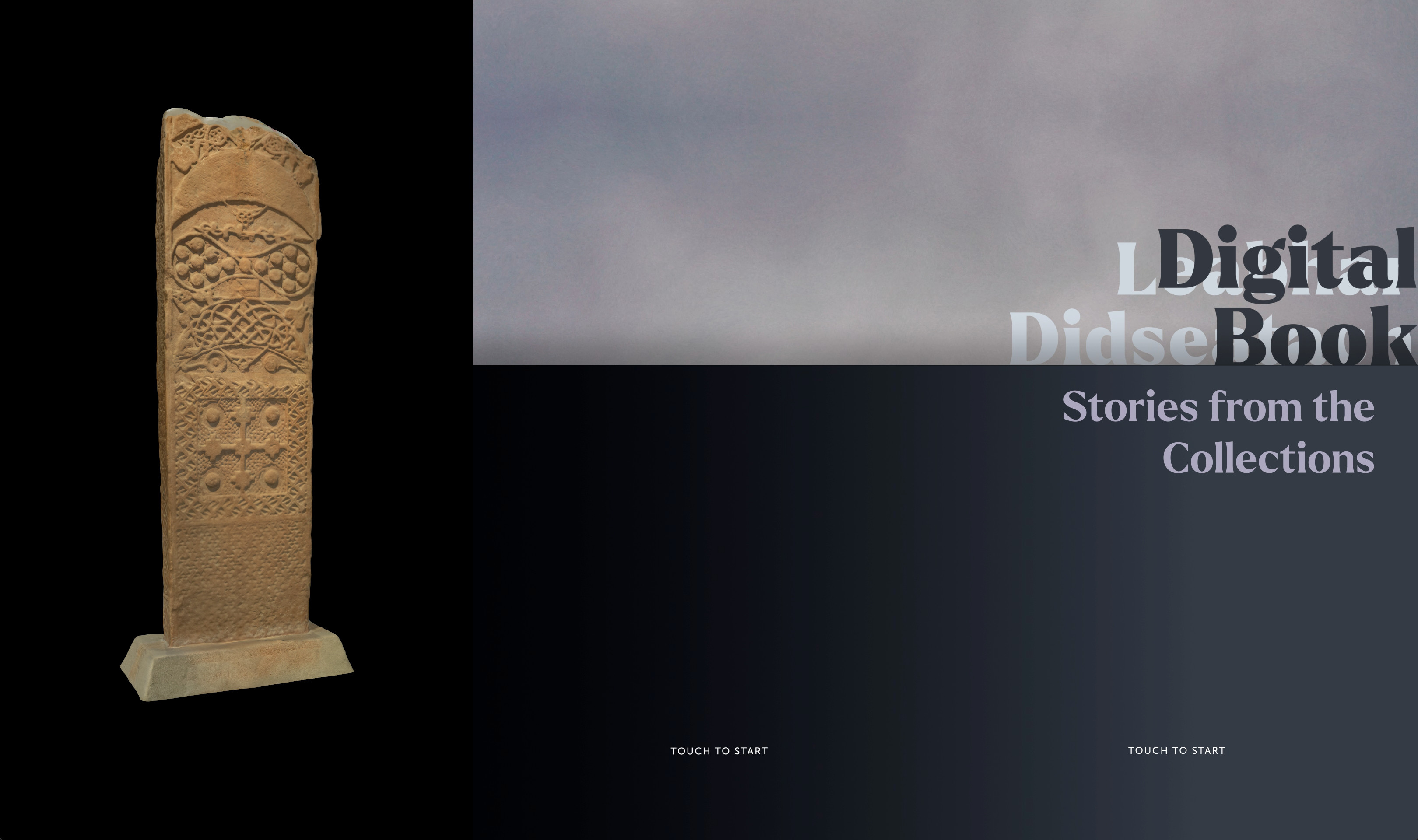
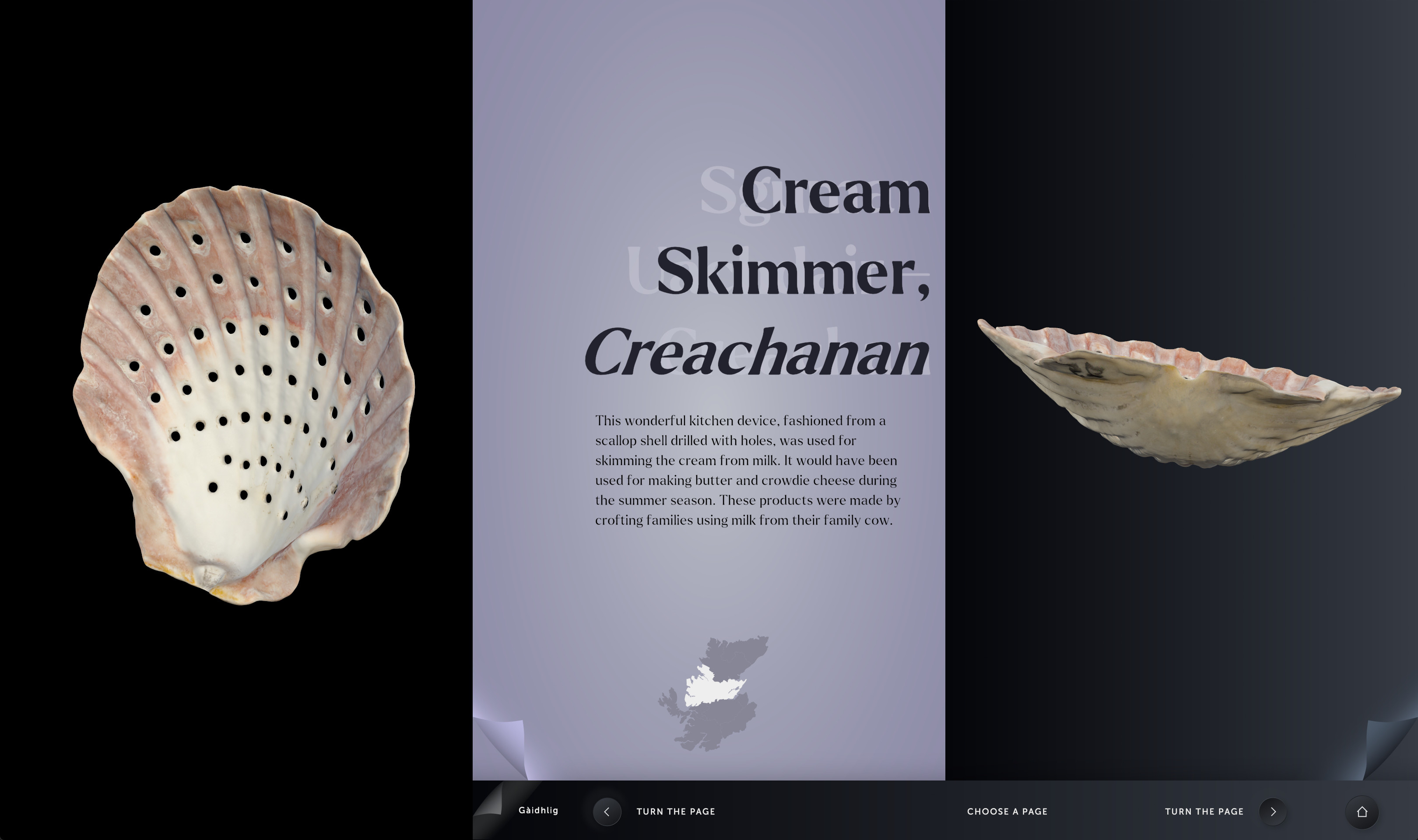
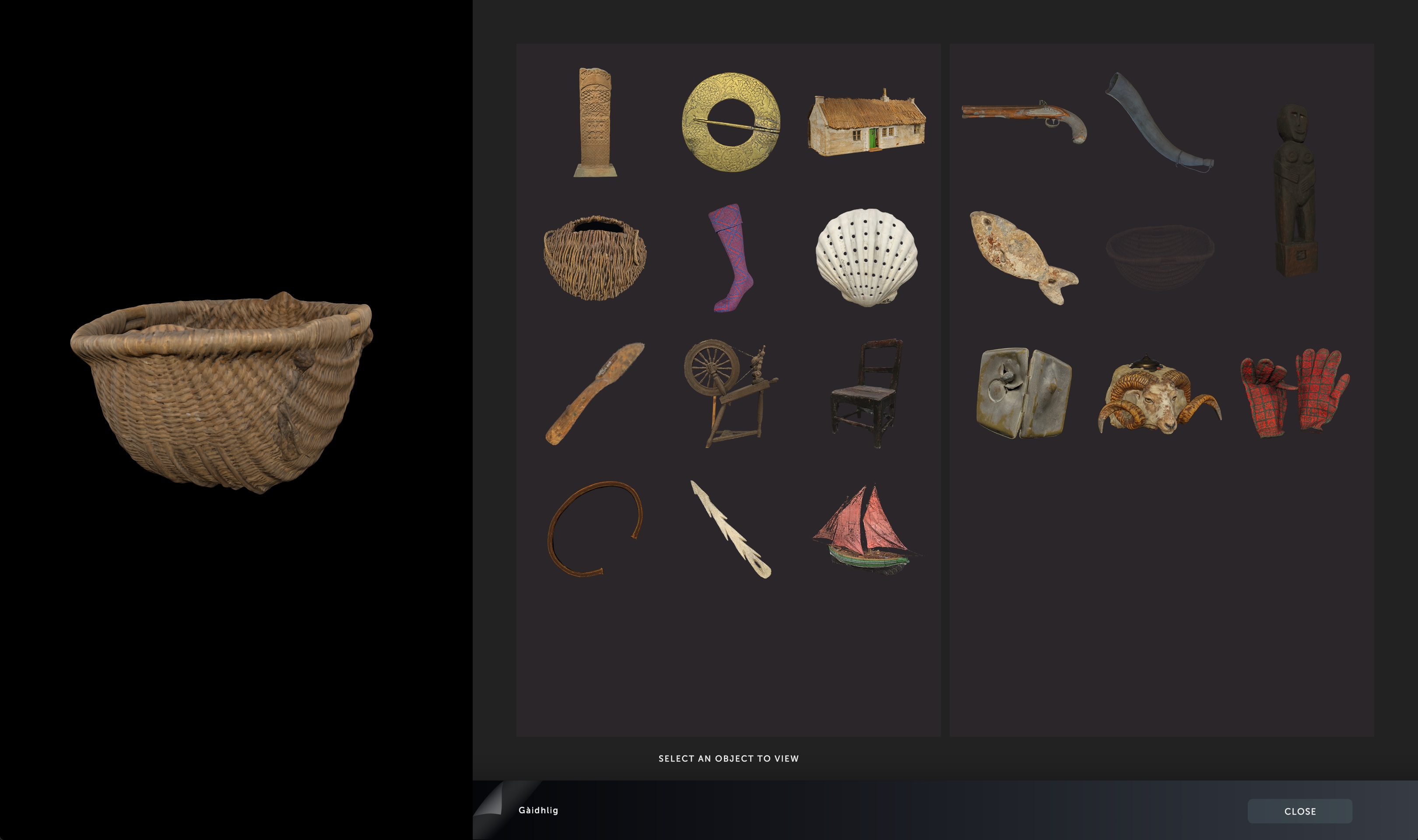
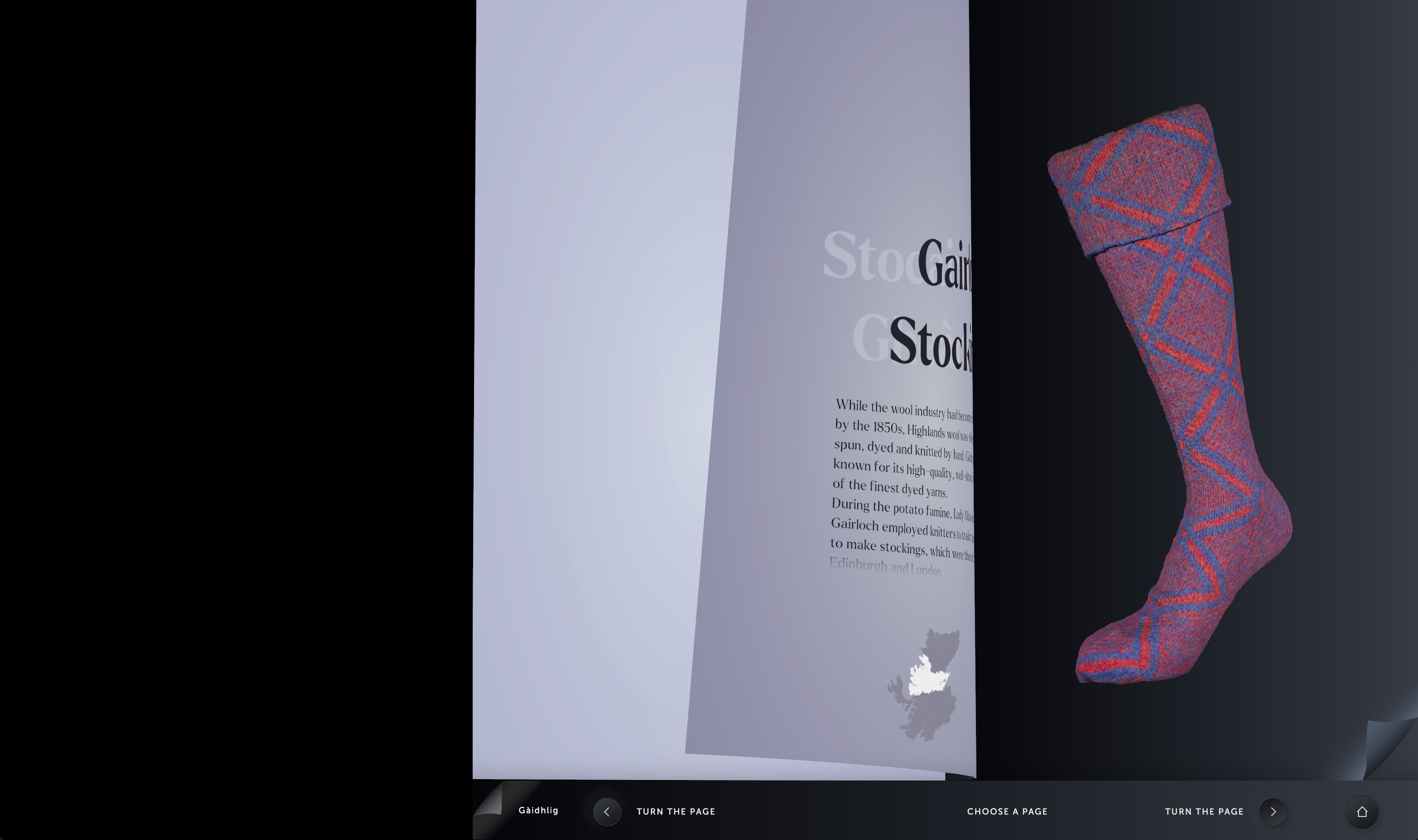
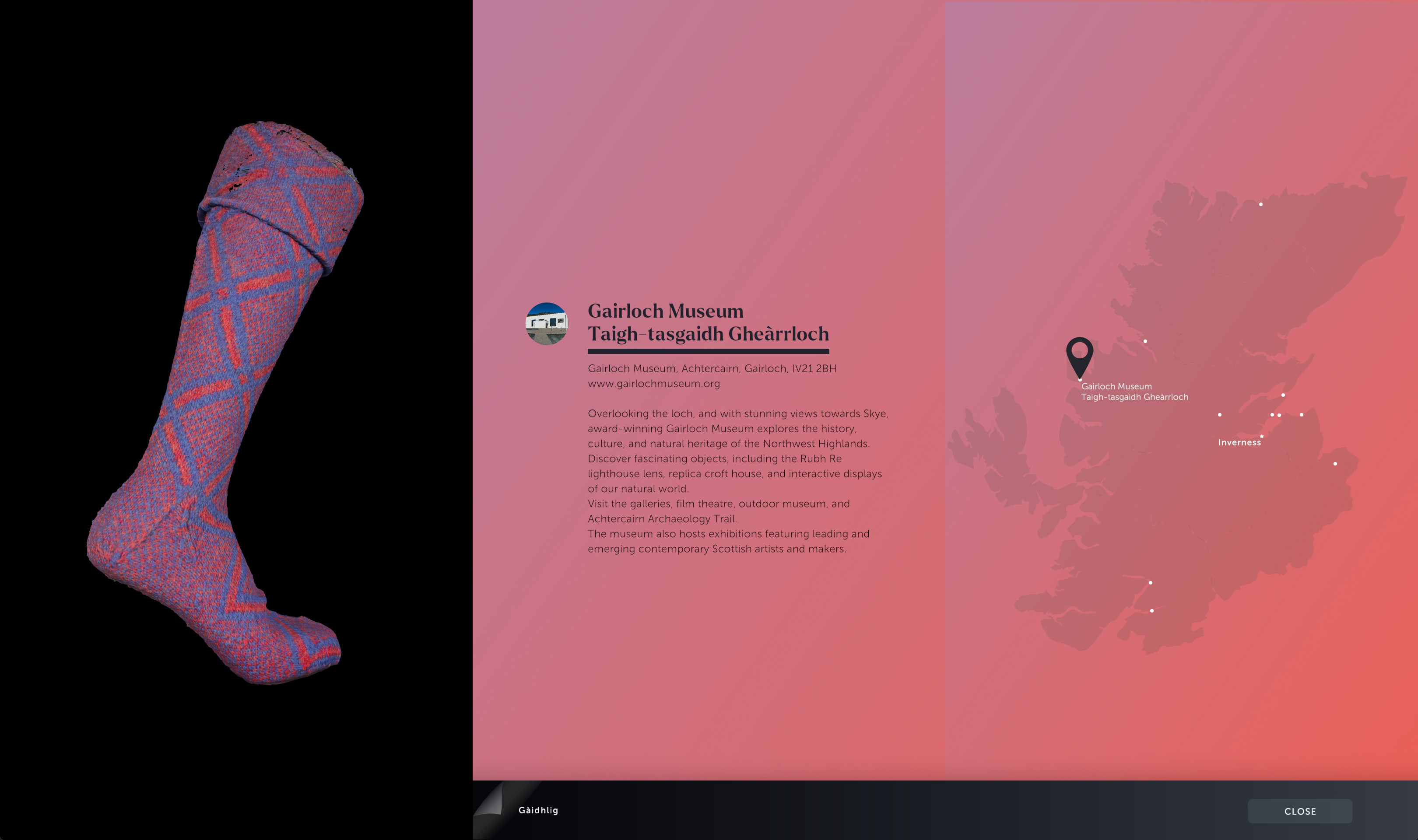
Digital Book explores the rich stories of the Highlands through a collection of 20 objects spanning more than 2,500 years of history. AY-PE produced photogrammetry models of all the objects, each located at different museums in the Highlands.
Created as a triple-display interactive, Digital Book comprises two portrait touch screens arranged side-by-side like the pages of an open book, and a third display that projects the objects onto a surface at a large scale.
Visitors can seamlessly navigate the objects by turning the pages, or by choosing an object to turn to directly. Each object is presented as a real-time 3D model that can be dragged and rotated on the touch screen, accompanied by short factual text and additional details about the museum where it is located. The team at Inverness Castle is able to update the content directly.
2. Digital Stitch
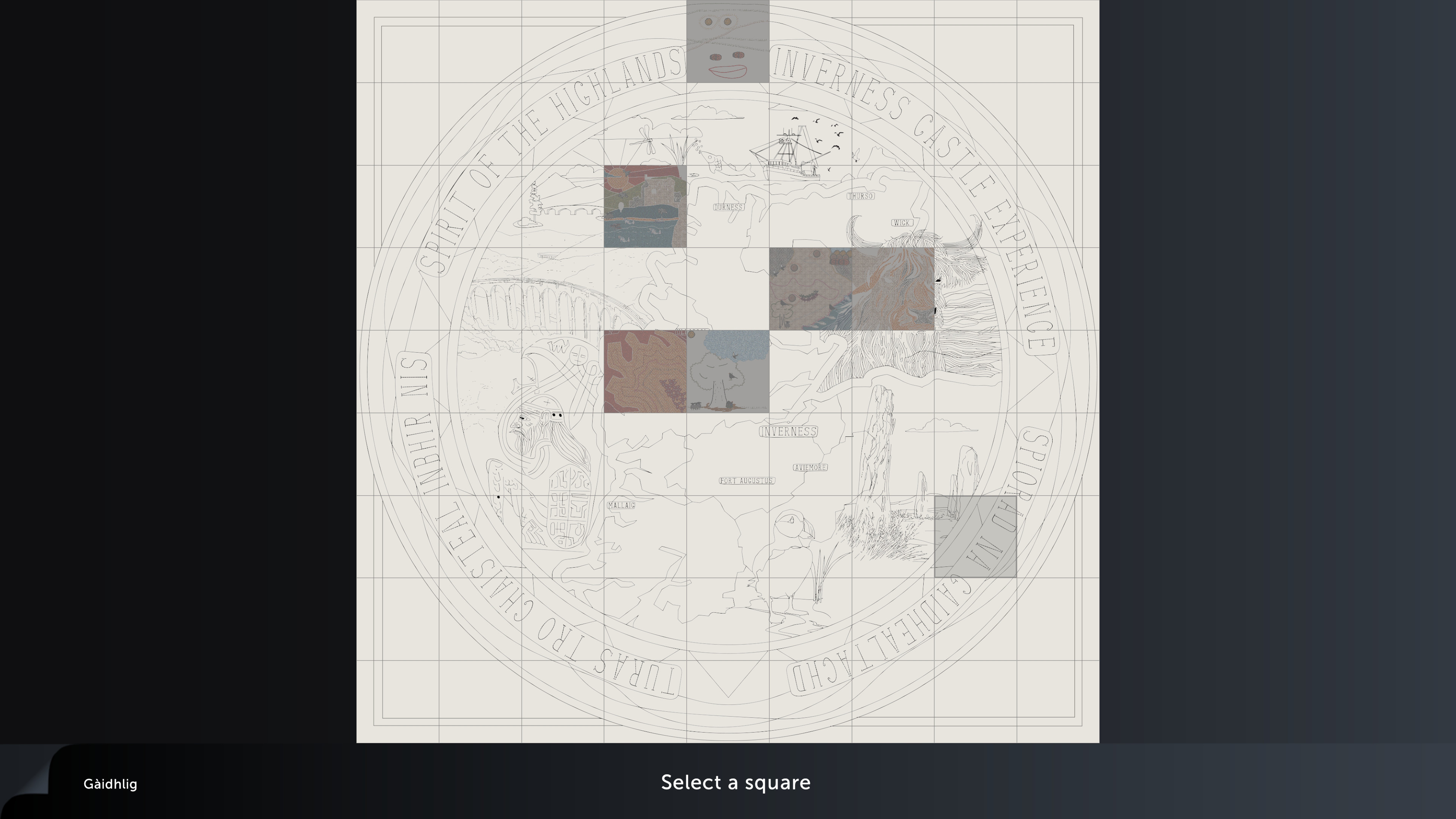
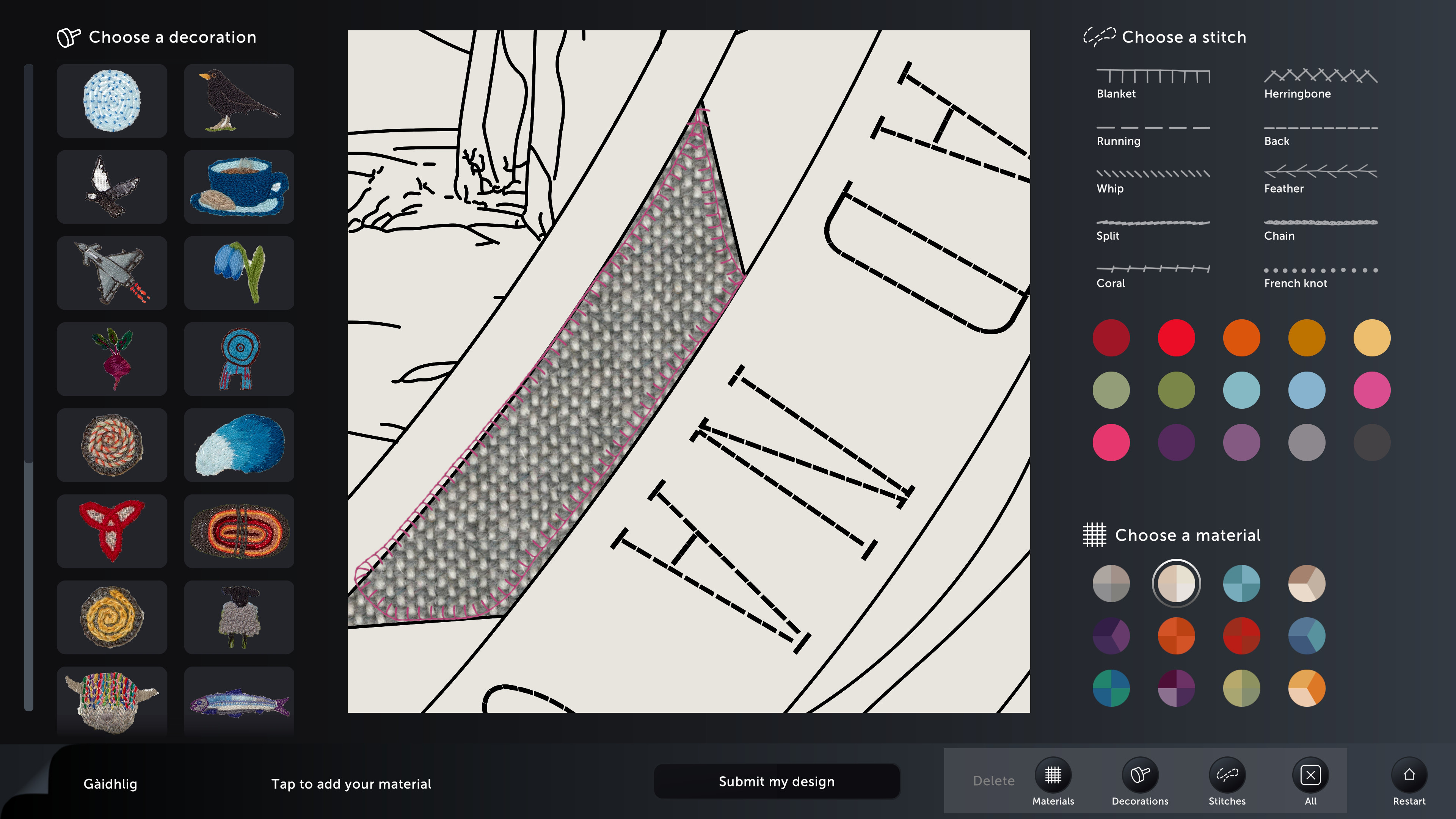
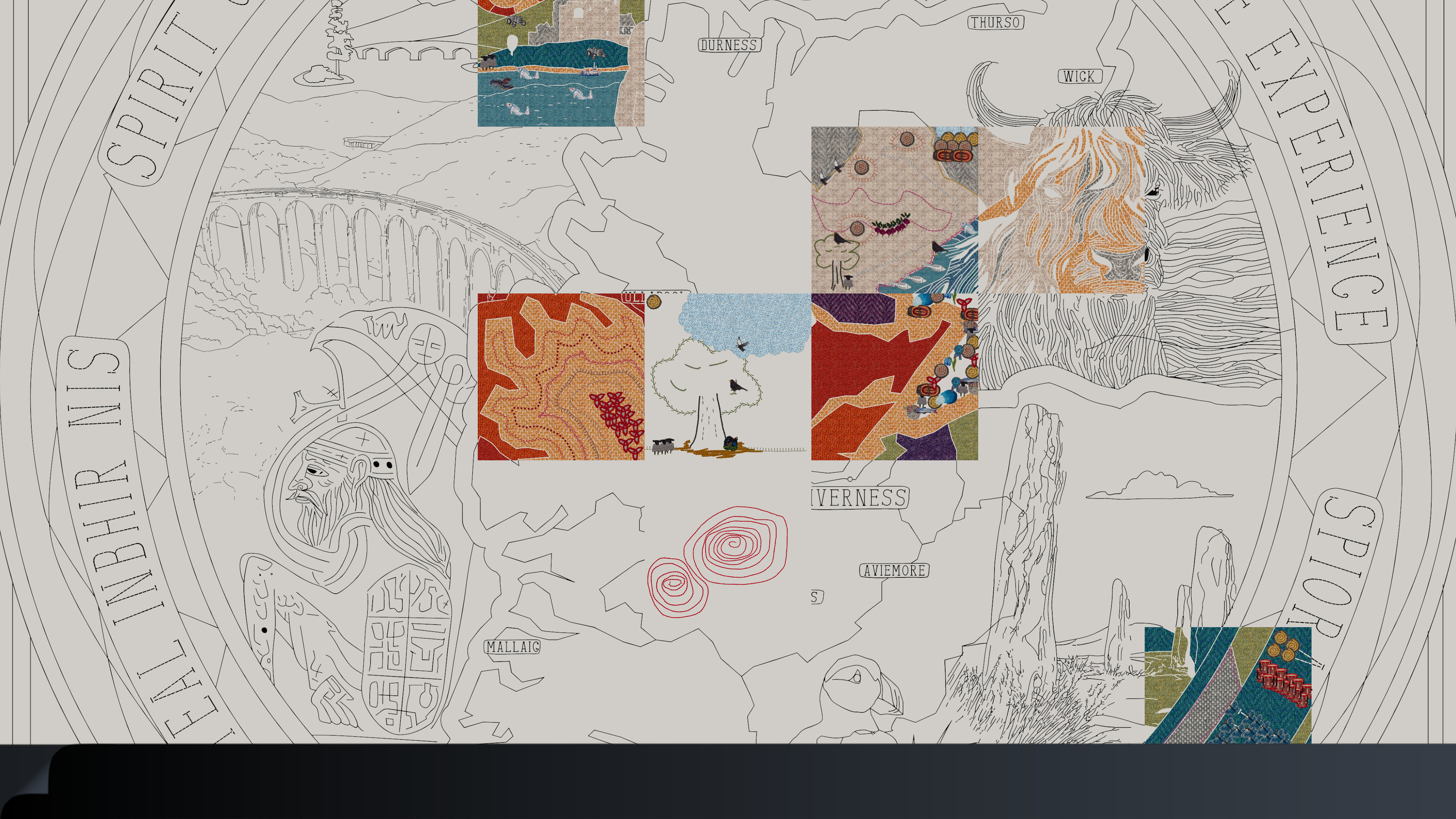
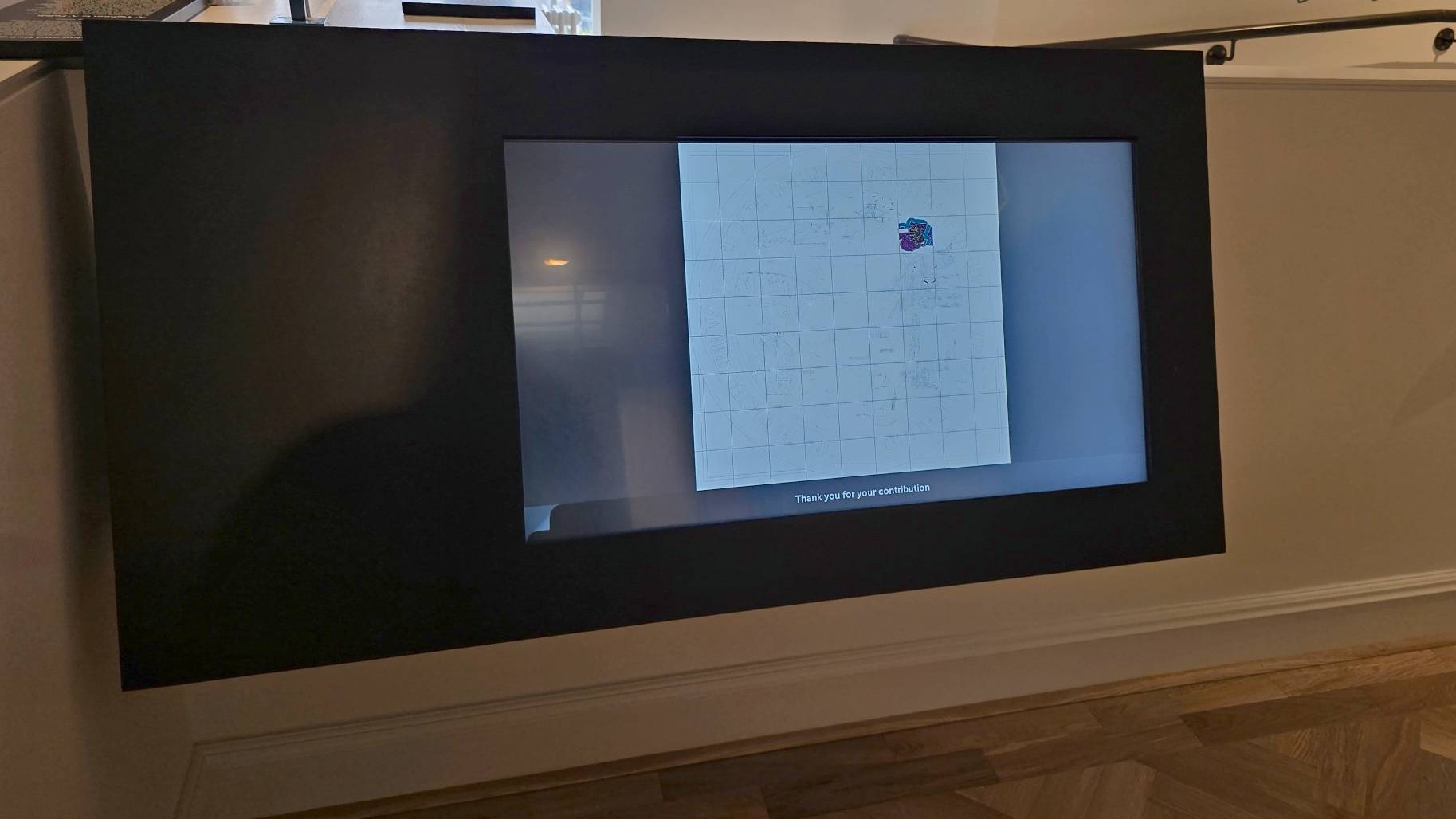
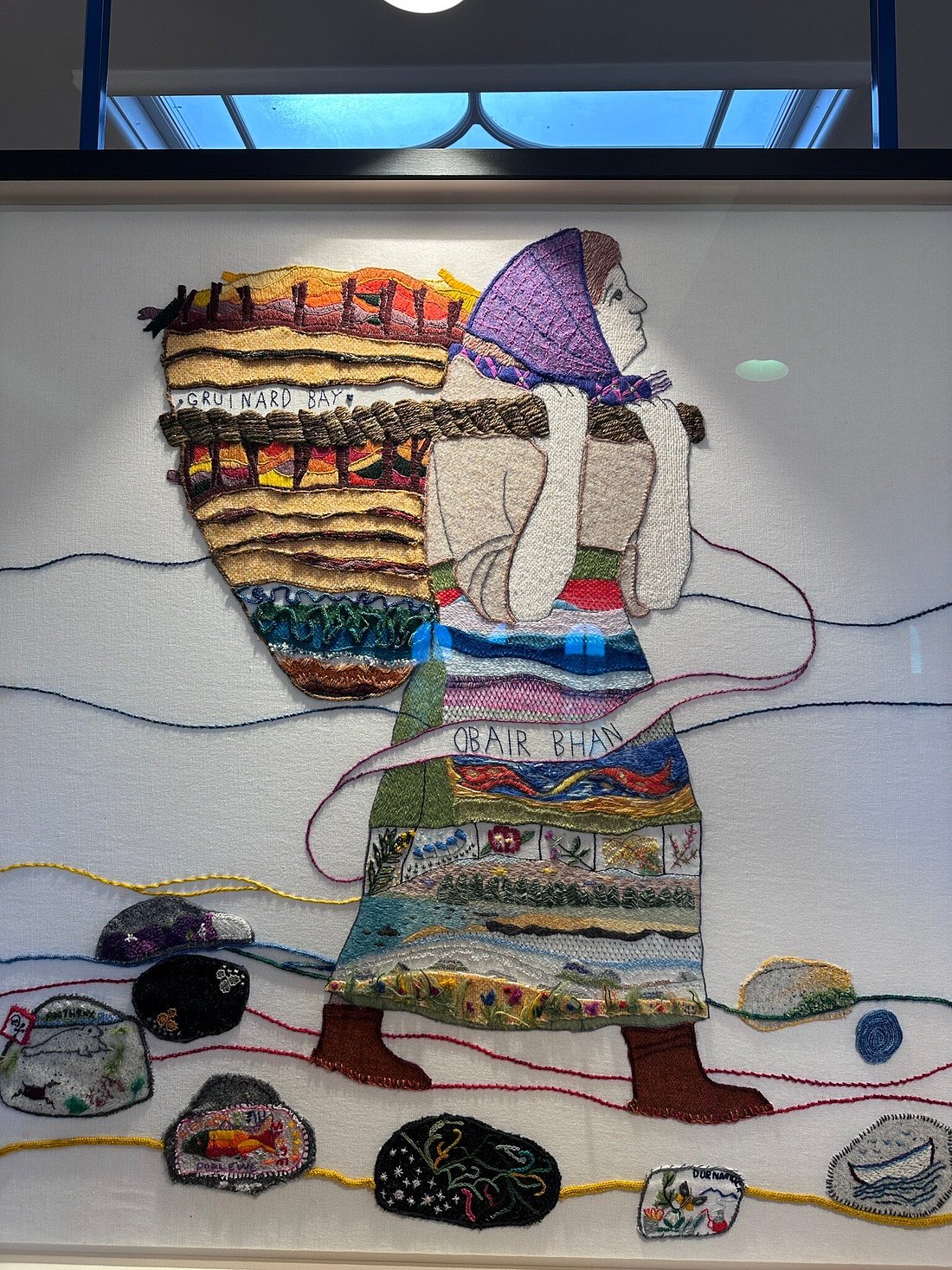
The Castle has a collection of tapestries created by more than 600 stitchers from across the Highlands and Islands. To support this collection, the Digital Stitch touch screen interactive gives visitors a unique opportunity to design and create a piece of a larger digital tapestry that can be shared with and enjoyed by other visitors.
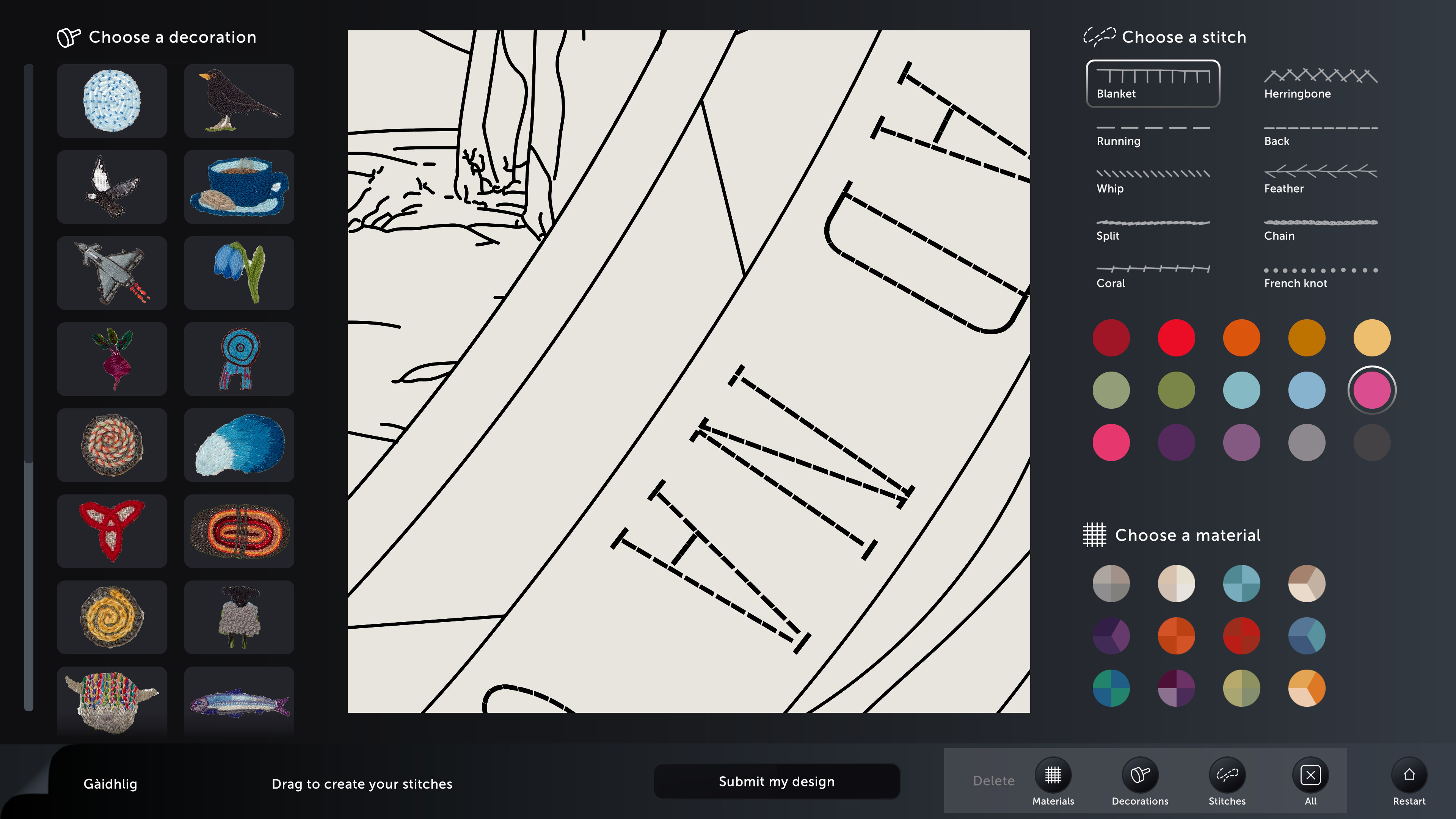
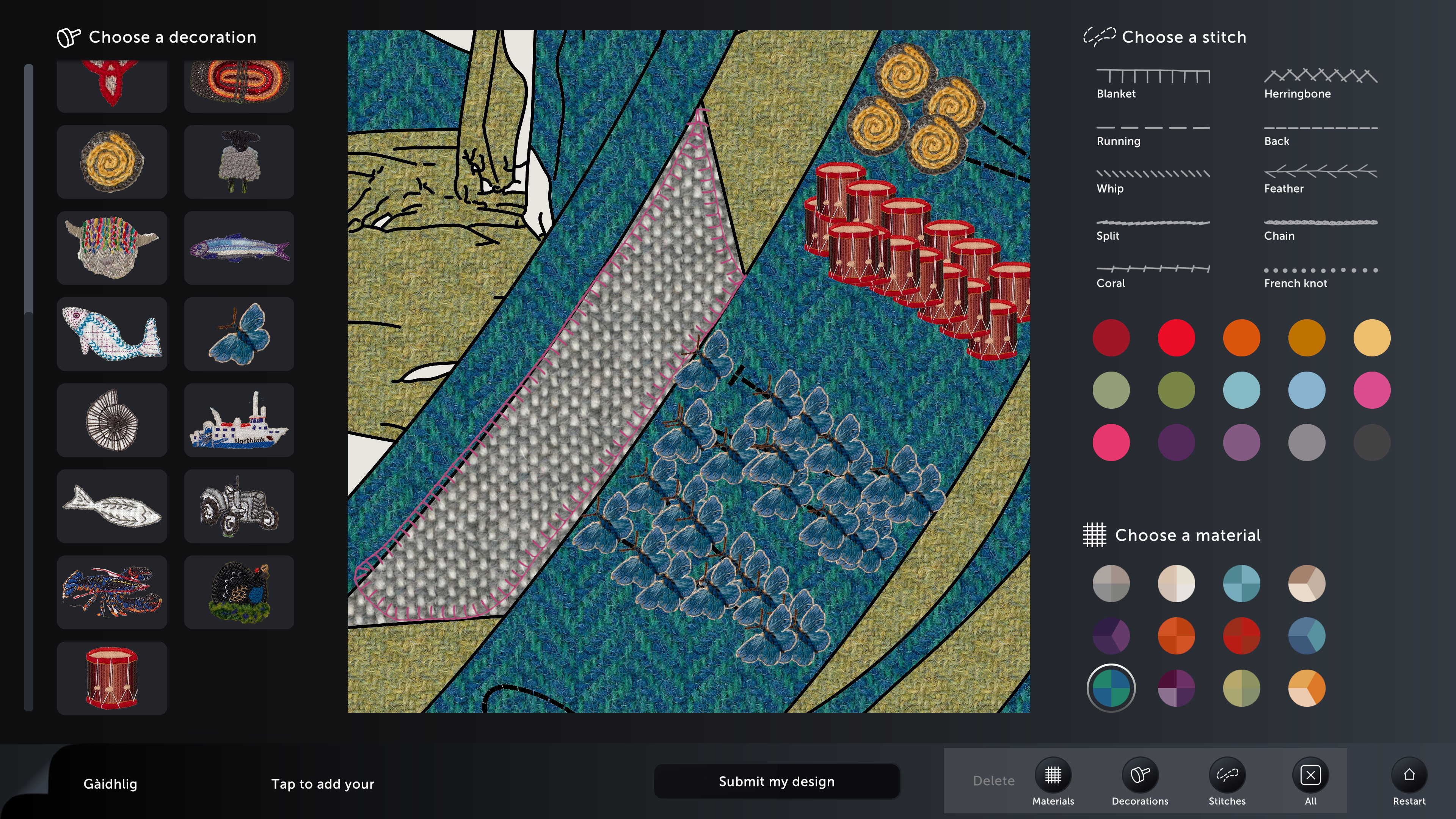
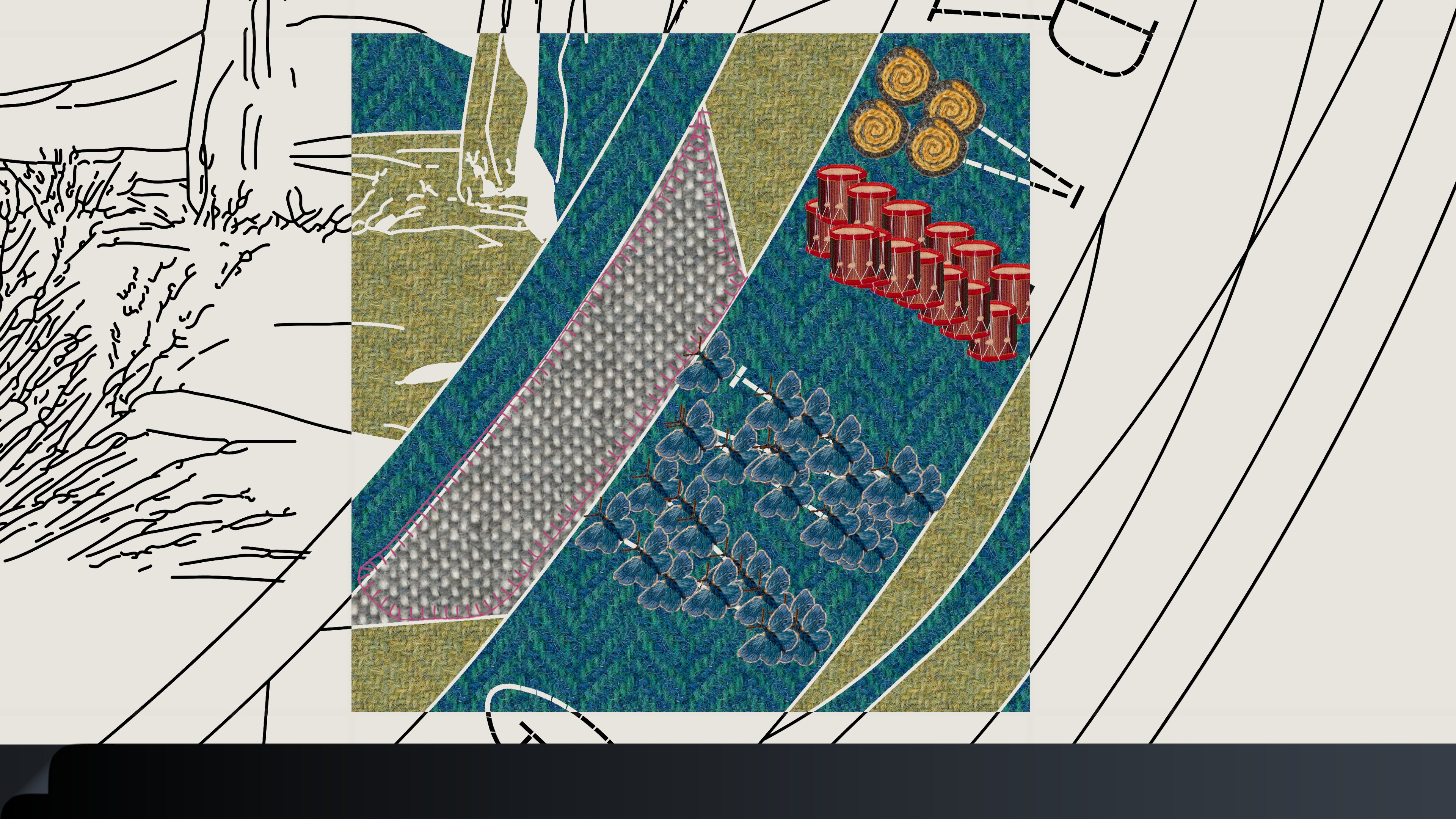
Visitors select a small piece of a larger tapestry outline image to design. They can then create their design using flood-fill materials, manually place decorations, and drag and draw with real-time stitches.
From the start of this project, the digital stitching idea created a clear technical challenge: how could stitches be made and drawn digitally in real time? There was no out-of-the-box solution or software plugin available to draw stitches.
Although drawing stitches shares some similarities with digital drawing using a pen or pencil, such as in photo editing software, the system needed to go further. It had to draw stitch shapes aligned to the direction of movement, accurately positioned with neighbouring stitches, either overlapping each other or leaving a gap between them depending on the stitch type. The stitches also needed to draw quickly in real time, with no lag or stuttering.
My technical solution was to develop a custom system in Unity that uses off-screen cameras and RenderTextures, instantiating stitch objects and creating visual snapshots that are rendered back to the screen. I developed a prototype stitching tool very early in the project to confirm that real-time stitching could be achieved to a high visual standard, and to identify and resolve any technical issues around memory usage and performance. Each type of stitch has its own internal scale and spacing settings, allowing fine control over the visual appearance.
An undo feature lets visitors easily remove stitches, materials or decorations, giving them more creative control without needing to start over completely. Completed designs can be added to the larger digital tapestry, allowing subsequent visitors to view previous designs. When all the pieces of the larger digital tapestry are complete, it starts over again from an empty tapestry.
The team at Inverness Castle is able to update the large tapestry outline image, so it can be changed to any design they choose.
3. Mixing Desk
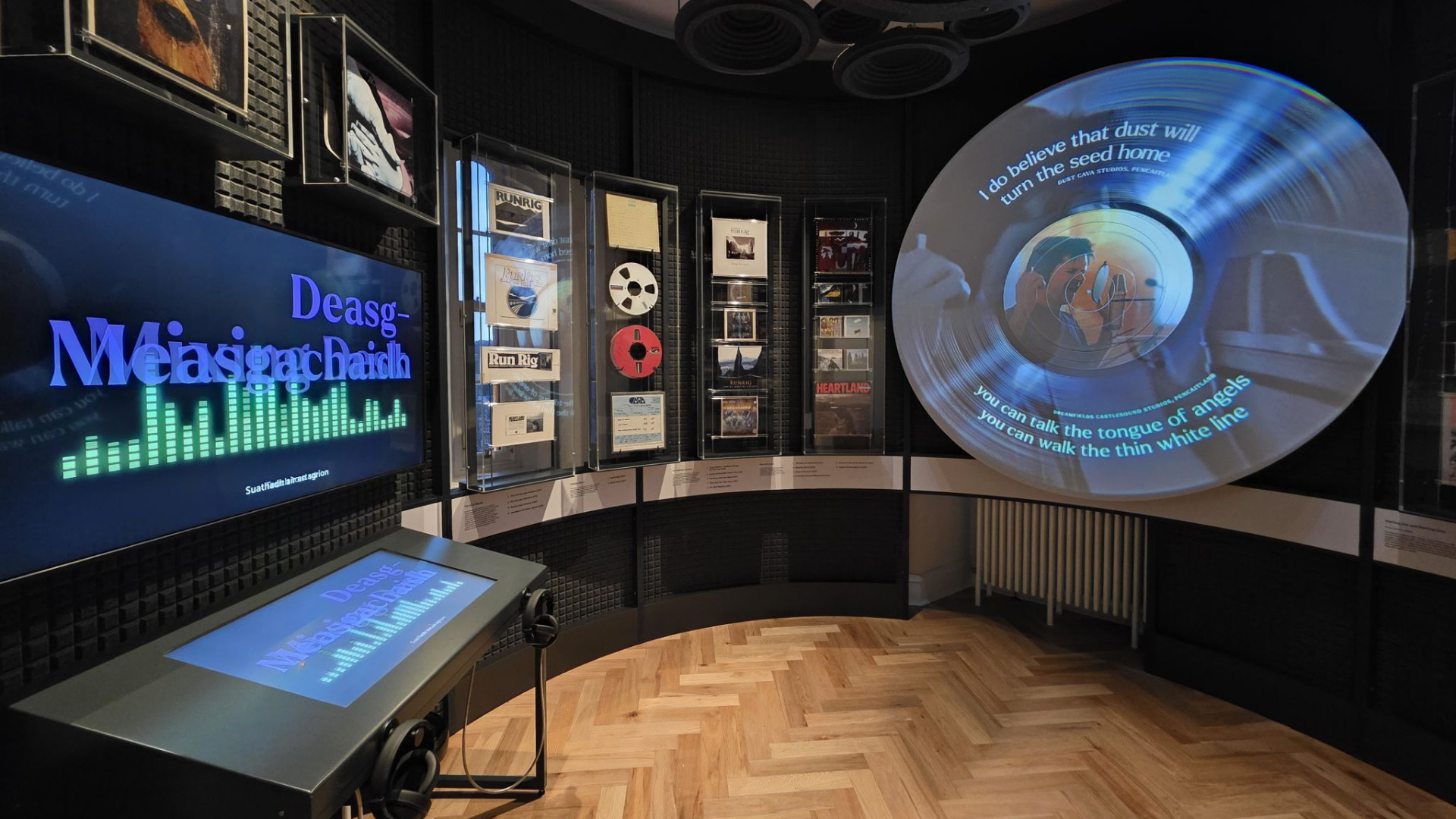
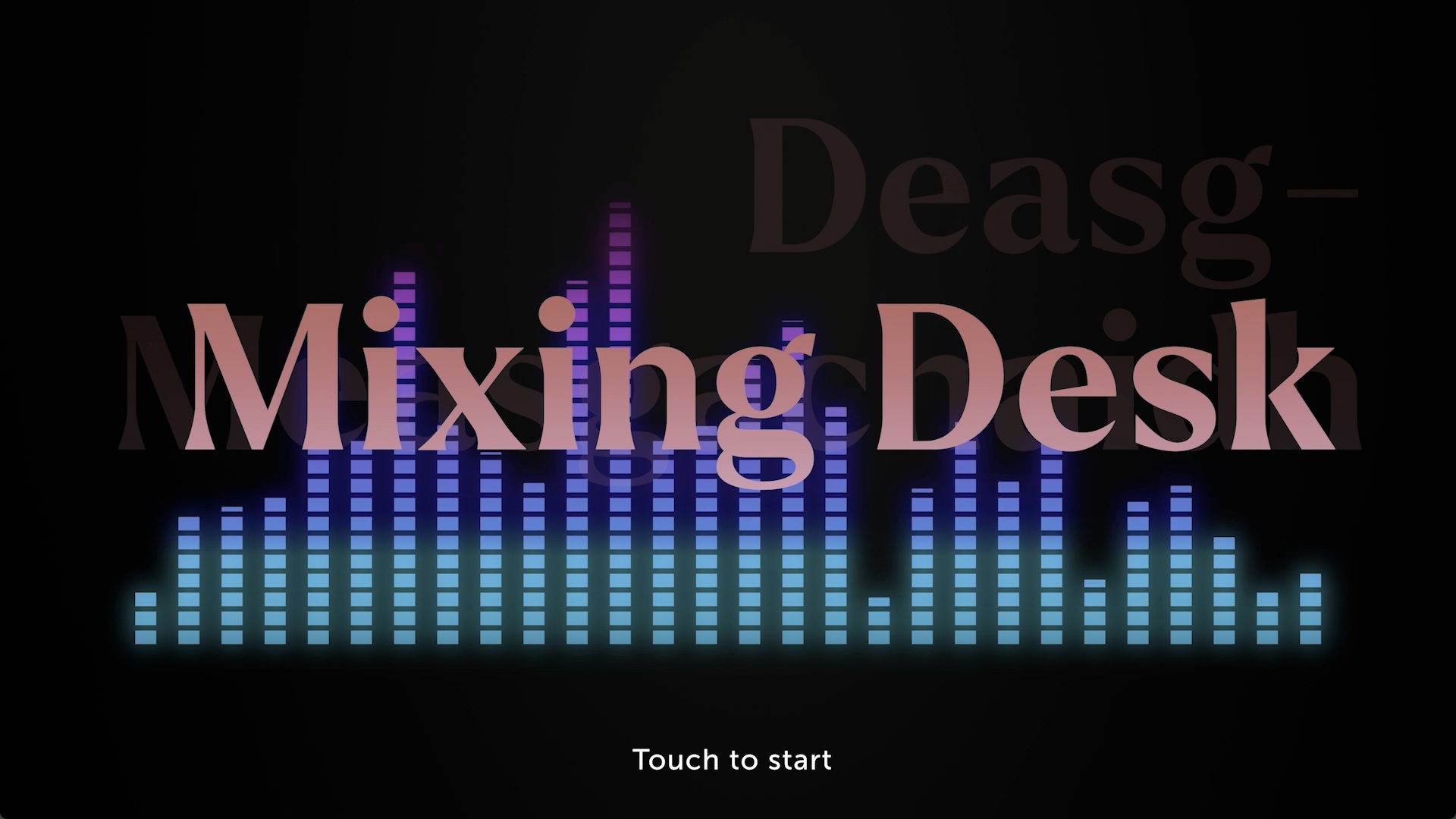
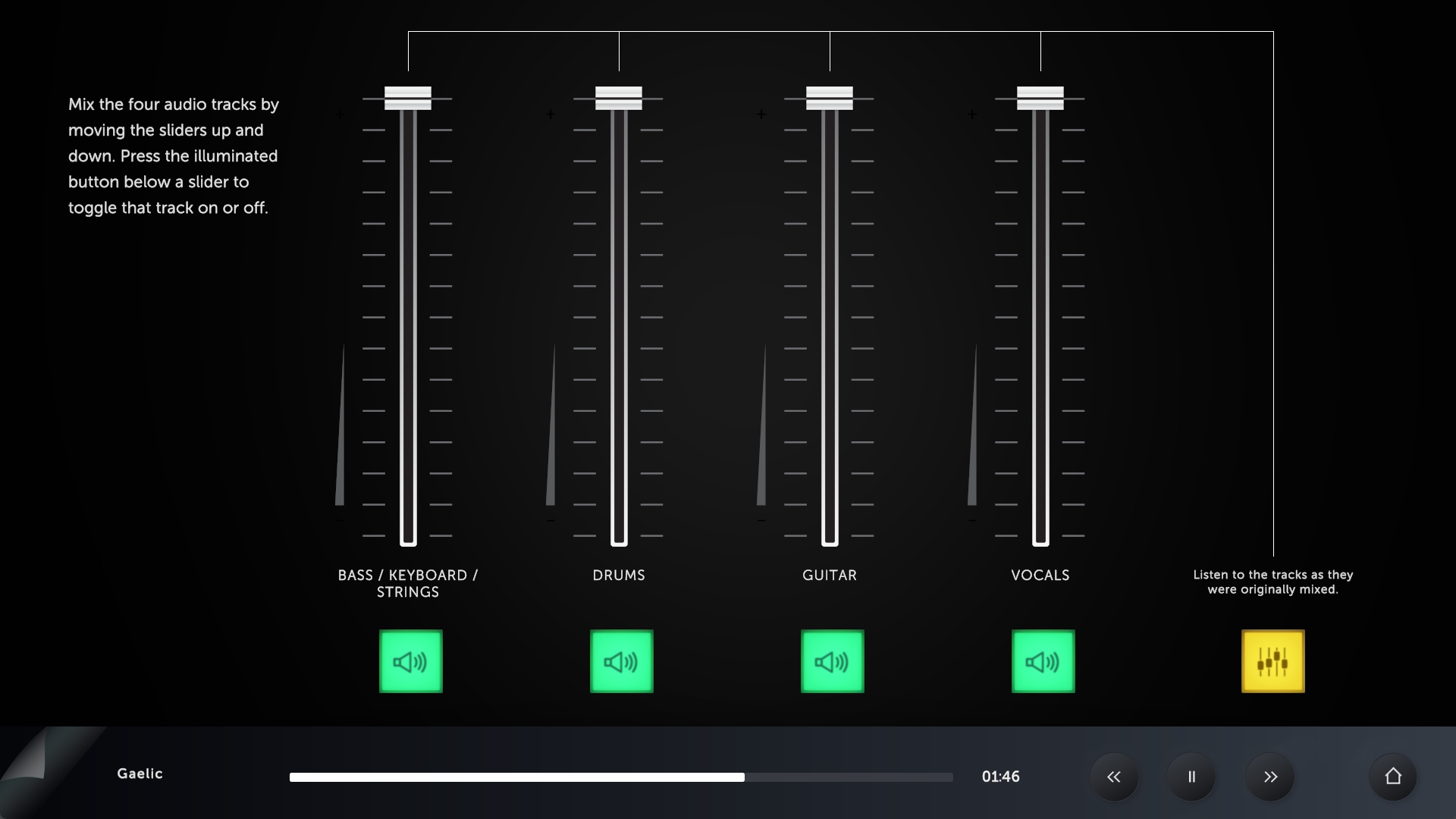
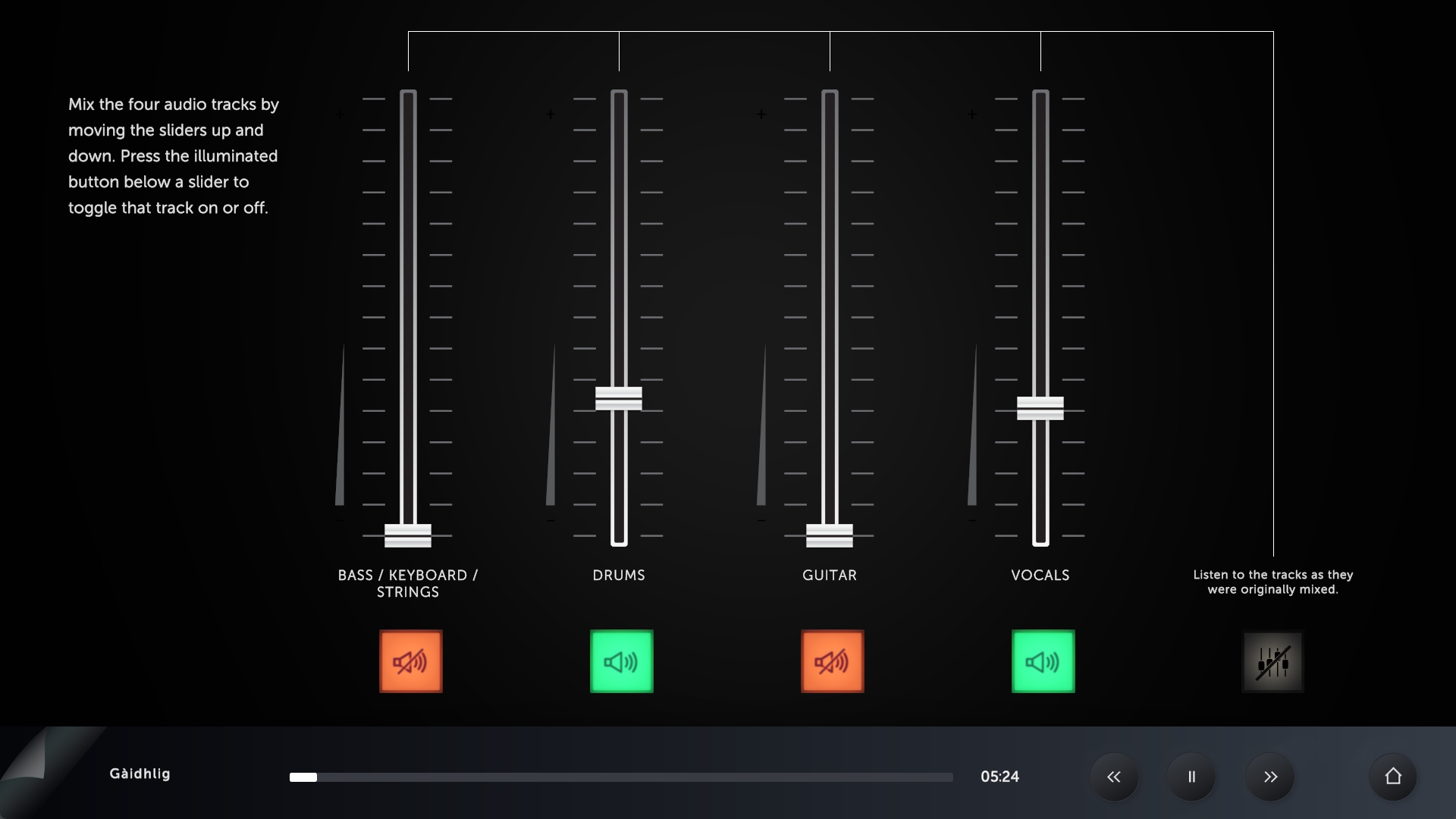
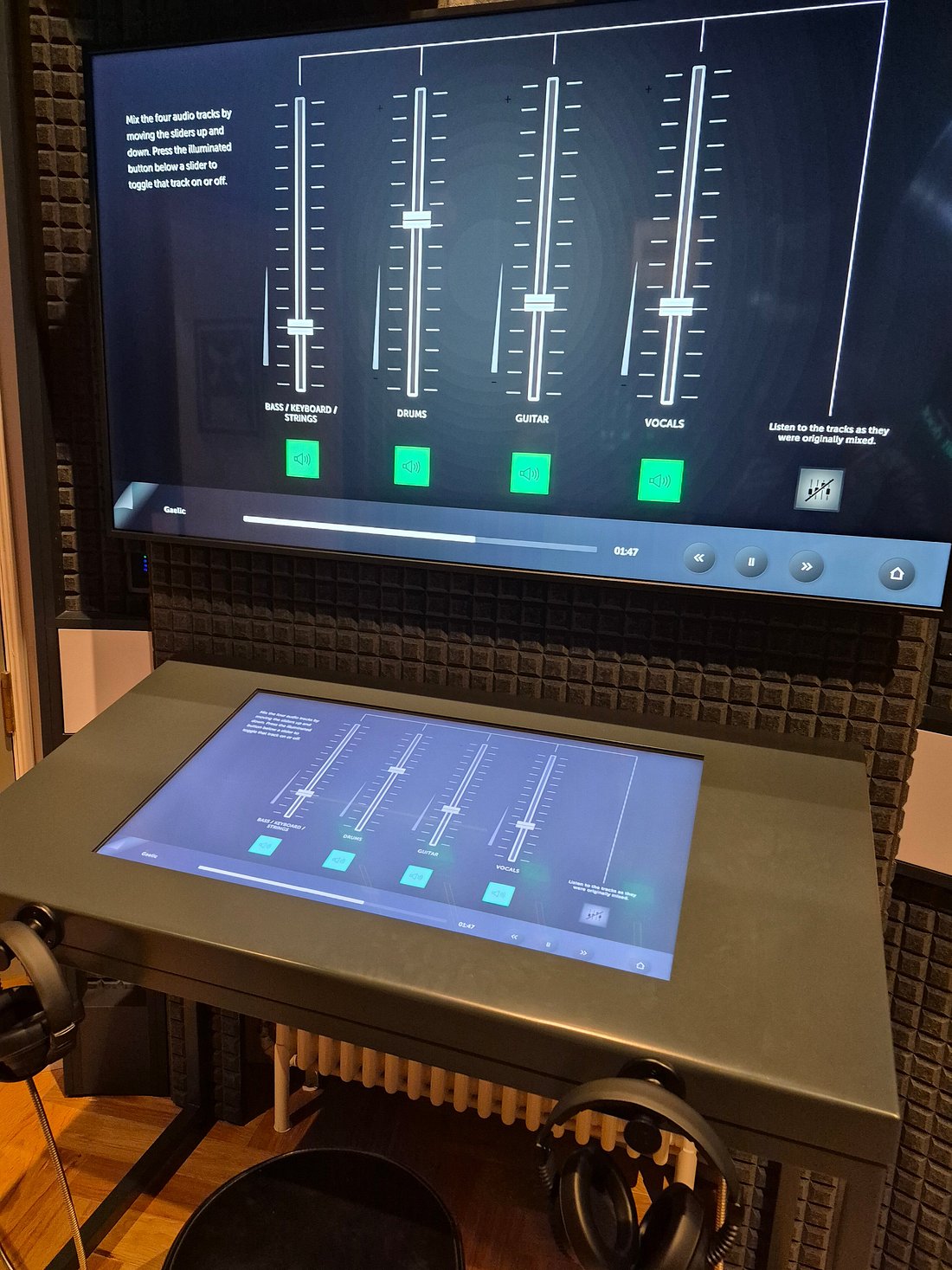
The Castle includes an exhibition that celebrates Runrig, one of the Highlands' most celebrated bands. As part of this exhibition, I developed the Mixing Desk: a touch screen interactive that gives visitors the opportunity to mix a Runrig song in real time. The song plays on a loop, and visitors can adjust four separate tracks to their liking.
4. Spirits of the Highlands
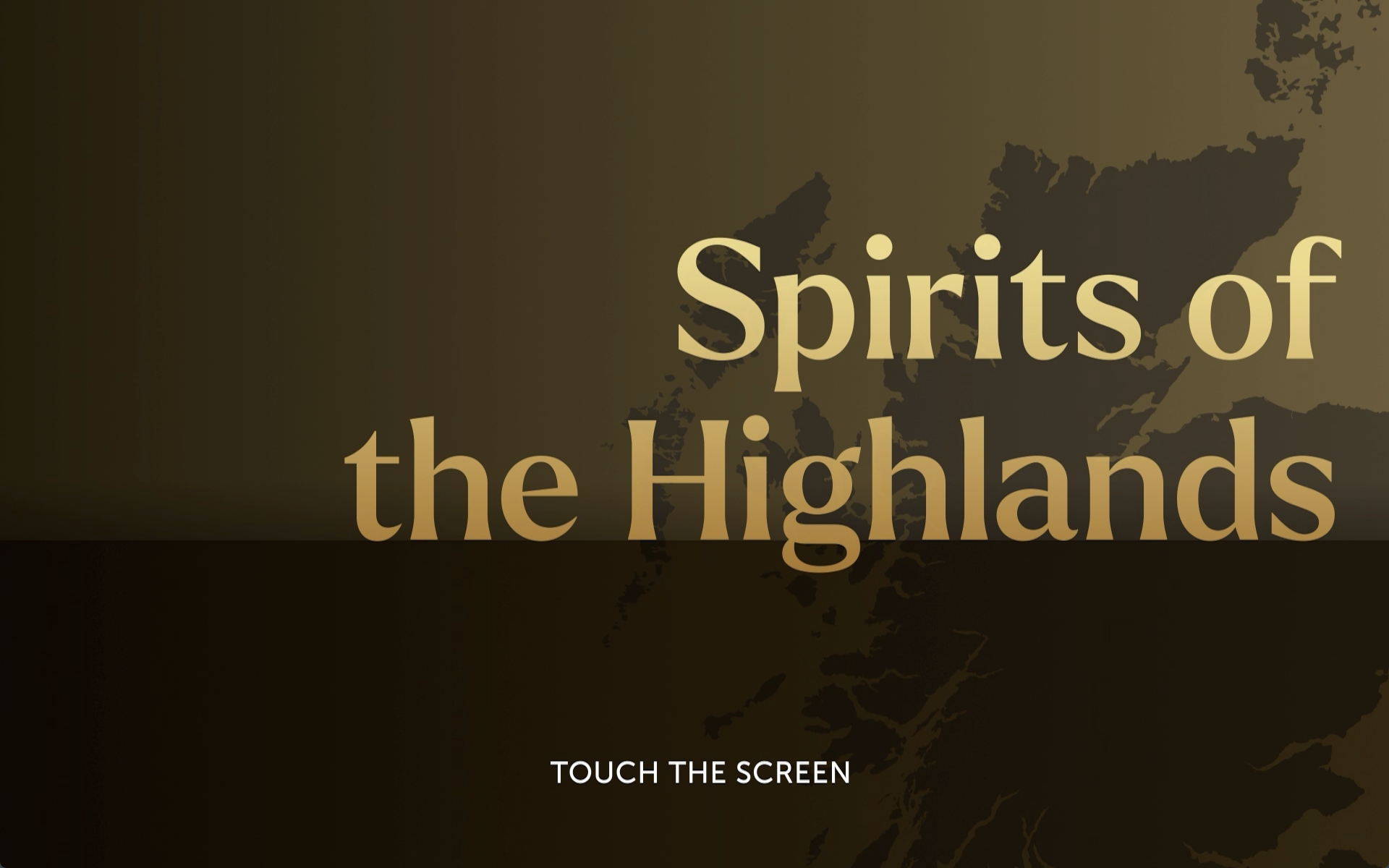
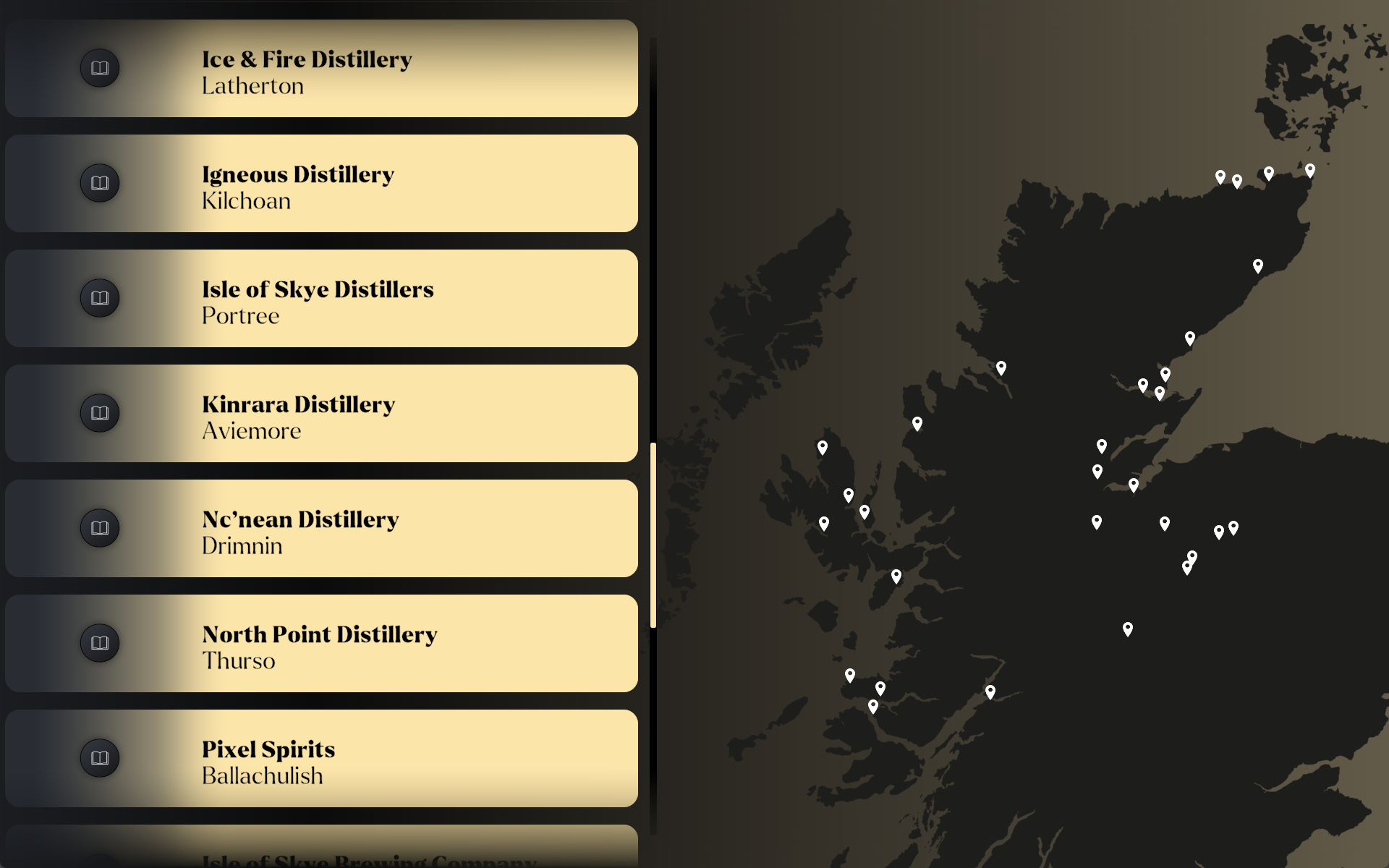
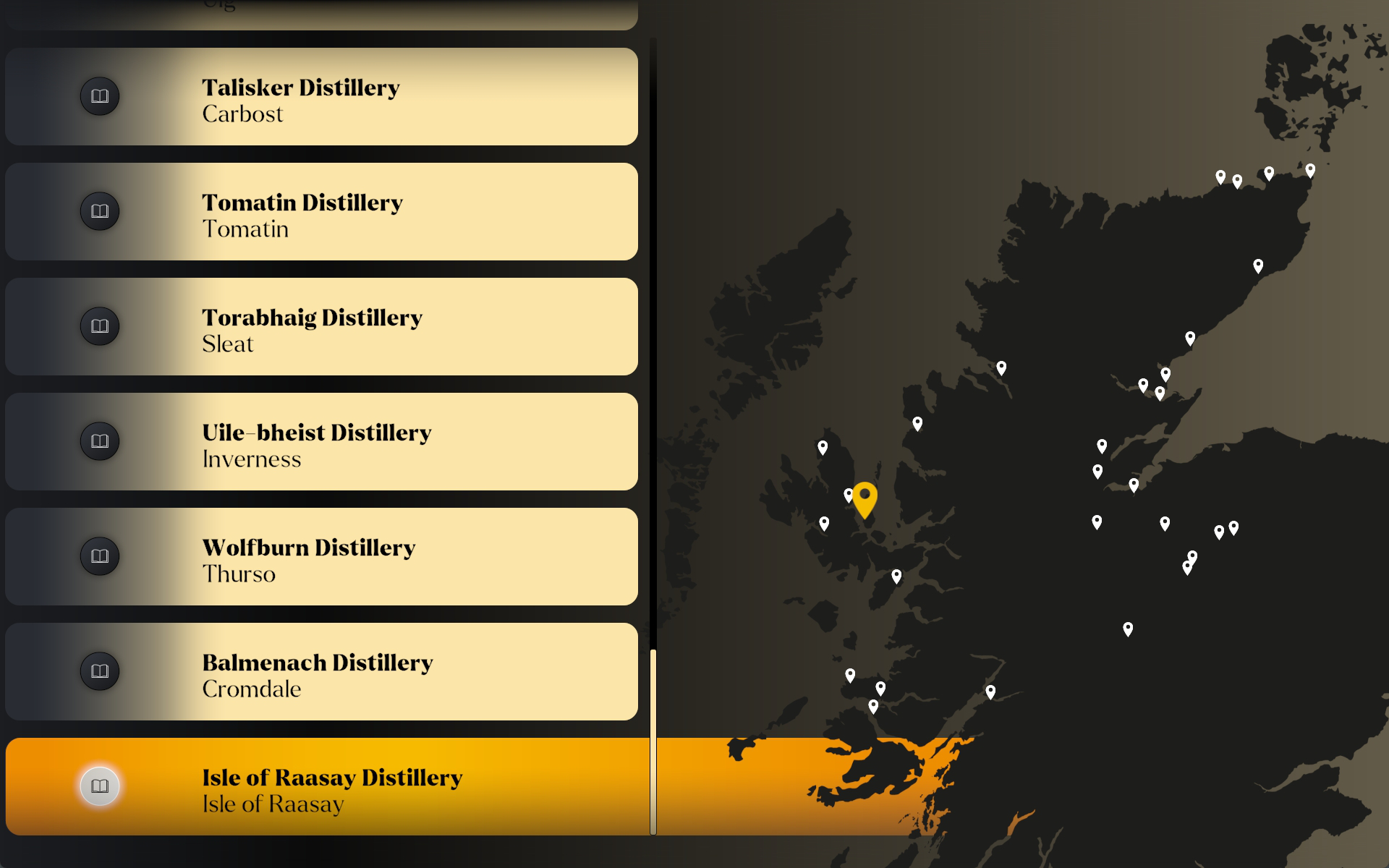
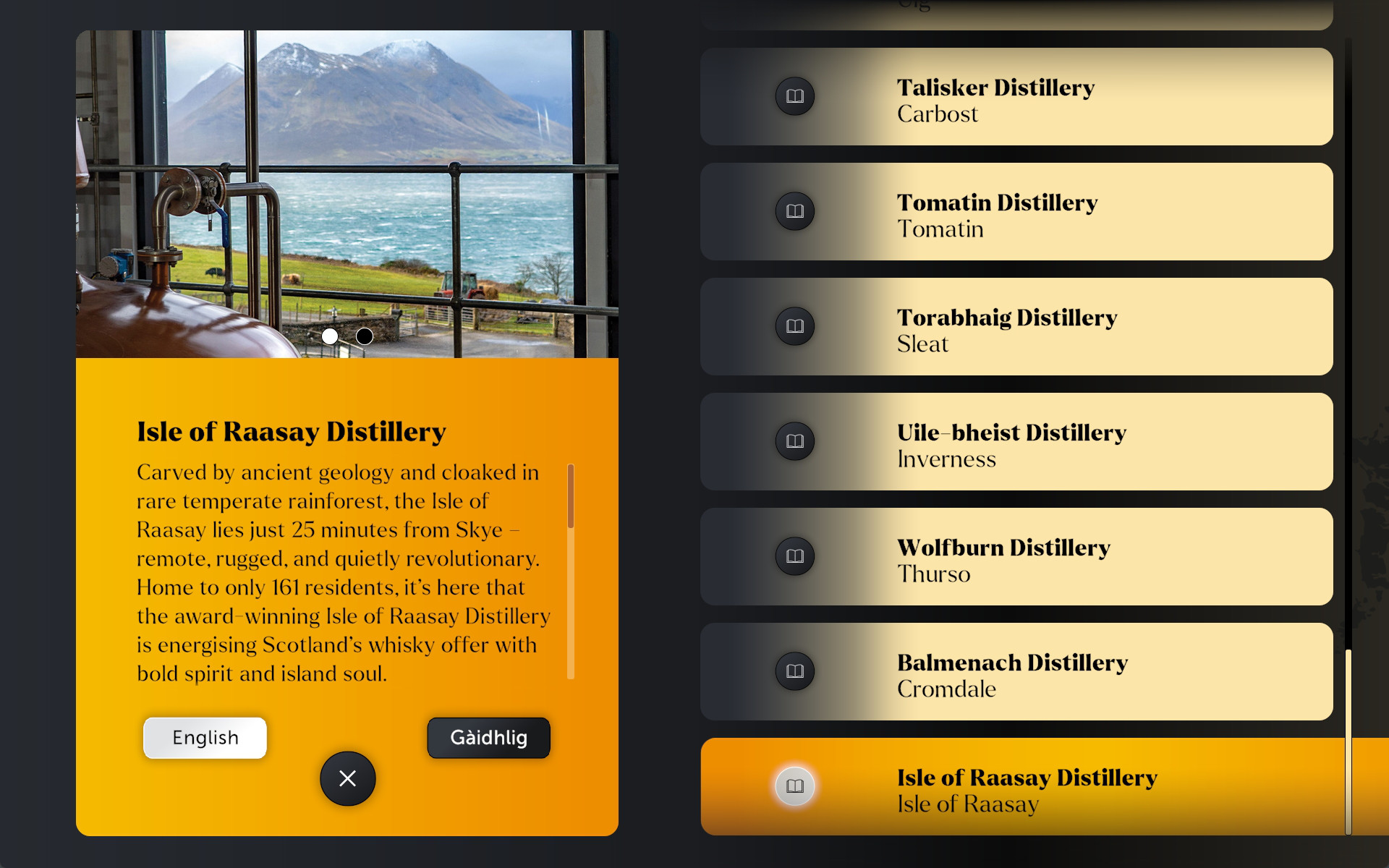
Spirits of the Highlands is a touch screen interactive running on an Android tablet installation. It allows visitors to explore the whisky distilleries of the Highlands through a map and scrollable list, and to discover more about each distillery through text and photos. The team at Inverness Castle is able to update the content directly.
5. Exhibition mockups tested in VR
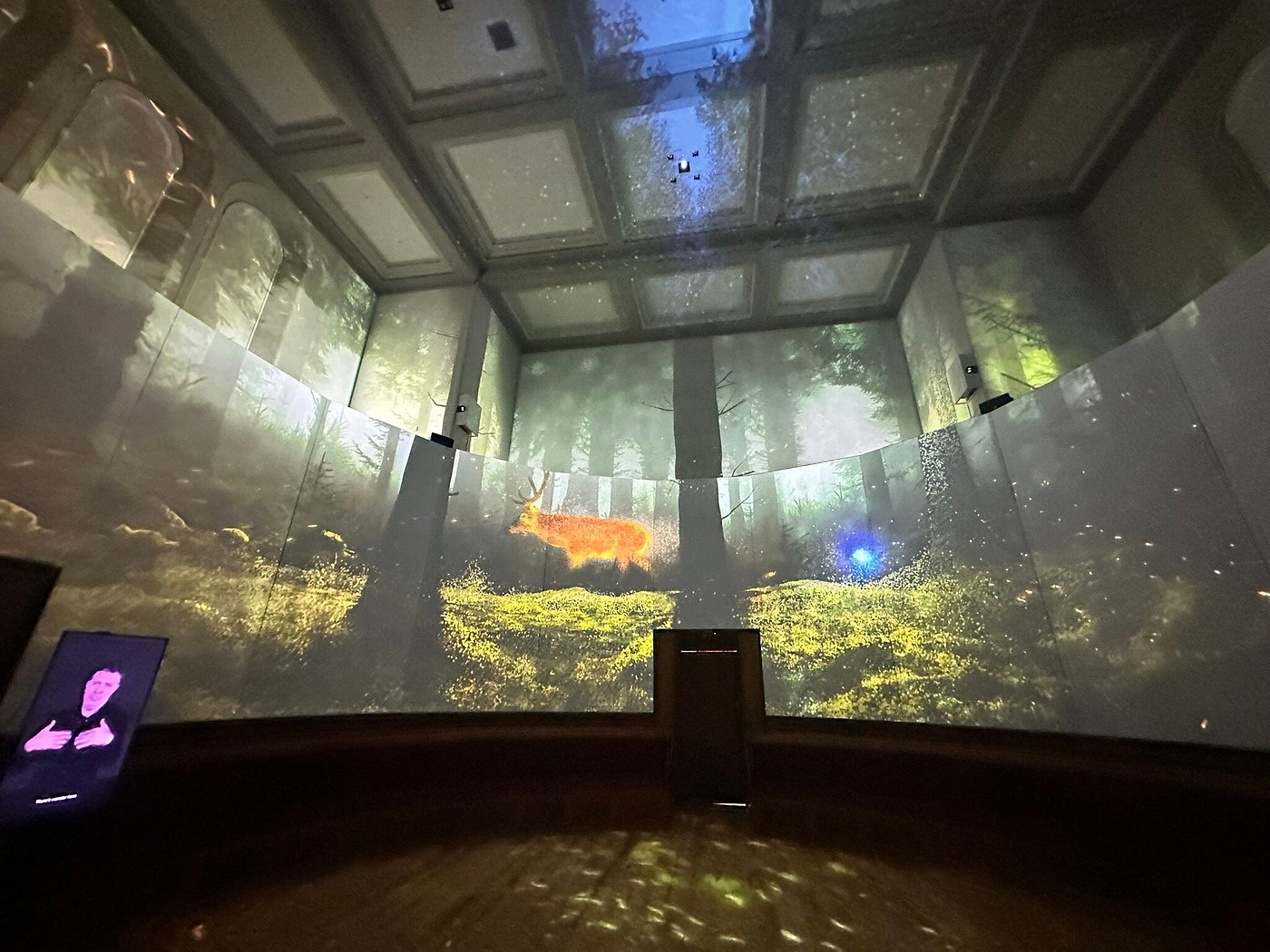
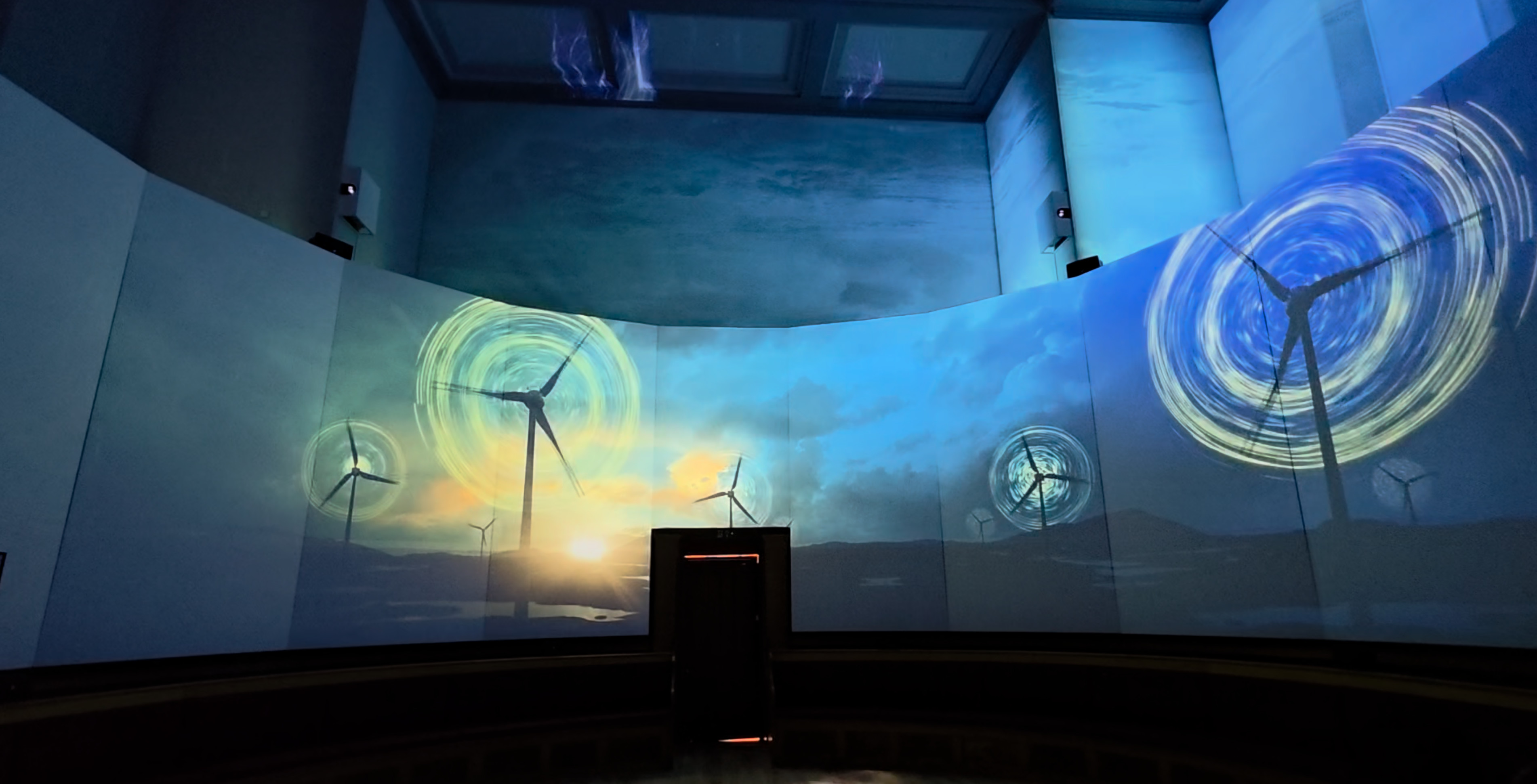
Beyond the touch screen interactives that I developed, AY-PE designed and created many AV experiences throughout Inverness Castle, including complex projection mapping. Prior to these ideas being pitched to the client or heading into production, there were many technical and creative challenges that the AY-PE team needed to work through and overcome to determine their feasibility.
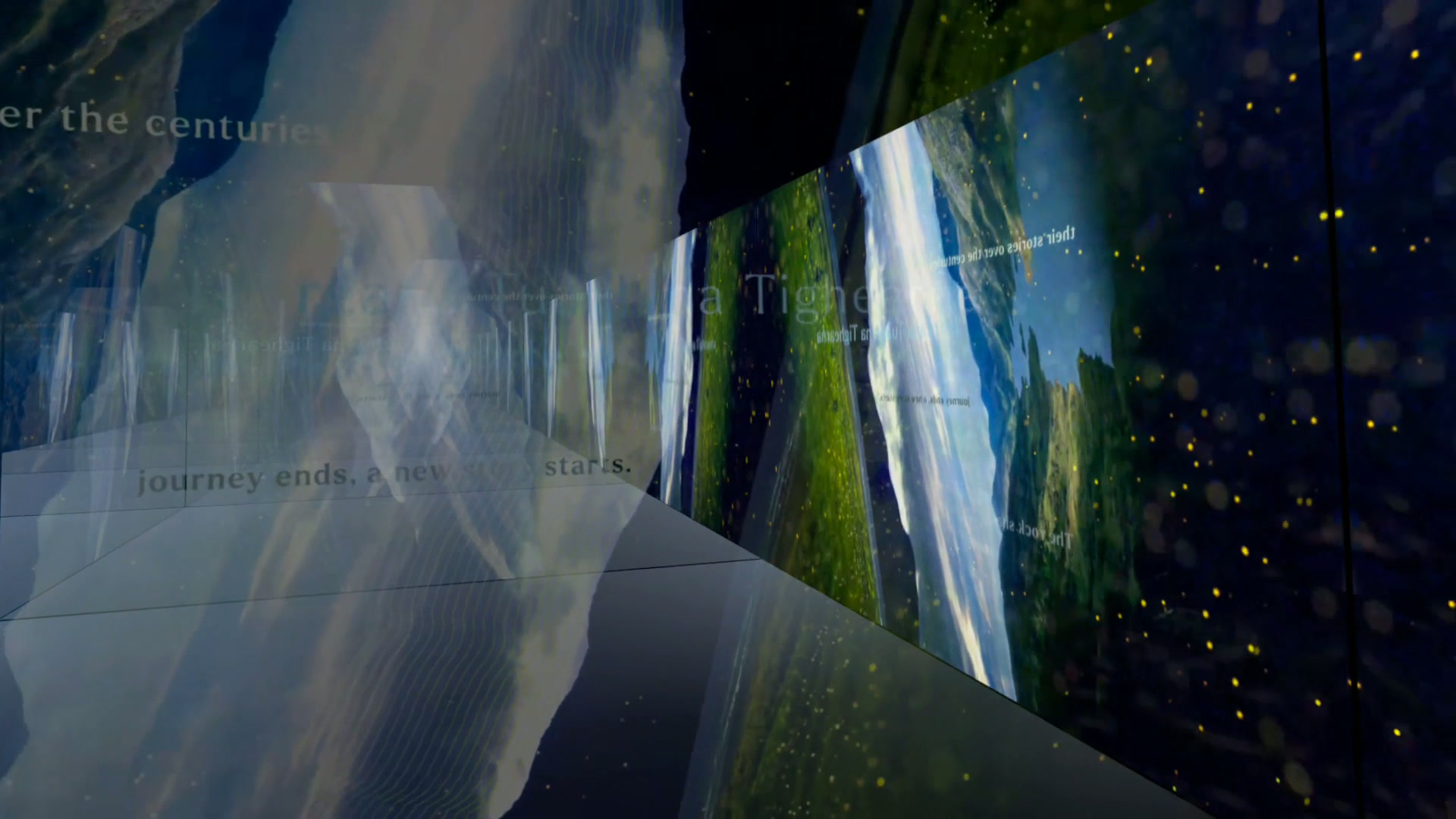
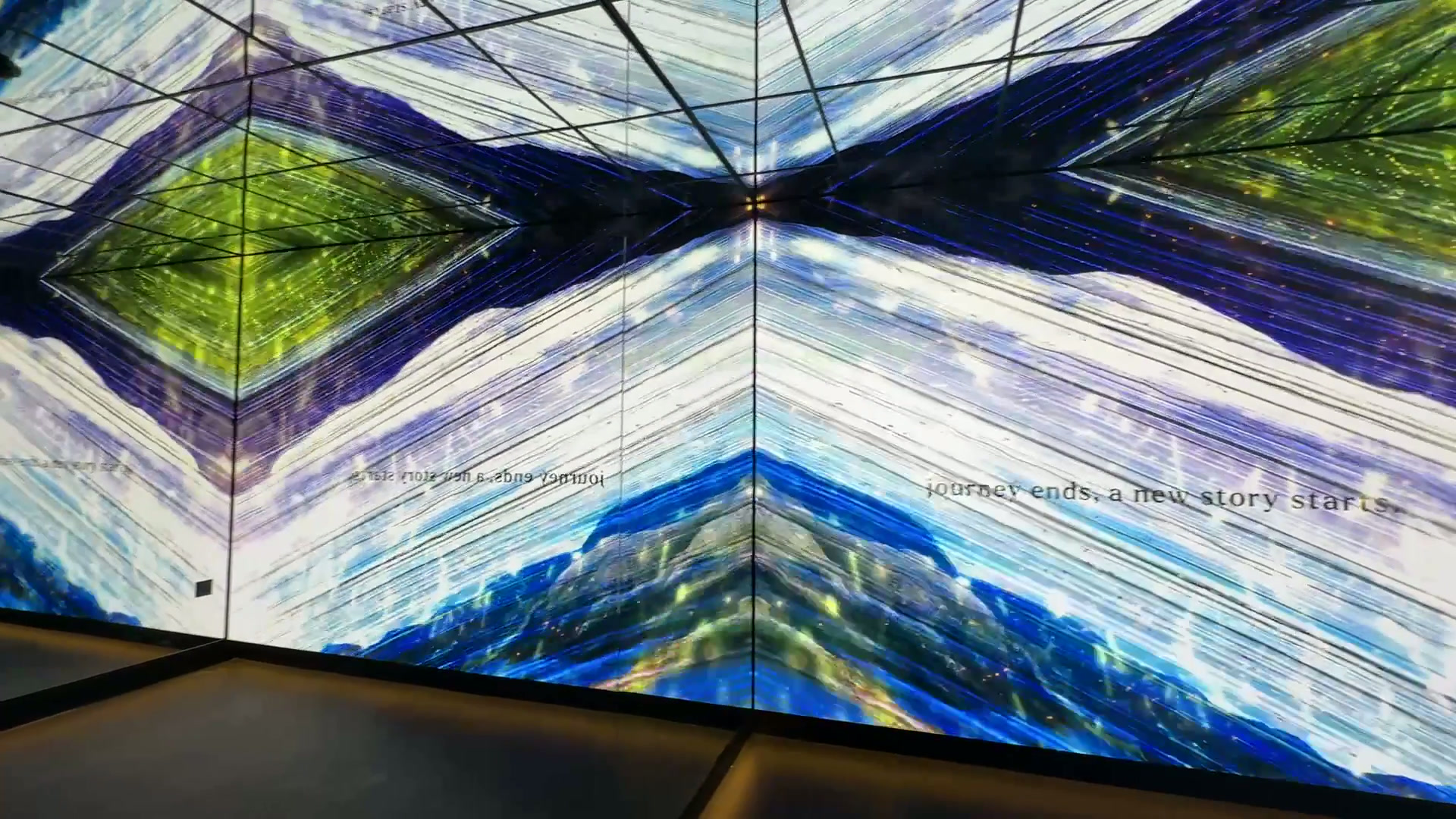
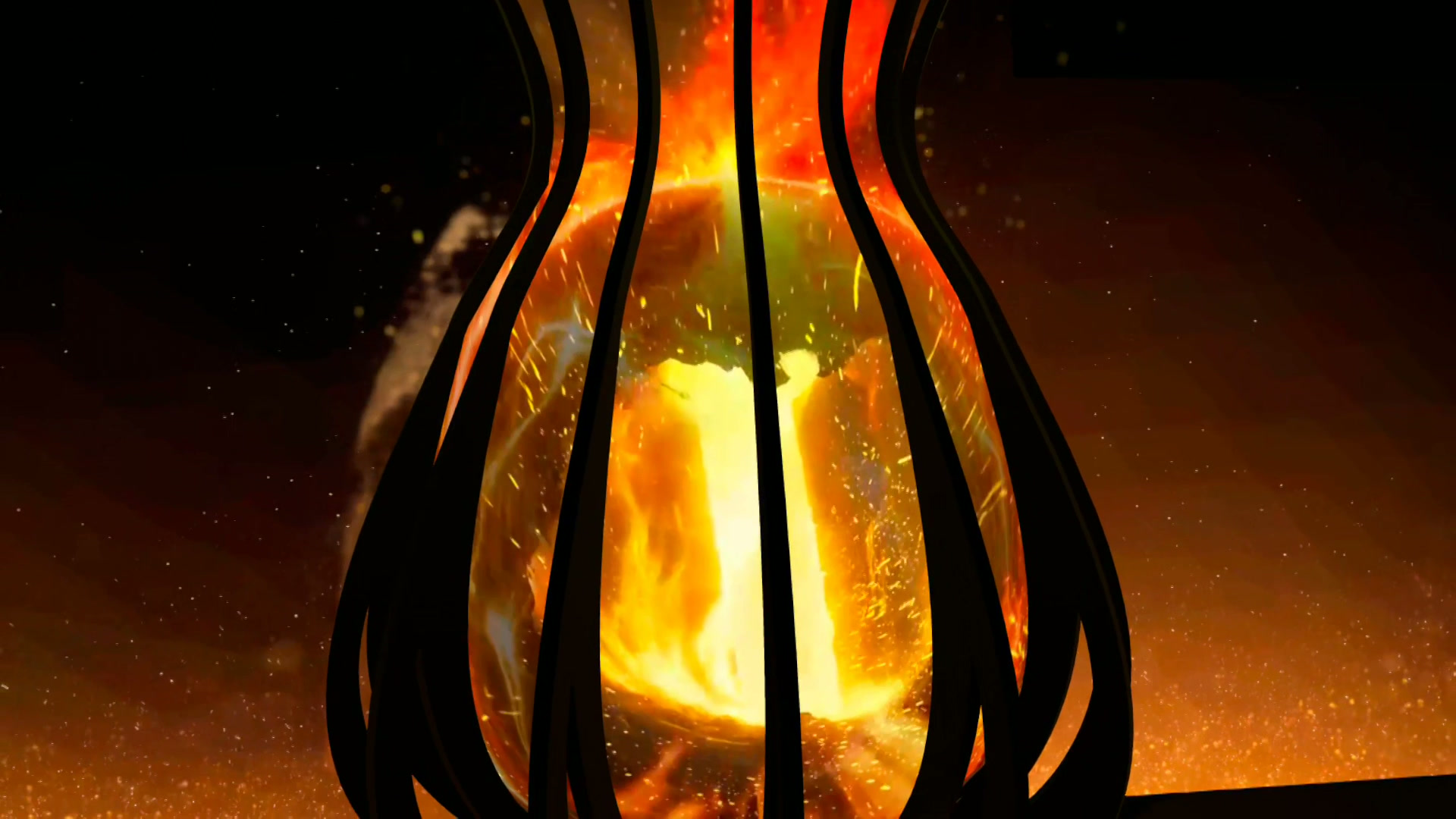
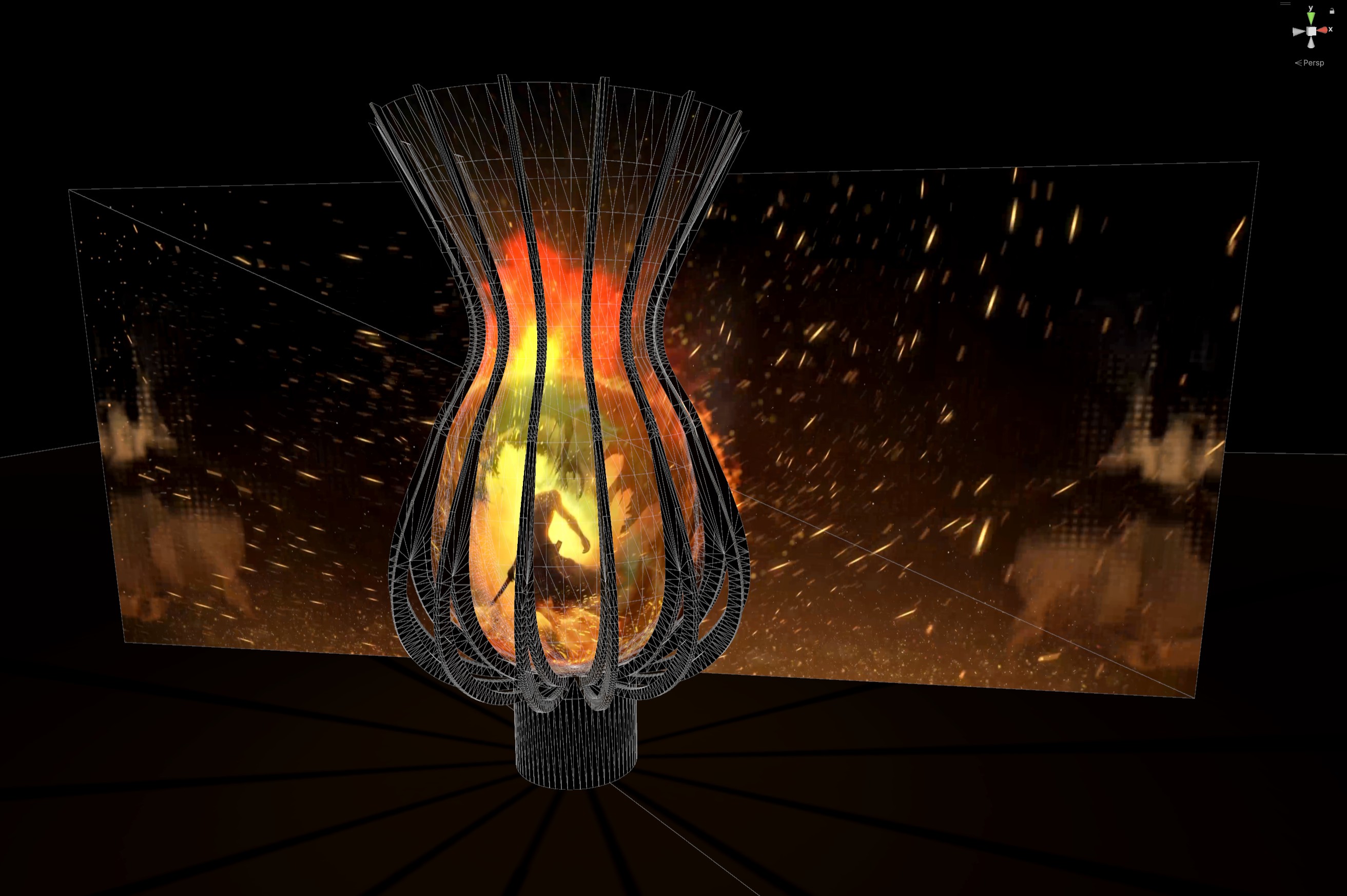
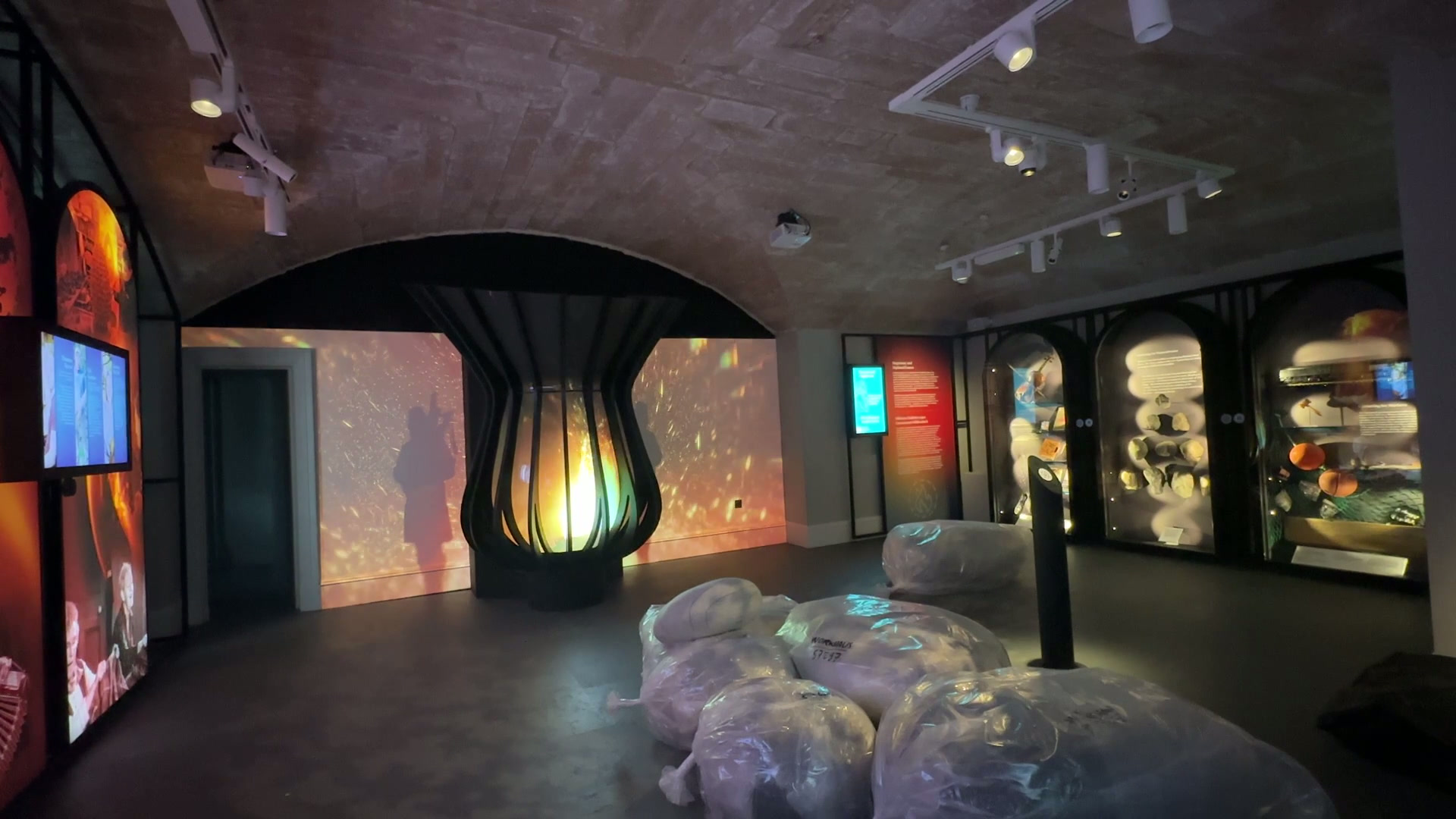
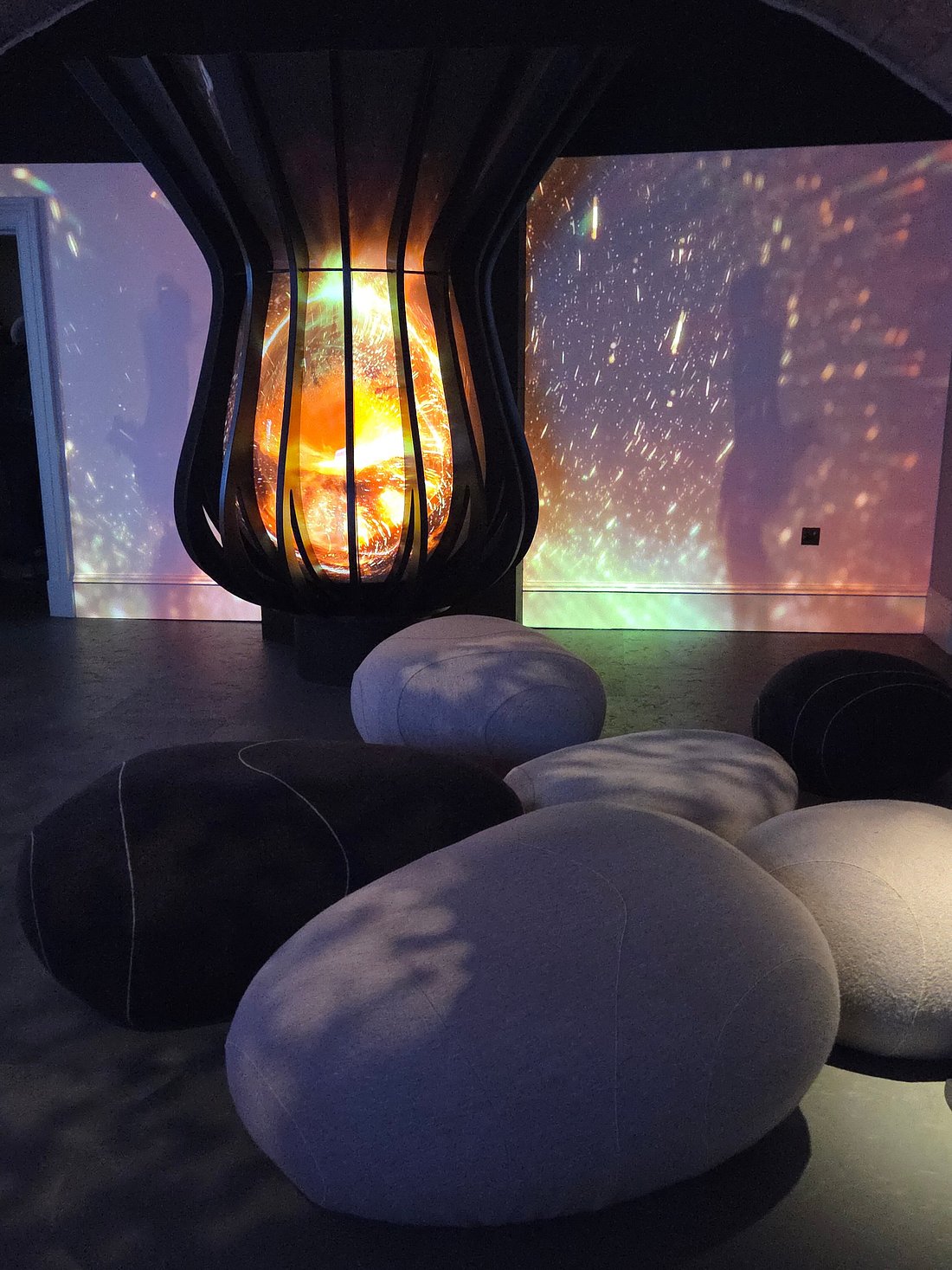
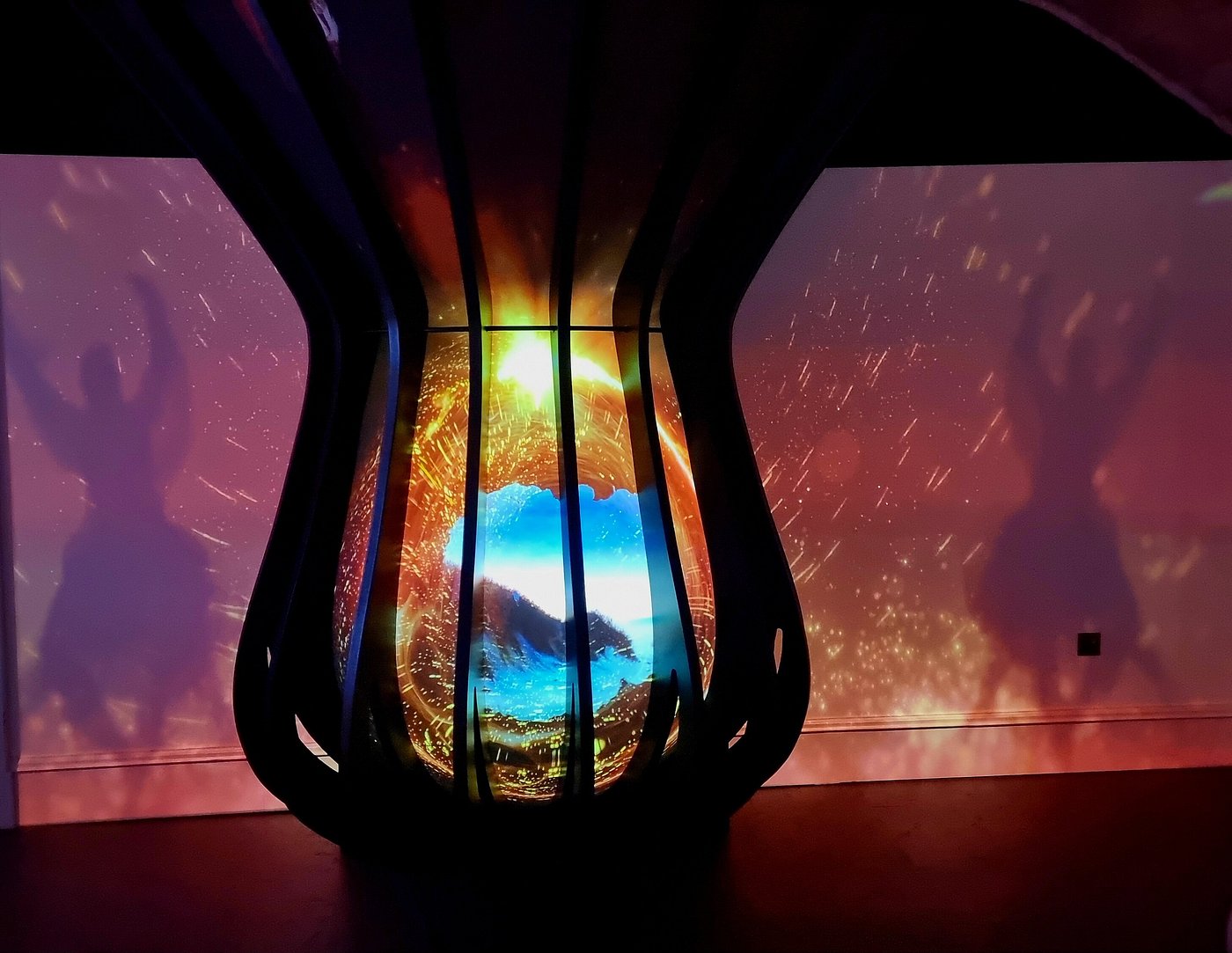
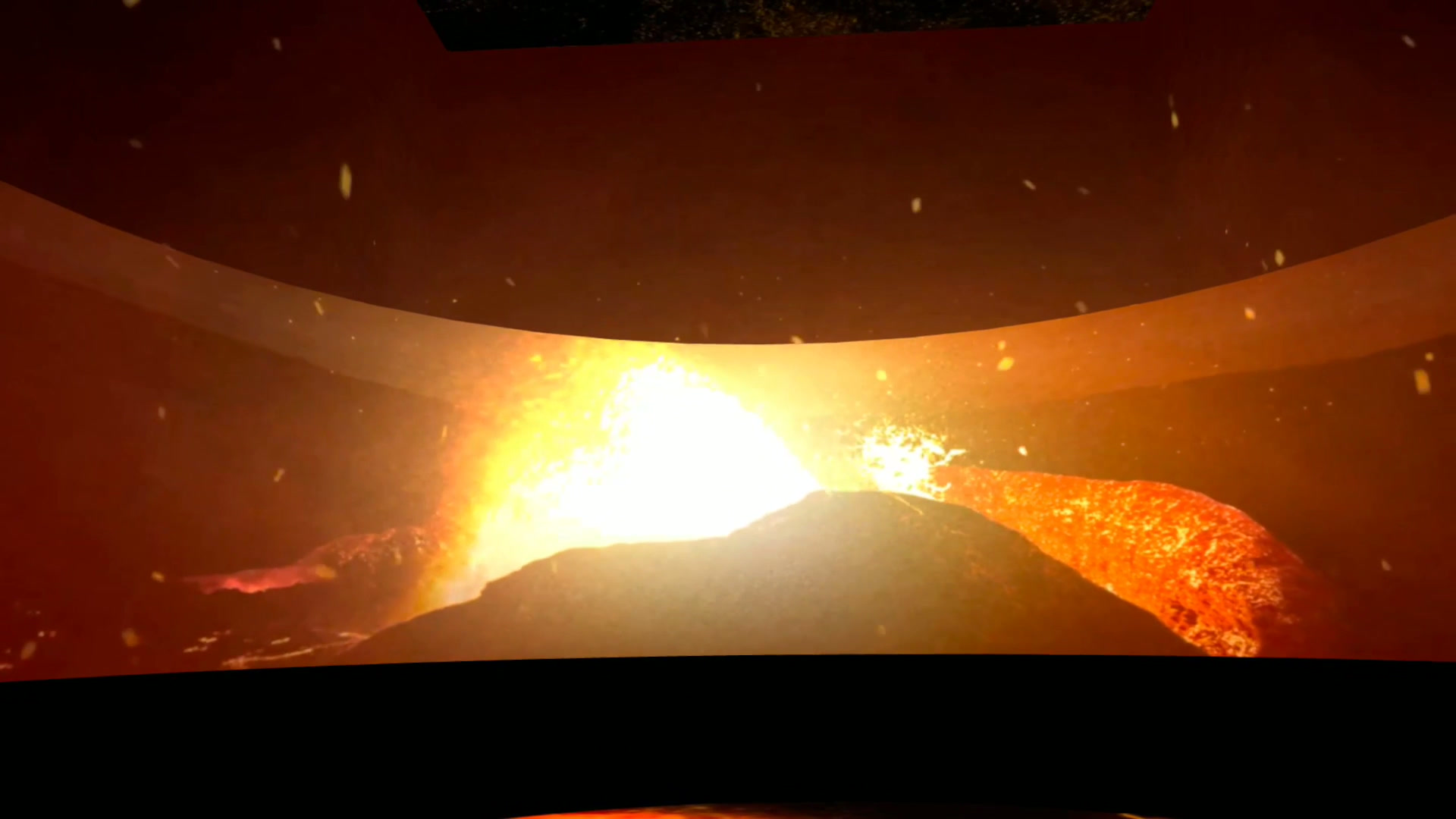
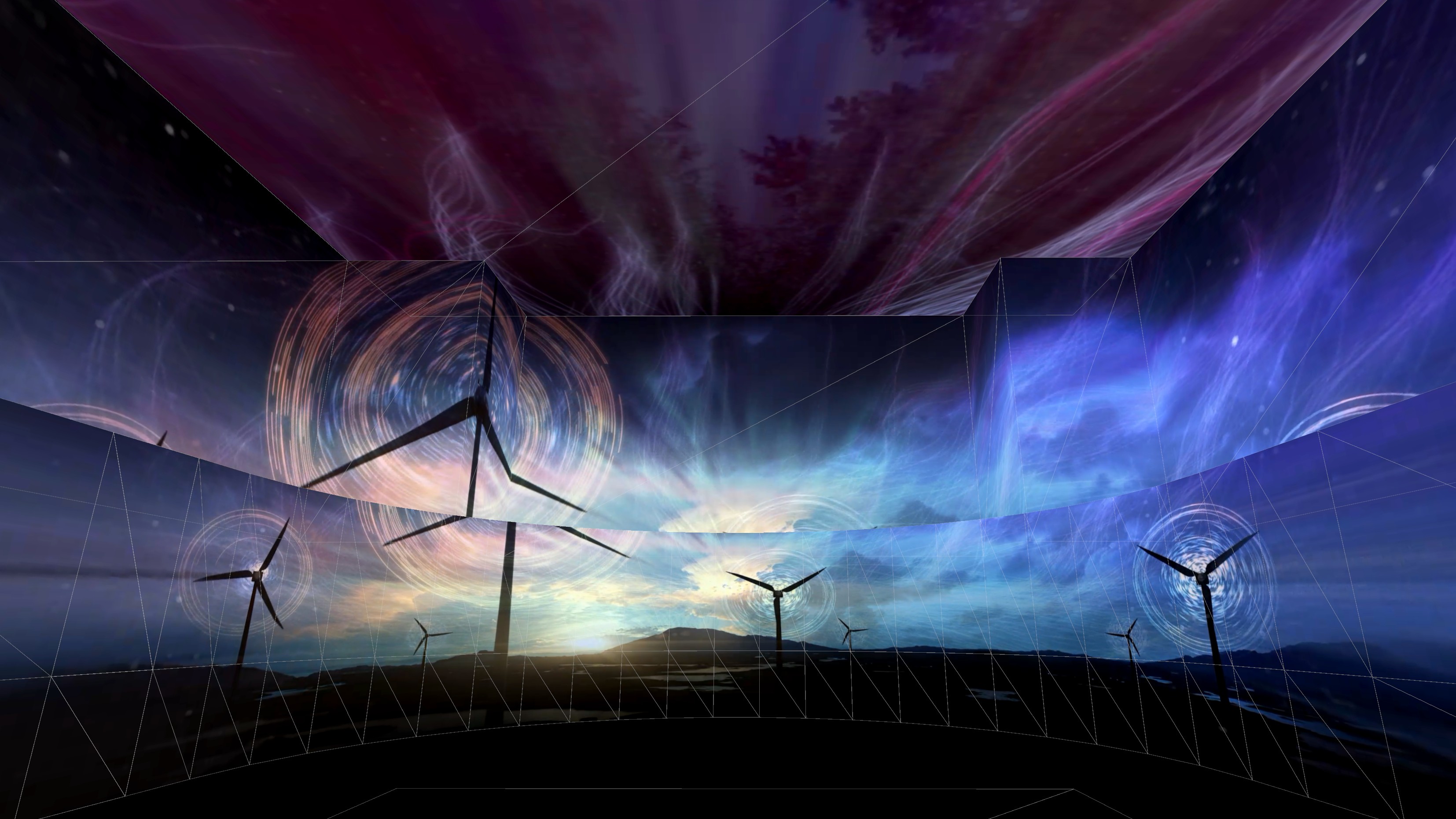
To support this, I created rapid virtual reality mockups of three of the Castle rooms: the Mirror Room, the Ceilidh Fire and the End Show. This allowed concept video content to be virtually projection mapped onto complex and curved display surfaces, giving the AY-PE team, and later the Castle client team, the opportunity to visualise how these rooms might look and feel before any real production work had begun. It also gave key decision-makers and stakeholders the opportunity to work out details before committing significant time or budget.
Mirror Room
Ceilidh Fire
End Show
Credits
Simon Kendrew: Software development
AY-PE: Photogrammetry, UI design.
Installation photos and video: AY-PE, Mather & Co, Fusion LX, Tripadvisor members.
Developed while employed as Senior Software Developer at AY-PE.